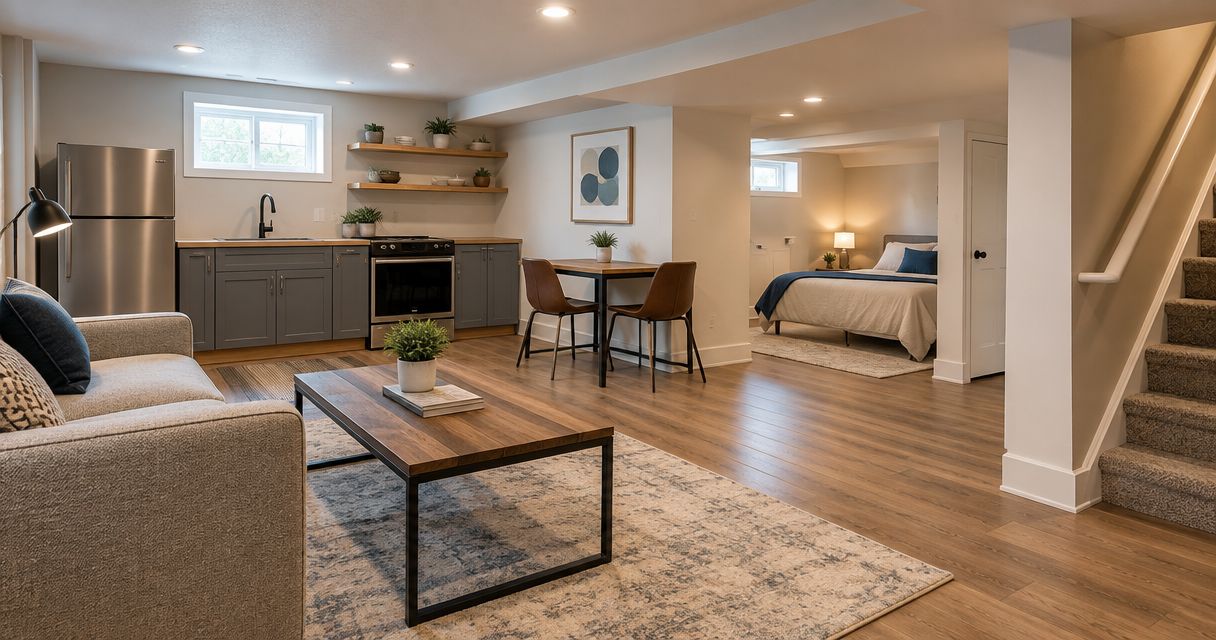
Converting a basement into a rental unit in Central Iowa means adding a legal egress window, a separate entrance, its own bathroom and kitchenette, and pulling permits before any framing starts — skip a step and the unit can't legally be rented. The process usually runs eight to twelve weeks once permits clear, and the permit review itself is the part most homeowners underestimate.
- Converting a basement into a rental unit in Central Iowa requires an egress window, a separate entrance, and a dedicated bathroom before it's legal to rent.
- Permits from your city (Des Moines, Ankeny, Waukee, West Des Moines and others each review separately) come before demo — not after.
- Radon mitigation matters more in Iowa than most states; test before you finish walls, not after.
- Phoenix Construction Solutions handles basement apartment conversions for rental income across Central Iowa from planning through final inspection.
Why this matters
A finished basement and a legal rental unit are not the same thing. A finished basement is a den with carpet and a TV. A rental unit is a dwelling with its own means of egress, its own bathroom, a kitchen or kitchenette, and — depending on your city's zoning — a separate address or unit number for the utility company and the lease.
Central Iowa cities each run their own permit process, and inspectors check for the same handful of things every time: egress window size, ceiling height, smoke and CO detection, and whether the space meets the local definition of a legal bedroom or accessory dwelling unit. Get any one of those wrong and you're re-doing drywall in 2026, not renting to a tenant.
How do you convert a basement into a rental unit in Central Iowa?
The conversion follows a fixed order. Doing these out of sequence is the single most common reason basement rental conversions in Central Iowa go over budget.
- Test for radon and moisture first. Iowa consistently ranks among the states with the highest indoor radon levels in the country, and a wet or high-radon basement needs mitigation before anything gets built on top of it.
- Confirm zoning allows a rental unit or accessory dwelling unit. Some Central Iowa municipalities cap basement rentals as accessory units; others require a separate entrance and a minimum ceiling height before the space counts as habitable.
- Cut the egress window opening. Any basement bedroom needs a code-compliant egress window well before drywall goes up — this is inspected separately from the rest of the project.
- Pull permits. Electrical, plumbing, and building permits are typically separate applications, and your city's timeline drives your whole schedule.
- Frame the separate entrance and interior walls. A rental unit needs its own path in and out that doesn't require walking through the main house.
- Rough in plumbing and electrical for the kitchen and bathroom. This is inspected before insulation and drywall close the walls.
- Insulate, drywall, and finish. Flooring, paint, and fixtures come last.
- Schedule final inspection. No certificate of occupancy for the unit, no legal rental income.
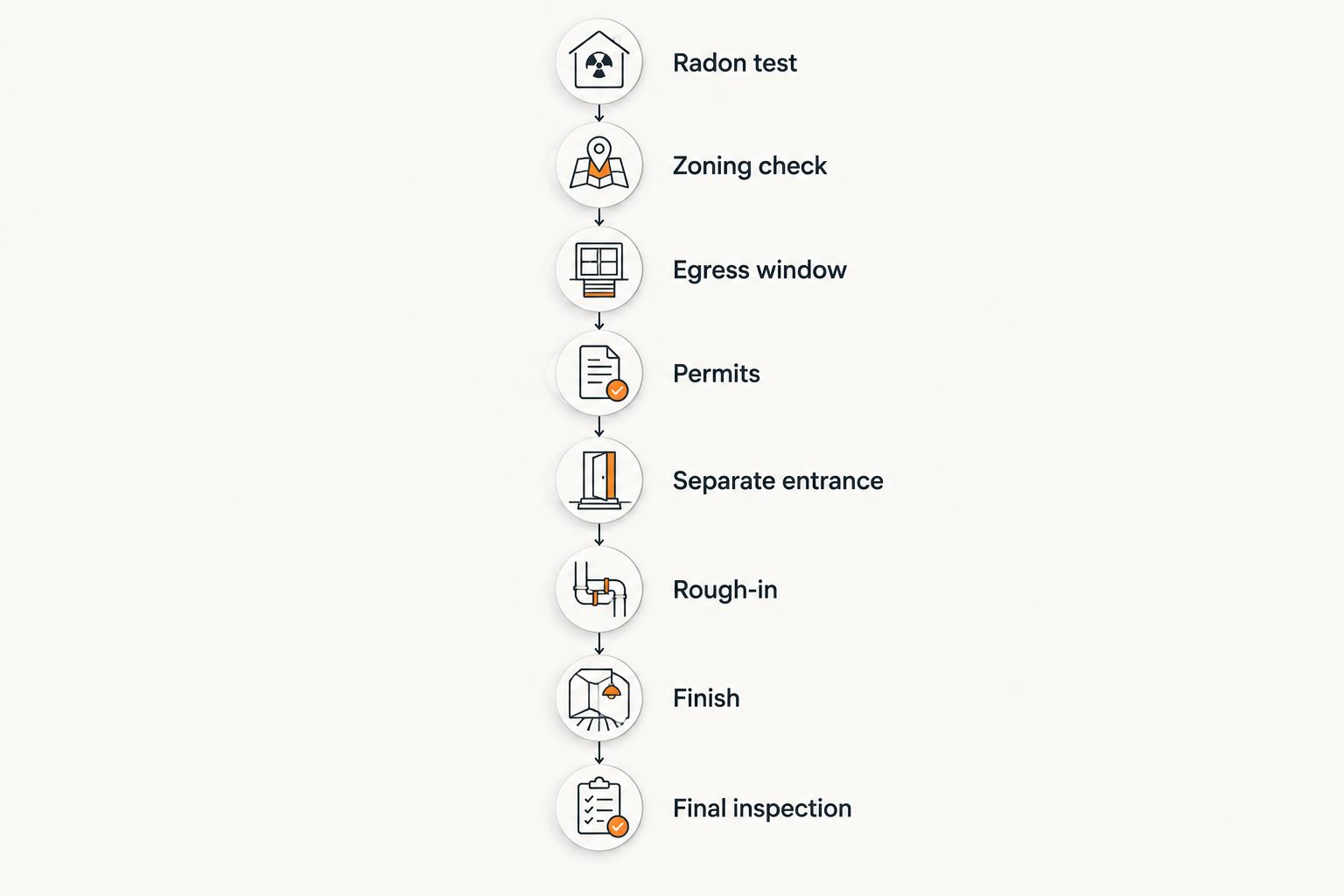
Homeowners planning a basement apartment conversion for rental income in Central Iowa typically spend more time on steps 1-4 than on the actual build, because that's where the permit clock runs.
Long-term rental unit vs. short-term rental unit
The build requirements shift depending on who's renting the space.
| Feature | Long-term rental unit | Short-term (Airbnb) rental unit |
|---|---|---|
| Entrance | Separate entrance usually required | Separate entrance strongly preferred by guests |
| Kitchen | Full kitchen typical | Kitchenette often acceptable |
| Lease/permit type | Rental registration in some cities | Short-term rental permit in some cities |
| Utility metering | Sub-metering common | Rarely sub-metered |
| Best for | Steady monthly income | Higher nightly rate, more turnover |
Long-term basement rental units win on predictable monthly income and lower turnover — best for owners who want a tenant, not a hospitality business. Short-term setups can earn more per night but bring more code scrutiny in several Central Iowa cities and more wear on finishes. Owners weighing the Airbnb route should also look at what a home addition for Airbnb hosts involves before committing to one path over the other.
Why the scope and timeline vary
A handful of site conditions decide whether a basement conversion is a straightforward eight-week job or a slower, more involved one in 2026:
- Ceiling height. Basements with low clearance may need excavation to meet the minimum habitable ceiling height, which adds structural work.
- Existing egress access. A basement with a walkout or existing window well is a faster egress fix than one needing a full new opening cut into the foundation.
- Radon and moisture levels. Mitigation systems and waterproofing add steps if the pre-build test comes back high.
- Utility separation. Sub-metering electric or adding a second water heater takes longer than sharing utilities with the main house.
- City permit backlog. Permit review time differs across Des Moines, Ankeny, Waukee, West Des Moines, Urbandale, and Norwalk — call ahead rather than assume.
- Foundation condition. Cracks or settling found during the moisture check can push the project into foundation repair before the rental build even starts.
“If the egress window and the radon test aren't handled before framing, the rest of the schedule is guesswork.”
Getting ahead of financing questions also saves time — see how to finance a basement remodel before locking in a scope.
Plan your basement rental conversion
Licensed, insured basement conversions across Central Iowa.
Do you need a permit to convert a basement into a rental unit in Iowa?
Yes — a basement rental conversion in Iowa needs building, electrical, and plumbing permits at minimum, and most Central Iowa cities require a separate application for each. Skipping permits doesn't just risk a stop-work order; it can void insurance coverage on the finished space and complicate a future sale. Details on the local process are covered in how to get building permits for a home renovation in Iowa.
Does a basement rental unit need an egress window?
Yes — any basement bedroom in a rental unit needs a code-compliant egress window, full stop, regardless of which Central Iowa city the home sits in. Inspectors check the opening before drywall closes the wall, so cutting it late in the project means redoing finished work. The specifics of sizing and placement are covered in egress window installation for basement bedroom conversions.
Should you waterproof the basement before converting it?
Yes — waterproofing and a radon test should happen before any framing, not after finishes go in. A basement that leaks or tests high for radon after the rental unit is built means tearing into finished walls, which costs more than addressing it up front. Waterproofing steps are laid out in how to waterproof a basement before remodeling in Central Iowa.
FAQ
How long does it take to convert a basement into a rental unit?
A basement-to-rental-unit conversion typically runs eight to twelve weeks once permits are approved. Permit review time in Central Iowa cities adds several weeks on top of that before construction even starts.
Is a basement rental unit the same as an accessory dwelling unit?
Not always — an accessory dwelling unit (ADU) usually needs its own kitchen, bathroom, and entrance under local zoning, while some cities allow a simpler basement rental with shared utilities. Check your city's zoning definition before finalizing the layout.
Can you rent out a basement without a separate entrance?
Some cities allow it for a room rental, but most jurisdictions require a separate entrance for the space to count as a legal, independent rental unit. A shared entrance also makes the unit far less marketable to renters.
What's the difference between a finished basement and a legal basement apartment?
A finished basement is livable space for the homeowner; a legal basement apartment has its own egress window, bathroom, kitchen, and passed final inspection as a separate dwelling. Only the second one can be legally rented for income.
Does Iowa require radon testing before finishing a basement?
Radon testing isn't always legally mandated for a remodel permit, but Iowa has some of the highest indoor radon levels in the country, making a pre-build test standard practice before closing up walls in 2026.
Can a basement rental unit have its own kitchen?
Yes — a full kitchen or kitchenette is standard for a long-term basement rental unit and typically required for the space to qualify as an independent dwelling under local zoning.
Do basement rental units need separate utility meters?
Sub-metering is common but not universally required — many Central Iowa homeowners keep utilities on one meter and build the cost into rent, while others sub-meter electric for a cleaner lease arrangement.
One last thing
The egress window is the step homeowners try to shortcut most, and it's the one inspectors check first — get that opening approved before you spend a dollar on finishes, because retrofitting one into a finished basement wall in Central Iowa means tearing out work you already paid for. If the space also needs to double as a legal bedroom for a family member down the line, look at basement additions for a legal bedroom in Central Iowa before you finalize the layout — the code requirements overlap almost entirely with a rental conversion.