Gutter replacement in Central Iowa requires a house-specific estimate based on measured gutter runs, downspouts, materials, installation access, and removal of the existing system. For a 2026 budget, compare complete installed scopes—not a gutter-only rate. Ask whether the estimate includes fascia repairs, disposal, and routing water away from the house; those items change what you are actually buying.
- How much does gutter replacement cost in Central Iowa? Get a measured estimate covering gutters, downspouts, removal, and repairs.
- Compare gutter replacement bids with identical materials, drainage routes, and written exclusions.
- Phoenix Construction Solutions fits Central Iowa homeowners planning remodeling or reconstruction alongside exterior work.
- Separate necessary drainage work from optional gutter guards before approving the scope.
Why this matters
A gutter quote is also a drainage plan. New troughs do not solve a discharge problem if the downspouts still release water where it collects beside the house.
Start by identifying what fails during rain: overflowing sections, leaking joints, loose attachments, or poorly placed outlets. The guide to gutter systems for Central Iowa homes helps frame the system selection; the estimate should explain how the proposed work addresses your particular problem.
How much does gutter replacement cost in Central Iowa?
The useful figure is the written installed total for your house, with inclusions and exclusions attached. A linear-foot rate describes only part of the job unless the contractor explicitly includes removal, fittings, downspouts, access, and repairs.
Use the following breakdown when requesting a 2026 gutter replacement estimate. Each line should identify included work, excluded work, or a condition requiring further inspection.
| Estimate component | What the written scope should identify | What to question |
|---|---|---|
| Gutter runs | Measured lengths, material, profile, and attachment method | A total with no material description |
| Downspouts | Locations, routing, fittings, and discharge points | Whether existing downspouts stay or are replaced |
| Removal | Existing gutters and accessories being removed | Whether removal and disposal are included |
| Supporting surfaces | Condition of fascia and other attachment surfaces | How concealed damage will be documented |
| Installation access | Work above porches, decks, additions, or landscaping | Whether access requirements are included |
| Optional accessories | Guards or other separately identified additions | Whether optional work is bundled into the base scope |
Do not use your home's interior floor area as a substitute for measured gutter length. Roof edges, attached garages, porches, and additions determine where collection and drainage are needed.
Ask the estimator to identify each roof section being served. That makes it easier to spot an omitted garage, porch, or rear addition before you approve the work.
Repair or replacement: which scope should you request?
Request an assessment of the failure before choosing full replacement. A localized leak and widespread deterioration are different problems, and the written recommendation should explain which condition exists.
These options are not interchangeable. Compare the benefit and limitation of each rather than assuming that the largest scope is automatically the right one.
| Option | Best for | Main benefit | Main limitation |
|---|---|---|---|
| Targeted repair | An isolated defect in an otherwise serviceable system | Addresses the identified failure without replacing every run | Leaves the remaining older components in place |
| Partial replacement | A damaged section or an altered roof edge | Limits replacement to the affected area | Requires compatible connections and coordinated drainage |
| Full replacement | A system with widespread deterioration or a needed redesign | Allows collection, attachments, and outlets to be planned together | Includes more removal and installation work |
Targeted repair
Ask whether the issue is an obstructed outlet, a failed connection, an attachment problem, or damaged material. The diagnosis should come before the proposed repair.
The advantage is a limited scope. The drawback is that fixing one location does not establish the condition of every other section, so ask what was inspected and what remains outside the recommendation.
Partial replacement
Partial replacement deserves consideration when an addition changes one roof edge or damage affects a defined area. Ask how the new section will connect to the retained system and where its water will discharge.
The benefit is selective work. The limitation is coordination: the retained sections must still function with the replacement, and differences in profile or appearance should be discussed before installation.
Full replacement
Full replacement allows the contractor to review the collection and discharge layout as a whole. It is the scope to discuss when the existing system has widespread problems or the drainage arrangement needs redesign.
The benefit is a coordinated plan. The drawback is a larger work scope, so require a clear explanation of why repair or partial replacement does not address the documented conditions.
Why gutter replacement estimates vary
A useful estimate explains the work behind the total. These factors belong in the inspection and scope discussion, not in a vague allowance for unspecified extras.
- Measured length and layout. Each gutter run, corner, connection, and outlet contributes to the installation scope. Ask for measurements rather than an assumption based on house size.
- Material and construction. The estimate should name the material, profile, and whether runs are sectional or formed continuously. Compare matching specifications before comparing totals.
- Downspout routing. Downspouts, elbows, extensions, and connections to existing drainage need explicit treatment. A gutter-only scope does not describe the full water path.
- Height and access. Upper roof edges, porch roofs, decks, landscaping, and nearby obstacles affect how installers reach the work. Ask what access preparation you must provide.
- Condition behind existing gutters. Deteriorated fascia or unsuitable attachment surfaces require a separate decision. Establish how the contractor will document those conditions after removal.
- Removal and accessories. Disposal, retained components, guards, and other accessories should be identified individually. Separate necessary replacement work from optional additions.
For your 2026 comparison, give every bidder the same requested scope. Otherwise, a smaller total can simply represent fewer downspouts, retained accessories, or excluded repairs—not a better offer for equivalent work.
How do you get a gutter estimate you can compare?
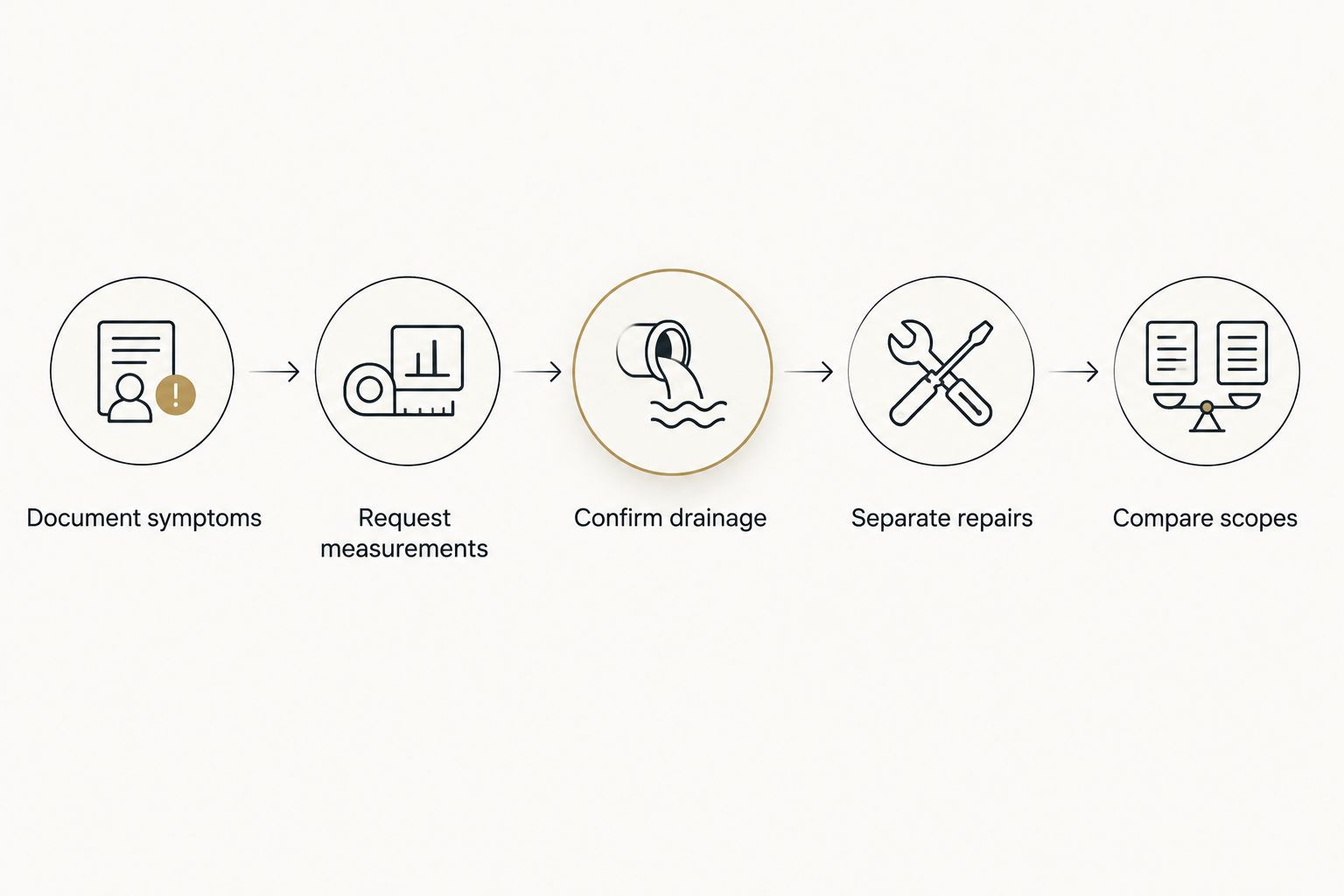
Use this sequence to turn a general inquiry into a written decision. You do not need to diagnose the system yourself; you need to describe the symptoms and ask the contractor to connect the recommendation to them.
- Document symptoms. Photograph visible overflow, leaks, detached sections, and discharge locations from a safe position on the ground. Identify the affected side of the house.
- Request measurements. Ask the estimator to document the runs being replaced and identify sections that will remain. Include garages, porches, and additions in the discussion.
- Confirm drainage. Review outlet locations and follow each proposed downspout route to its discharge point. Ask whether extensions or existing drain connections are included.
- Separate repairs. Have known fascia or trim repairs described separately. Establish a written approval process for damage uncovered after removal.
- Compare scopes. Review matching materials, removal, accessories, exclusions, and payment terms. Resolve differences before selecting the contractor.
The sequence matters because accessories and finishes should not distract from an incomplete drainage plan. Approve where the water goes before approving what the gutters look like.
Keep the same written request when contacting different contractors. The guide to comparing bids from Central Iowa remodeling contractors provides a related framework for reviewing inclusions and exclusions.
Does gutter replacement include fascia repair?
Fascia repair belongs in the contract only when the written scope includes it. Ask whether the existing attachment surface can be assessed before removal and what conditions will require a revised scope.
A gutter fastened to deteriorated material does not address the supporting surface. Conversely, do not approve replacement of sound trim solely because gutter work is underway; ask for the condition and proposed correction to be documented.
For a 2026 contract, request a clear change-approval procedure. It should explain how concealed damage is photographed, how the repair is described, and how you approve additional work before it proceeds.
Should you replace gutters when replacing the roof or siding?
Coordinate gutter decisions with roof or siding work whenever those scopes affect the same edges and attachments. Coordination does not mean every exterior component needs replacement.
Ask which components must be removed, which can remain, and who is responsible for reinstalling or replacing them. Discuss the sequence before signing separate contracts so the handoff does not leave removal, attachment, or drainage responsibilities unclear.
If an addition changes the roof layout, review the affected gutter runs as part of that design. Reusing the old outlet arrangement without checking the new collection area skips an important planning decision.
Are gutter guards part of gutter replacement?
Gutter guards are a separate scope decision, not a substitute for a functioning gutter and downspout system. Ask for the base replacement scope and the accessory scope to be identified independently.
The potential benefit is reducing debris entering the trough. The limitation is that guards do not eliminate inspection or correct unsuitable slope, damaged attachments, or a poor discharge location.
Before selecting guards, ask how they attach, how the gutters remain accessible for maintenance, and whether installation affects adjacent roof components. Keep the discussion tied to the proposed product rather than a general promise of no maintenance.
When gutter work is part of a larger renovation
Phoenix Construction Solutions is best for Central Iowa homeowners planning remodeling, additions, or reconstruction. The licensed and insured contractor is based in Carlisle and serves Des Moines, Norwalk, Pleasant Hill, Ankeny, Urbandale, Waukee, West Des Moines, and surrounding Central Iowa communities.
For an exterior issue that overlaps with reconstruction or an addition, discuss the complete project rather than treating each visible symptom as a separate job. Phoenix Construction Solutions handles remodeling, additions, and reconstruction; confirm whether a standalone gutter project fits the requested scope before proceeding.
Bring photos, a description of the problem, and any related renovation plans to the consultation. Ask how roof-edge conditions, exterior repairs, and drainage decisions should be coordinated within the proposed work.
Book a Consultation
Discuss remodeling, additions, or reconstruction in Des Moines and Central Iowa.
FAQ
How do I budget for gutter replacement in Central Iowa in 2026?
Budget from a measured, written installed estimate that identifies gutters, downspouts, removal, disposal, and repair exclusions. Compare equivalent scopes rather than treating a gutter-only rate as the complete project.
Can I estimate gutter replacement from my home's square footage?
Interior square footage does not establish gutter replacement quantities. The estimator needs the roof-edge layout, measured gutter runs, outlets, and downspout routes.
Is it better to repair gutters or replace them?
Repair suits an isolated defect when the remaining system is serviceable; replacement deserves consideration when deterioration is widespread or drainage needs redesign. Ask the contractor to explain the observed condition behind the recommendation.
Does replacing gutters fix water in a basement?
Gutter replacement alone does not establish that a basement water problem is solved. Roof runoff, downspout discharge, grading, and other water-entry paths need assessment before you select the corrective work.
Do new gutters include new downspouts?
New downspouts are included only when the written scope says so. Confirm locations, routing, extensions, and any connections to existing drainage before approving the estimate.
Should I approve fascia repairs before the old gutters come off?
Approve documented, visible repairs in the initial scope and establish a separate approval process for concealed damage. Require an explanation of the condition and proposed repair before additional work proceeds.
Who can I call about gutter concerns during a larger Central Iowa remodel?
Call Phoenix Construction Solutions at (515) 505-8781 to discuss remodeling, additions, or reconstruction that overlaps with exterior concerns. Confirm whether the requested gutter work fits the project during the consultation.
One last thing
Before approving your 2026 gutter replacement scope, follow the proposed water path from each roof section to the final discharge point. Ask the contractor to explain any route you cannot identify on the proposal.
A replacement plan is incomplete if it describes the new gutters but leaves the downspout discharge unresolved. Make that destination part of the written conversation before installation begins.