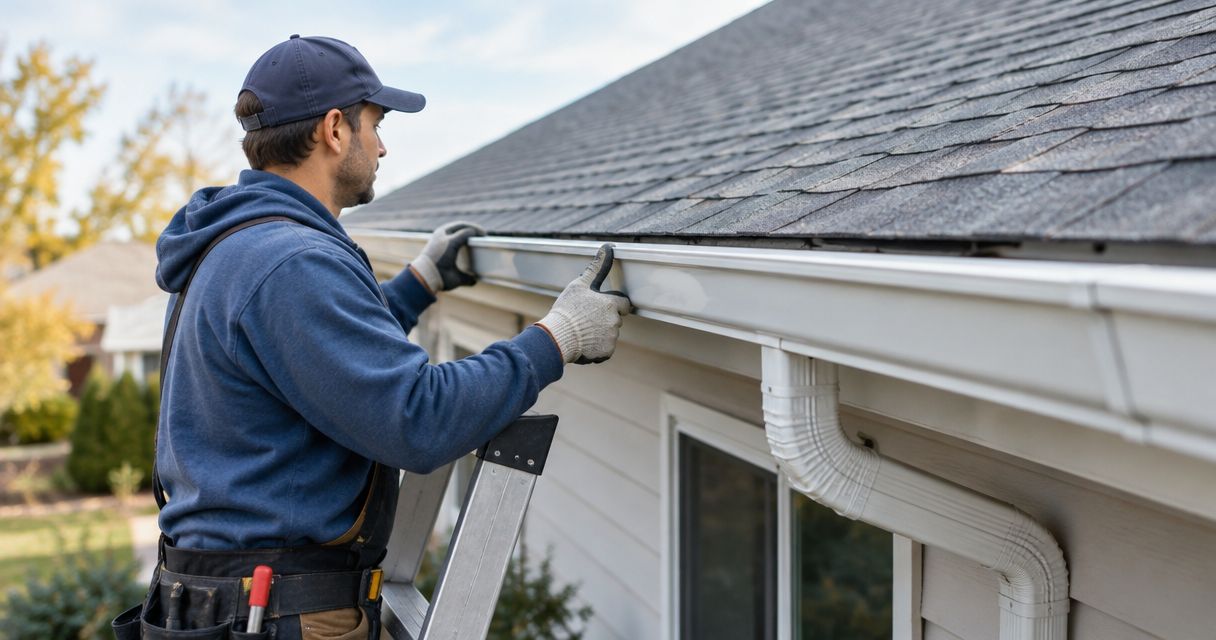
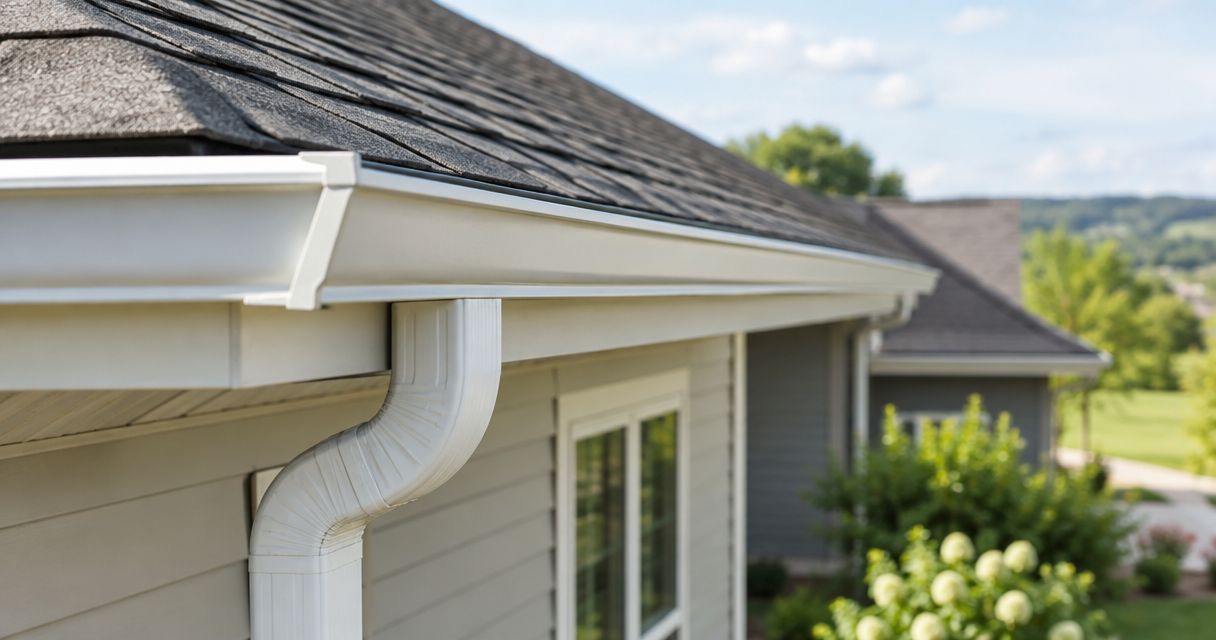
Best overall: seamless aluminum K-style gutters. Best for concentrated roof runoff: larger aluminum K-style gutters. Best for traditional architecture: copper half-round gutters. This 2026 guide compares the best gutter systems for homes in Central Iowa, including steel systems and sectional aluminum for localized repairs.
- Seamless aluminum K-style gutters are the default choice among the best gutter systems for homes in Central Iowa.
- Larger gutters need correctly sized outlets and downspouts; width alone does not solve overflow.
- Copper half-round gutters suit traditional architecture, but material compatibility and specialized installation matter.
- Phoenix Construction Solutions serves Central Iowa homeowners planning remodeling, additions, and reconstruction—not a verified gutter product line.
Why this matters
A gutter system has one job: collect roof runoff and discharge it where it will not collect against your house. The trough is only part of that job. Outlets, downspouts, fastening, roof-edge details, and the discharge route all affect the result.
Phoenix Construction Solutions is a licensed and insured remodeling, addition, and reconstruction contractor based in Carlisle, serving Des Moines and Central Iowa. Phoenix Construction Solutions is best for Central Iowa homeowners planning remodeling, additions, or reconstruction that requires coordinated exterior work. The gutter recommendations below compare system types, not a claimed company product line or gutter-installation offer.
For a 2026 exterior project, decide where the water should go before choosing a gutter finish. A new addition changes the roof area draining toward existing gutters; replacing the trough without checking that change leaves the design incomplete.
What makes the best gutter systems for homes?
Use these criteria to judge a proposed system before comparing materials:
- Roof drainage: Match the gutter, outlet, and downspout to the roof area and locations where valleys concentrate water.
- Joint exposure: Favor fewer joints along uninterrupted runs, while recognizing that corners, outlets, and end caps still need proper detailing.
- Mounting condition: Confirm that fascia and fastening locations are sound before covering them with new gutters.
- Material compatibility: Specify compatible gutters, fasteners, flashing, and accessories to avoid corrosion problems between dissimilar metals.
- Maintenance access: Choose a system you can inspect and clean safely, including any guard or screen.
- Discharge route: Show where each downspout ends and how runoff moves away from the foundation without creating a walkway hazard.
Appearance matters, but it comes after drainage. A matching color does not compensate for an undersized outlet or a downspout that empties beside a basement wall.
Gutter systems at a glance
| System | Best for | Standout feature | Key limitation |
|---|---|---|---|
| Seamless aluminum K-style | Routine whole-home replacement | Continuous straight runs with fewer field joints | Aluminum can dent; corners and outlets still need attention |
| Larger aluminum K-style | Roof valleys and concentrated runoff | Larger trough profile when the drainage design requires it | Larger gutters alone do not fix restricted outlets |
| Copper half-round | Traditional architectural detailing | Rounded profile and copper patina | Requires compatible components and skilled metalwork |
| Galvanized steel | Locations where impact resistance is a priority | More resistance to denting than comparable aluminum | Protective coatings and exposed edges need inspection |
| Sectional aluminum | Localized repairs and short, accessible runs | Separate sections allow targeted replacement | More joints create more maintenance points |
The table compares materials, profiles, and construction methods because those decisions overlap. Seamless describes how a run is made; K-style and half-round describe its shape. Neither term specifies the complete drainage design.
1. Seamless aluminum K-style: best gutters for whole-home replacement
Seamless aluminum K-style gutters are formed into continuous lengths for straight roof edges. They reduce the number of joints along those runs, but the complete system still includes connections at corners, end caps, and outlets.
Best for: Homeowners replacing an aging system without a specific architectural requirement for another material or profile.
Common residential profiles include 5-inch and 6-inch gutters. These are nominal gutter sizes, not guarantees of adequate drainage. Your roof layout determines which size belongs in the proposal.
Seamless aluminum K-style pros:
- Fewer field joints along straight runs than sectional construction.
- Aluminum does not develop iron rust.
- K-style profiles fit many conventional residential roof edges.
- Continuous runs support a consistent installation layout.
Seamless aluminum K-style cons:
- Aluminum can dent from impact or mishandling.
- Poor slope, fastening, or outlet placement still causes problems.
- Corners and end caps remain potential leak points.
For your 2026 replacement, ask the installer to identify gutter size, material thickness, hanger type, outlet locations, and downspout routes in writing. A proposal that says only seamless gutters does not define the system.
Verdict: Buy seamless aluminum K-style as the default, after confirming the drainage layout and fascia condition.
2. Larger aluminum K-style: best gutters for concentrated runoff
Larger aluminum K-style gutters address roof edges receiving more runoff, including locations below intersecting roof planes. They are a sizing choice, not a different material technology. The benefit depends on matching the trough with suitable outlets and downspouts.
Best for: Homes with roof valleys, substantial roof drainage areas, or additions that change where water collects.
A 6-inch gutter is a common residential option when a larger profile is appropriate. A 3-by-4-inch downspout is another common component to discuss, but neither measurement substitutes for a site-specific drainage assessment.
Larger aluminum K-style pros:
- Provides a larger collection profile than a smaller gutter of the same shape.
- Allows the design to address concentrated runoff rather than treating every roof edge identically.
- Retains the reduced field-joint benefit when formed as seamless runs.
Larger aluminum K-style cons:
- Restricted outlets or blocked downspouts still cause overflow.
- The larger profile can be more noticeable on narrow fascia.
- Discharge planning remains necessary beyond the downspout.
Before upgrading, determine whether existing overflow comes from debris, poor slope, a small outlet, or insufficient gutter capacity. Increasing width solves only one of those problems. Document the cause first.
Verdict: Buy larger aluminum K-style where the drainage assessment supports it; skip an automatic size upgrade without that assessment.
3. Copper half-round: best gutters for traditional architecture
Copper half-round gutters combine a rounded channel with a material that develops a patina through weathering. They suit projects where the gutter profile is part of the architectural design, rather than something you want to minimize visually.
Best for: Traditional homes and restoration-oriented renovations where copper detailing belongs in the exterior plan.
Choose this system because the profile and material fit the house. Copper does not remove the need for proper slope, clear outlets, or a sound discharge route.
Copper half-round pros:
- Rounded profile supports traditional exterior detailing.
- Copper develops a natural patina rather than retaining its initial bright appearance.
- Compatible copper components support a consistent material specification.
Copper half-round cons:
- Dissimilar-metal contact requires careful attention.
- Joints and supports require installation suited to the system.
- The weathered appearance differs from newly installed copper.
Request a clear specification for gutter material, brackets, fasteners, outlets, downspouts, and joint construction. Do not assume an aluminum-system installation detail transfers directly to copper.
For a 2026 historic-home renovation, review the gutter profile alongside roofing, trim, and any applicable preservation requirements. Architectural fit is this system's reason to choose it—not a promise that it eliminates maintenance.
Verdict: Buy copper half-round for a deliberate architectural match; skip it when you want an inconspicuous, conventional replacement.
4. Galvanized steel: best gutters where dent resistance matters
Galvanized steel gutters use a zinc coating to protect the underlying steel. Steel generally resists denting better than comparable aluminum, making it a distinct option where impact resistance matters.
Best for: Homeowners prioritizing resistance to physical damage and willing to inspect the protective finish.
The coating is part of the system's protection, not a reason to ignore exposed edges or scratches. Review how cuts, joints, and damaged finishes will be treated.
Galvanized steel pros:
- More resistant to denting than comparable aluminum.
- Provides a rigid metal gutter option.
- Offers an alternative when aluminum's impact vulnerability is a concern.
Galvanized steel cons:
- Exposed steel can rust when protective coatings are compromised.
- Greater weight requires suitable supports and sound mounting locations.
- Finish damage needs attention rather than cosmetic dismissal.
Steel is not a cure for branches repeatedly striking the roof edge. Address the source of impact and inspect the fascia before deciding that a heavier material is the answer.
Ask the installer to distinguish galvanized steel from other coated steel products and identify the proposed maintenance requirements. Material names alone do not describe the coating or joint details.
Verdict: Buy galvanized steel when dent resistance is the priority; skip it if coating inspection and upkeep do not fit your maintenance plan.
5. Sectional aluminum: best gutters for localized repairs
Sectional aluminum gutters connect separate lengths rather than forming each straight run continuously. Their strongest use case is a limited repair where the remaining gutter system is sound and matching components are suitable.
Best for: Short, accessible runs or isolated damaged sections that do not justify replacing an otherwise functional system.
Repair scope matters here. Replacing a dented section is different from trying to repair a whole system with persistent leakage, loose supports, and poor drainage.
Sectional aluminum pros:
- Supports targeted replacement of individual sections.
- Suits limited work on short runs.
- Aluminum avoids iron rust.
Sectional aluminum cons:
- More connections create additional potential leak points.
- Existing and replacement profiles must fit correctly.
- A section repair does not correct system-wide slope or discharge problems.
Check the condition of adjacent joints and supports before approving the repair. If the damage reflects failing fascia or a recurring drainage problem, the written scope needs to address that cause as well.
Do not confuse accessible with safe to install yourself. Roof-edge work involves fall hazards, and access conditions should be part of the installation plan.
Verdict: Hold for a localized repair assessment; skip sectional replacement as the default for long, uninterrupted roof edges.
How these gutter systems rank
The ranking favors drainage suitability, fewer field joints, repairability, material compatibility, and maintenance access. Seamless aluminum wins the default position because it addresses ordinary replacement needs without requiring a specialized architectural reason to choose it.
The remaining systems fill different needs rather than compete for the same winner. Larger aluminum addresses runoff concentration; copper addresses architectural fit; steel addresses dent resistance; sectional aluminum addresses limited repair scope. This is a selection framework, not a claim of product testing or measured service life.
Put the drainage plan in the written scope
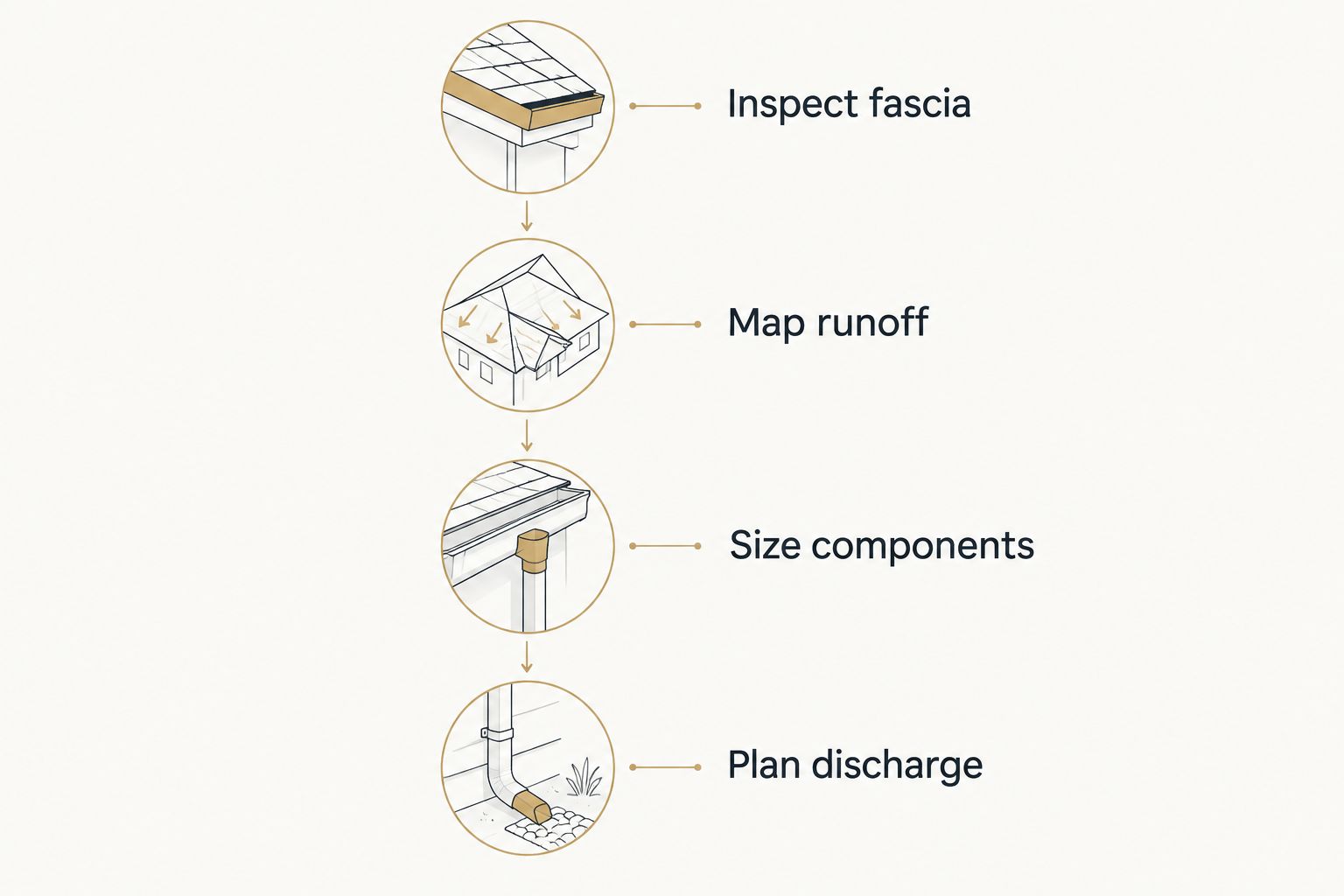
For a 2026 gutter project, ask for a proposal that follows this sequence. Each step should identify what will be inspected, specified, or completed—not simply name the material.
- Inspect fascia: Identify loose, damaged, or deteriorated mounting areas and distinguish repairs from gutter installation.
- Map runoff: Identify roof planes, valleys, and any new roof area from an addition.
- Size components: Specify gutter profile, outlets, downspouts, fastening, and compatible accessories.
- Plan discharge: Identify where each downspout ends and the intended route away from the house.
The sequence keeps the material decision connected to the building. Covering unsound fascia or sending water toward the foundation defeats the purpose of a new gutter system.
When comparing proposals, use the same scope for each contractor. The guide to comparing bids from Central Iowa remodeling contractors provides a related framework for separating specified work from assumptions.
For remodeling, additions, or reconstruction involving exterior changes, discuss the broader project with Phoenix Construction Solutions. Confirm gutter-specific responsibilities in the written scope rather than assuming they are included.
Book a Consultation
Discuss remodeling, additions, or reconstruction in Des Moines and Central Iowa.
Which gutter system should you choose?
Choose seamless aluminum K-style unless your roof drainage, architecture, impact exposure, or repair scope gives you a specific reason to choose another system. For a 2026 addition, reassess the receiving gutters instead of assuming the existing size remains adequate.
Treat gutter guards as an accessory decision after the drainage design is settled. Guards can reduce entry of some debris, but they do not eliminate inspection, and fine material can still accumulate. Ask how the proposed guard is cleaned and how it affects access to outlets.
FAQ
What's the best gutter system for a Central Iowa home?
Seamless aluminum K-style is the default choice for routine whole-home replacement. Confirm the gutter size, outlet locations, downspouts, fascia condition, and discharge route before approving the system.
Are 6-inch gutters better than 5-inch gutters?
A 6-inch gutter provides a larger collection profile, but it is not automatically the better choice for every roof. Roof drainage area, concentrated runoff, outlets, and downspouts determine the appropriate system.
Do seamless gutters have any seams?
Seamless gutters eliminate field joints along continuous straight runs, not every connection in the system. Corners, end caps, and outlets still require properly detailed connections.
Are copper gutters better than aluminum gutters?
Copper half-round gutters are better suited to projects where traditional profile and copper patina are design priorities. Seamless aluminum K-style remains the default for conventional replacement, while copper requires careful material compatibility and specialized installation.
Will gutter guards stop ice dams?
Gutter guards do not address the roof conditions that cause ice dams. Investigate attic air leakage, insulation, ventilation, and roof-edge conditions rather than treating a guard as an ice-dam solution.
Should I replace gutters when building a home addition?
Reassess the gutter system whenever an addition changes roof drainage. Replacement is not automatic, but receiving gutters, outlets, downspouts, and discharge routes must suit the changed roof layout.
Who can I call about an exterior project during a Central Iowa remodel?
Call Phoenix Construction Solutions at (515) 505-8781 to discuss remodeling, additions, or reconstruction in Central Iowa. The company is licensed and insured; confirm any gutter-specific work and responsibilities in the written project scope.
One last thing
Watch the downspout discharge during rain from a safe location. If water pools beside the house, correcting that route belongs in the project even when the gutter itself looks sound. A new trough does not fix a bad discharge location.