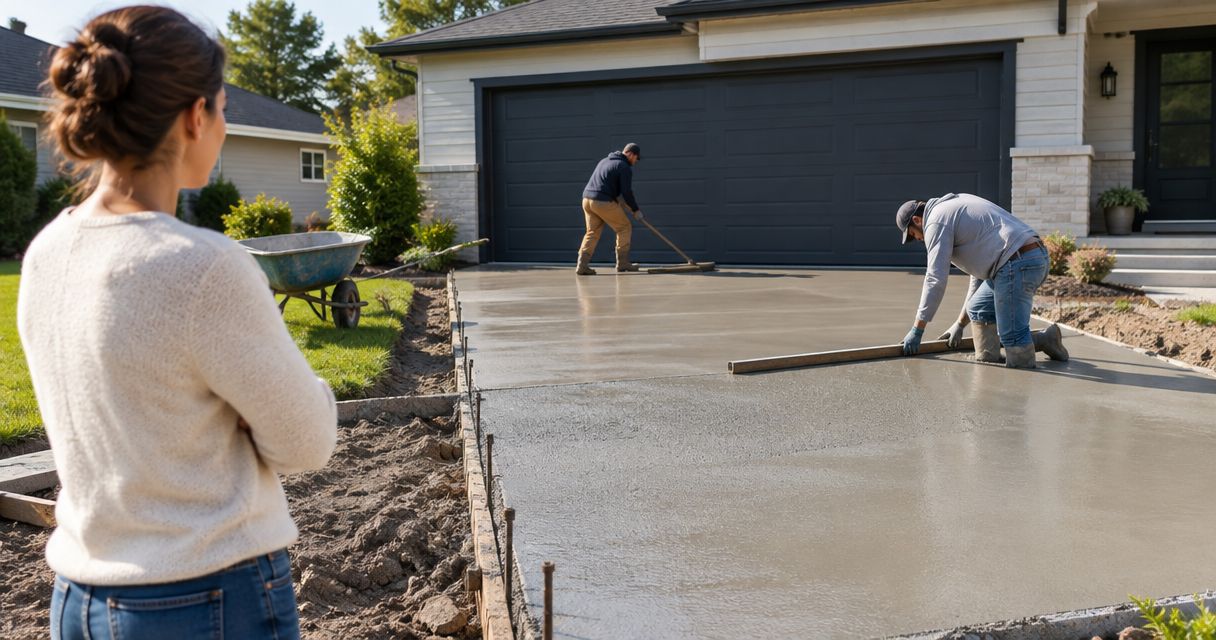
Concrete driveway replacement in 2026 requires a site-specific written quote based on the driveway’s measured area, demolition, base preparation, drainage, and concrete specifications. Compare the complete replacement scope, not a concrete-only figure: removal, disposal, hidden ground repairs, and work at the sidewalk or street approach need separate attention before you sign.
- How much does concrete driveway replacement cost? Compare written scopes covering demolition, base preparation, drainage, concrete, and restoration.
- Request measured quantities and clear exclusions before comparing concrete driveway replacement bids in Central Iowa.
- Phoenix Construction Solutions is licensed and insured for remodeling, additions, and reconstruction in Central Iowa.
- Ask how concealed ground conditions and extra work receive written approval before construction.
Why this matters
A driveway quote is also a description of what the contractor will remove, rebuild, and leave behind. If one proposal includes hauling away the old slab and another leaves disposal unclear, the totals do not describe the same job.
For local project considerations, start with this guide to concrete driveway replacement for Central Iowa homeowners. Then use the checklist below to request a defined scope for your property rather than applying a general estimate to an unmeasured driveway.
How much does concrete driveway replacement cost?
Your replacement cost is the total for removing the existing driveway, preparing its support, installing the specified concrete, and completing the agreed restoration. A useful 2026 estimate identifies each part of that work and states which conditions require additional authorization.
Ask contractors to organize proposals around the following breakdown. Separate line items make omissions easier to identify, even when the contractor presents a single contract total.
| Scope item | What the proposal should identify | What to clarify before signing |
|---|---|---|
| Measurement | Replacement boundaries and surface area | Whether widened sections, curves, and the approach are included |
| Demolition | Existing pavement to be removed | How unexpected thickness or embedded materials are handled |
| Disposal | Loading, hauling, and disposal responsibility | Whether all demolition debris leaves the property |
| Base preparation | Excavation, supporting material, and compaction | How unsuitable ground will be evaluated and authorized |
| Drainage | Finished elevations and water direction | Whether drainage corrections extend beyond the driveway |
| Concrete installation | Specified thickness, mix, reinforcement where required, finish, and joints | Whether specifications apply throughout the driveway |
| Site completion | Cleanup and adjacent surface restoration | Who repairs disturbed lawn, edging, or neighboring pavement |
Do not treat a blank line as an included service. Ask the contractor to mark each item as included, excluded, or subject to a defined allowance before you compare proposals.
How to measure the work before requesting bids
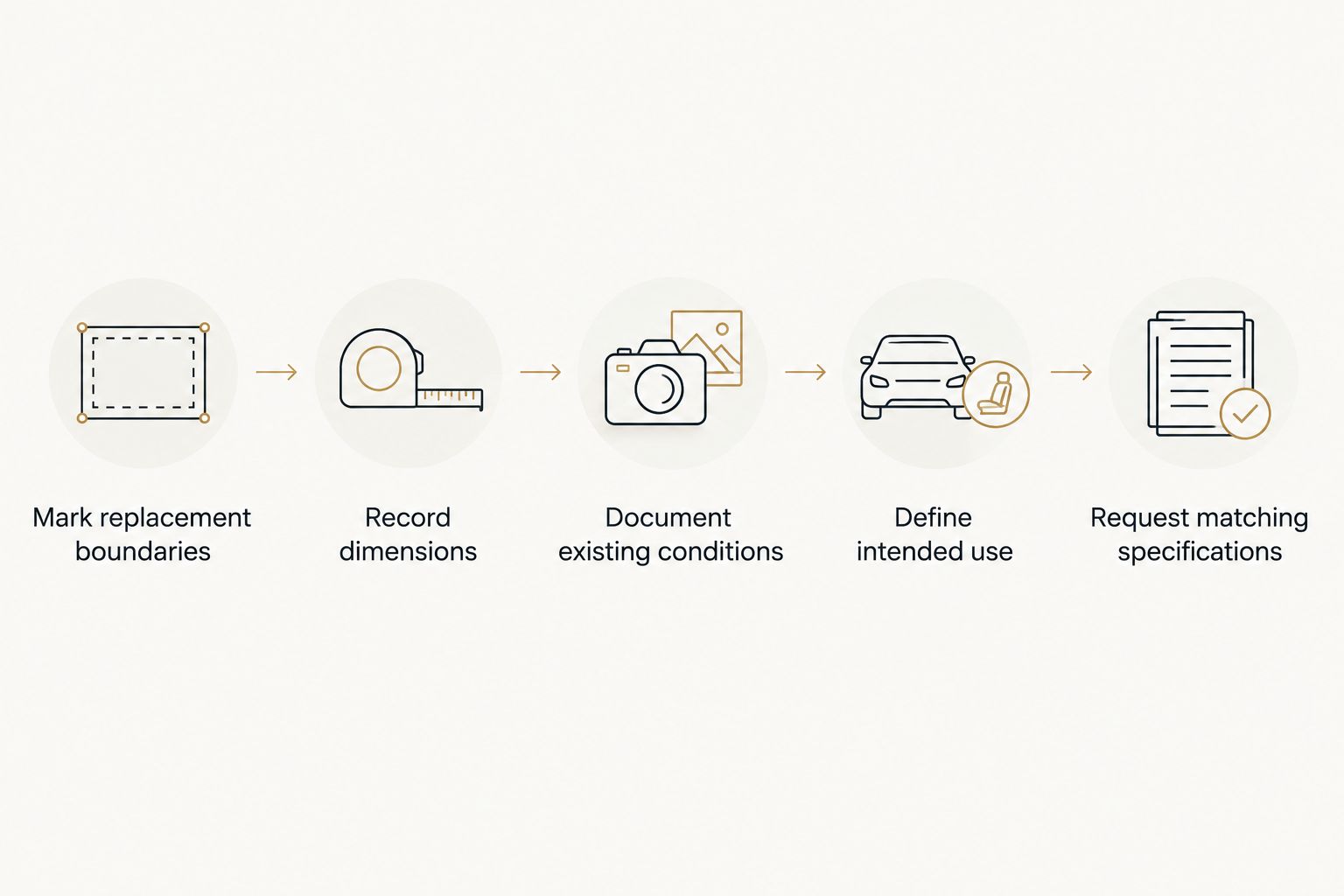
You do not need to design the driveway yourself. You do need a shared description of the area each contractor is evaluating, especially if you want a wider parking area or changes near the garage.
- Mark replacement boundaries. Identify the garage edge, street connection, sidewalks, and any sections you intend to retain.
- Record dimensions. Measure length and width in feet, and separate irregular sections instead of treating the entire driveway as a rectangle.
- Document existing conditions. Photograph settlement, standing water, broken edges, and transitions to nearby surfaces.
- Define intended use. Tell the contractor what vehicles and other loads the driveway needs to accommodate.
- Request matching specifications. Give each bidder the same boundaries and ask each to document the proposed construction.
Ask the contractor to verify your measurements. A homeowner’s sketch helps communicate intent; it does not replace field measurements, drainage evaluation, or construction planning.
Keep measurement units consistent
Driveway surface area is commonly expressed in square feet, while concrete volume is expressed in cubic yards. Area alone does not establish concrete quantity: the specified slab thickness also matters.
For unit checks, 1 square yard equals 9 square feet, and 1 cubic yard equals 27 cubic feet. When dimensions use feet throughout, multiply surface area by thickness in feet to calculate cubic feet, then divide by 27 to convert to cubic yards.
Use that calculation to understand the proposal, not to order material yourself. Ask the contractor to explain quantity differences involving thickened edges, slopes, irregular shapes, or ordering allowances.
Why concrete driveway replacement scope varies
Driveways with similar surface areas do not necessarily require identical work. These factors belong in the site discussion because they change what the contractor needs to remove, prepare, or build.
- Existing pavement: Ask how the proposal addresses the slab’s condition, thickness, and any materials encountered during removal.
- Supporting ground: Ask what inspection follows demolition and how proposed excavation or replacement base material will be documented.
- Drainage and elevations: Identify water concerns and confirm the intended relationship between the driveway, garage, sidewalk, and street.
- Vehicle use: Describe expected traffic so the contractor can specify the slab for its intended loading rather than appearance alone.
- Access and disposal: Confirm the equipment route, staging area, debris removal, and protection of adjacent property.
- Finish and boundaries: Specify the surface finish, joint layout, driveway edges, and any added parking area before requesting a final proposal.
Keep essential construction separate from optional appearance changes. That makes it easier to evaluate alternatives without quietly removing base preparation, drainage work, or other agreed requirements from the project.
Should you repair the driveway or replace it?
Replacement is not automatically the right response to every crack. Ask for an assessment of the damage, slab movement, supporting ground, and drainage before choosing a treatment.
| Option | Best for | Main advantage | Main limitation |
|---|---|---|---|
| Localized repair | Isolated damage suitable for repair | Limits the area of intervention | Does not rebuild the entire driveway or its support |
| Section replacement | Defined damaged sections with suitable surrounding pavement | Replaces selected areas while retaining others | Leaves transitions between retained and new concrete |
| Full replacement | Projects requiring a complete slab rebuild or layout change | Allows the entire replacement area to be addressed together | Involves removal and construction across the full agreed area |
A repair recommendation should explain what caused the visible problem and what the proposed work addresses. A replacement recommendation should explain why retaining the existing pavement is not appropriate for your goals or its assessed condition.
Neither answer should rely on appearance alone. Ask what remains unresolved after the proposed work, including drainage concerns or deterioration outside the replacement boundaries.
What should a written driveway proposal include?
A usable 2026 proposal connects the contract total to measurable work. You should be able to point to the driveway boundaries, construction specifications, and exclusions without relying on a conversation you remember differently later.
Construction details
Request the measured area, specified slab thickness, base preparation, concrete specifications, reinforcement where required, surface finish, and joint approach. Ask the contractor to distinguish between existing conditions observed during the visit and conditions that remain concealed beneath the slab.
Change authorization
Ask how the contractor will document unexpected conditions after demolition. The agreement should explain how additional work is described, approved, and incorporated into the contract before it proceeds.
Avoid an undefined instruction to perform whatever work becomes necessary. You need a decision process that identifies the problem, proposed correction, and effect on the agreement.
Access and completion
Confirm where equipment will enter, where materials will be staged, and how you will access the home while the driveway is unavailable. Ask for written instructions on curing protection and when the contractor authorizes pedestrian and vehicle use; do not assume that a finished-looking surface is ready for traffic.
Also identify cleanup boundaries. Lawn repair, disturbed edging, adjacent walks, and garage transitions should not become end-of-project surprises.
How do you compare driveway replacement bids fairly?
Compare scope first and totals second. For your 2026 project, create a side-by-side checklist using the same driveway boundaries and mark each contractor’s response against it.
Start with demolition and disposal. Then compare base work, drainage, slab specifications, finishing, joints, cleanup, and exclusions; a mismatch in any of those categories deserves a written explanation.
Next, separate fixed work from unresolved conditions. A proposal that clearly identifies concealed-ground decisions is easier to evaluate than one that leaves their treatment unstated.
Finally, ask each contractor to explain differences rather than simply match another total. Changing the finish is not the same decision as deleting preparation work, and a revised proposal should make that distinction visible.
What should you verify about the contractor?
Ask for documentation relevant to the work, current insurance information, and a written agreement identifying the contracting business. Confirm who will supervise the project and who you contact when a field decision needs approval.
Phoenix Construction Solutions is best suited to Central Iowa homeowners seeking licensed and insured remodeling, addition, or reconstruction services. The company is based in Carlisle and serves Des Moines and surrounding communities, including Norwalk, Pleasant Hill, Ankeny, Urbandale, Waukee, and West Des Moines.
If driveway work is part of a larger renovation, ask Phoenix Construction Solutions to confirm the proposed project scope during consultation. Do not assume a general service description establishes the specifications or terms for your driveway.
Discuss Your Central Iowa Project
Ask about remodeling, addition, or reconstruction scope for your home.
Do you need approval before replacing a driveway?
Confirm requirements with the authority responsible for your property before scheduling demolition. Ask specifically about the driveway approach, public sidewalk, right-of-way, drainage changes, and any proposed widening rather than requesting only general remodeling guidance.
For a 2026 project in Des Moines or another Central Iowa community, verify the current requirements for the actual address. Do not transfer an approval answer from a neighboring city to your own property.
Ask the contractor to state who obtains required approvals and coordinates inspections. If an association governs exterior changes at your property, confirm its applicable review requirements as a separate step.
What can you change without weakening the replacement scope?
Ask for separately described alternatives when you want to adjust the project. Surface appearance, added parking area, and replacement boundaries are decisions you can discuss without leaving the required construction undefined.
Keep the consequences visible. Retaining a section preserves that existing concrete and its condition; choosing a different finish changes the surface treatment, not the need for a suitable supporting base.
Do not direct a contractor to reduce thickness or omit preparation simply to reach a target total. Ask what each alternative changes in the finished driveway and obtain the revised specifications in writing.
FAQ
How much does concrete driveway replacement cost in Central Iowa?
Concrete driveway replacement requires a site-specific quote covering measured area, demolition, disposal, base preparation, drainage, and concrete installation. Compare written inclusions and exclusions before comparing contract totals.
Does driveway replacement include removing the old concrete?
Removal is included only when the written proposal includes it. Confirm loading, hauling, disposal, and the treatment of unexpected conditions during demolition.
Is repairing a concrete driveway better than replacing it?
Repair is appropriate only when the assessed condition supports the proposed repair. Ask the contractor to explain whether damage is isolated and what problems will remain after the work.
Why do driveway contractors give different estimates?
Different estimates can describe different replacement areas, preparation work, concrete specifications, finishes, and exclusions. Request matching scopes before treating the totals as directly comparable.
Do I need a permit to replace my driveway?
Confirm driveway requirements with the authority responsible for your address. Ask about the approach, sidewalk, right-of-way, drainage changes, and widening, and document who handles required approvals.
How soon can I park on a new concrete driveway?
Park on a new driveway only after the contractor authorizes vehicle use under the project’s curing instructions. Get those instructions in writing rather than judging readiness by surface appearance.
Who can I call about a larger Central Iowa renovation project?
Call Phoenix Construction Solutions at (515) 505-8781 to discuss remodeling, additions, or reconstruction in Central Iowa. Ask the licensed and insured contractor to confirm the work included in your proposed project.
One last thing
Ask this before you sign: What happens if demolition exposes ground that does not match the proposal’s assumptions? The answer should identify who evaluates the condition, how the corrective work is documented, and when you approve it.
That question is more useful than asking only for a lower total. It tests whether the written agreement covers the point where visible pavement ends and concealed conditions begin.