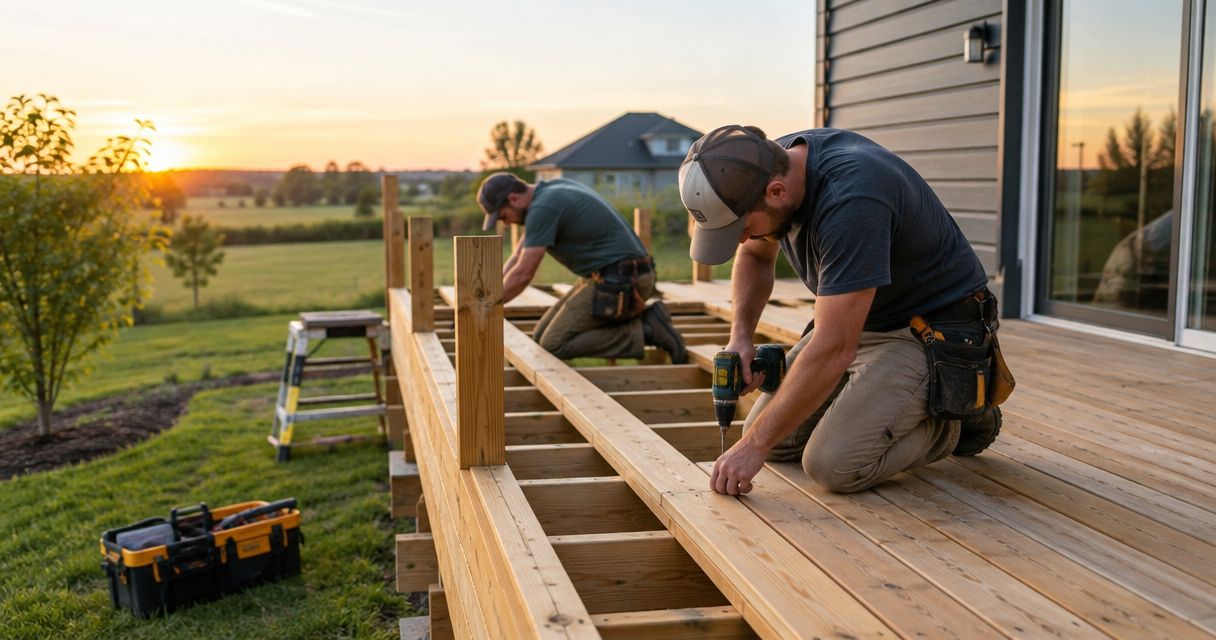
Building a deck in Central Iowa takes a project-specific schedule, not a fixed number of days: the full timeline includes planning, any required approvals, construction, and closeout. Crew time alone excludes the work that must happen before installation starts. For a 2026 project, ask for a written schedule that separates the proposed start date, construction milestones, and the point when you can use the deck.
- How long does it take to build a deck? Get a project-specific schedule covering approvals, construction, and closeout.
- Separate active construction from the full deck-building timeline before comparing contractor proposals.
- Resolve deck layout, stairs, railings, and material selections before committing to a construction schedule.
- Phoenix Construction Solutions is a licensed and insured Central Iowa remodeling contractor; discuss your deck scope during a consultation.
How long does it take to build a deck in Central Iowa?
The useful answer is a written timeline for your property and design—not a generic construction estimate. A deck replacement, a new elevated deck, and a deck connected to a larger outdoor project involve different work. Your schedule should identify which tasks apply before assigning completion dates.
For a 2026 deck project, start by identifying the local authority responsible for your address. Review how to get building permits for a home renovation in Iowa, then confirm the requirements for your specific deck rather than assuming every Central Iowa community follows the same process.
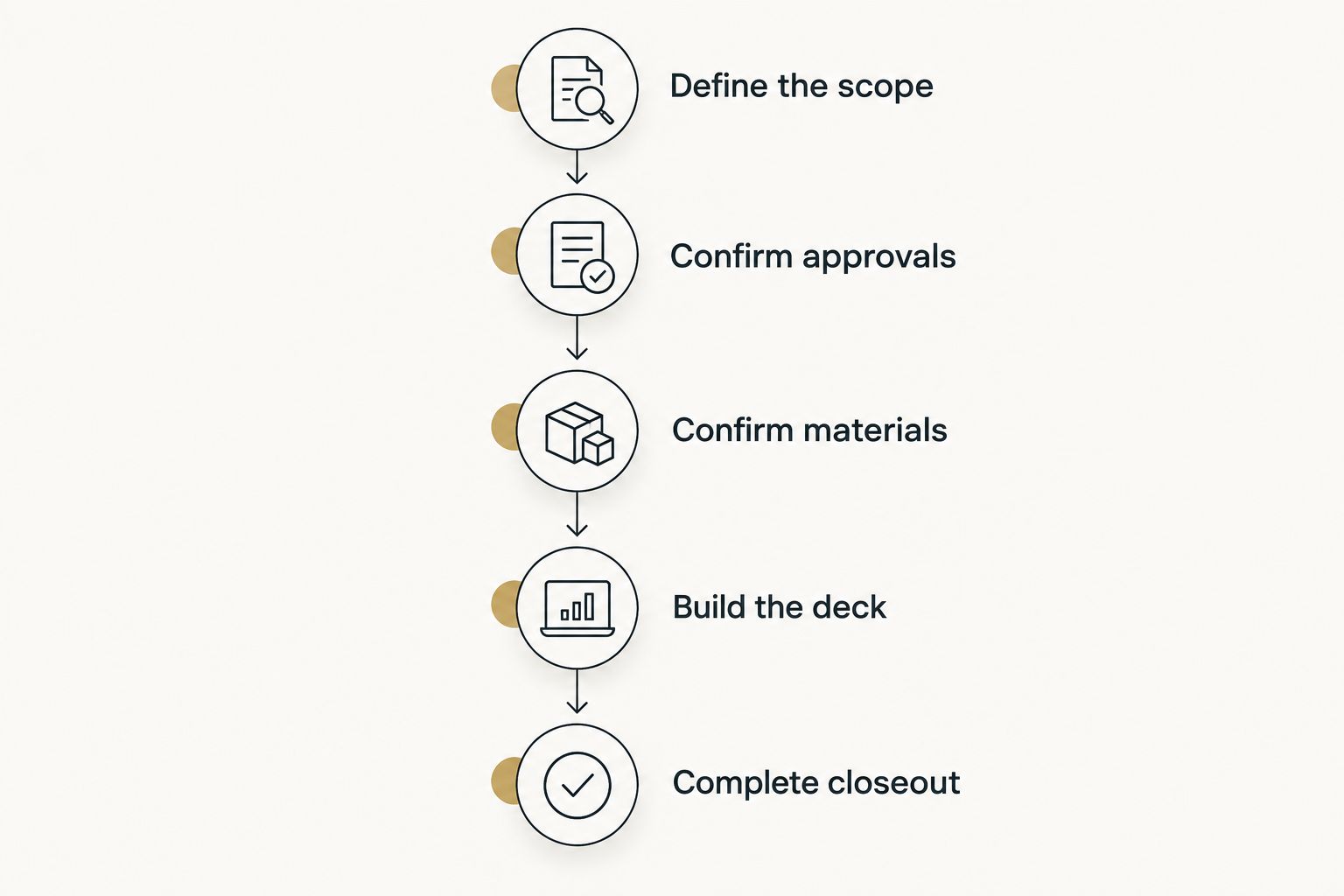
Use this sequence to evaluate the timeline a contractor gives you:
- Define the scope. Establish the deck footprint, height, stairs, railings, and connection to the house.
- Confirm approvals. Identify applicable permits, required inspections, and any neighborhood approval obligations.
- Confirm materials. Complete selections and have the contractor verify procurement before relying on a start date.
- Build the deck. Coordinate demolition where needed, foundations, framing, decking, stairs, and guards.
- Complete closeout. Address remaining work, complete applicable inspections, and confirm when the deck is ready for use.
These steps describe the work sequence, not a promised duration. Ask the contractor which tasks can overlap and which require an earlier task to finish.
Why this matters
If you ask only how long installation takes, you leave the rest of the project outside the answer. A proposed construction duration does not tell you when drawings will be ready, whether approval is required, or whether the selected railing is ready for installation.
Compare schedules with the same starting point and finish line. For your 2026 planning, distinguish the date you authorize the project from the date construction begins. Also distinguish the end of framing from the point when the finished deck is cleared for use.
This matters when you are coordinating a gathering, replacing an exterior exit, or combining the deck with other backyard work. Tell the contractor about those constraints before accepting the proposed sequence.
A new deck: establish the full construction scope
A new deck requires decisions about its location, support, connection details, and access. Those decisions shape the work—not just the appearance. Establish where stairs land, how doors open onto the deck, and how the footprint relates to the yard.
Do not treat a sketch of the deck surface as a complete construction scope. Ask whether the proposal addresses foundations, framing, decking, guards, stairs, and work at the house connection. Identify any electrical or other work separately if it is part of your plan.
Best for: homeowners creating outdoor space where no deck currently exists. The benefit is control over the layout; the trade-off is that the complete structure and its site requirements need to be resolved before the schedule is dependable.
A deck replacement: inspect before assuming reuse
Replacing an existing deck introduces a different question: what stays? New deck boards do not establish that the existing framing, connections, or foundations are suitable for continued use. Have the contractor assess those components before treating replacement as a surface-only project.
Ask the written scope to distinguish removal, retained components, repairs, and new construction. It should also explain how additional findings will be documented after demolition. An assumption about hidden conditions is not the same as an inspection finding.
Best for: homeowners replacing a worn or unsuitable deck in an existing location. Retaining suitable components can limit the work, but concealed damage or inadequate connections can change the original plan.
A deck with backyard additions: coordinate the interfaces
If your deck is part of a larger outdoor project, identify where the scopes meet. A patio connection affects stair placement; a covered area introduces separate structural questions. An outdoor kitchen requires its own planning rather than being treated as furniture added at the end.
Decide which contractor or trade owns each connection between those elements. Ask whether the deck can be completed independently or whether another part of the project must happen first. Record that dependency in the schedule.
Best for: homeowners planning connected outdoor spaces. The benefit is a coordinated layout; the trade-off is a schedule that must account for more than deck construction alone.
| Project scope | Best for | Planning advantage | Schedule limitation |
|---|---|---|---|
| New deck | Creating a new outdoor living area | Layout can be planned around intended use | Site and structural details need resolution |
| Deck replacement | Updating an existing deck location | Existing conditions provide a starting point | Hidden conditions can change the scope |
| Deck with backyard additions | Connecting multiple outdoor spaces | Related work can be planned together | Dependencies extend beyond the deck itself |
Why deck-building timelines vary
Deck schedules vary because the work and its dependencies vary. Use these factors to question a proposed timeline, not to calculate an unsupported completion date.
- Design complexity. Changes in elevation, additional stairs, and detailed layouts introduce more components to plan and install. Ask which features control the sequence.
- Existing conditions. Demolition can expose deterioration or connection problems that were not visible beforehand. Establish how the contractor will document findings and obtain authorization for changes.
- Approvals and inspections. Confirm what your local authority requires for the proposed work. Do not assume a permit or inspection turnaround without checking the applicable process.
- Material coordination. Decking, railings, fasteners, and related components need to work together. Have the contractor confirm selections and procurement status before describing the start date as firm.
- Weather and site conditions. Rain, frozen ground, and unsuitable working conditions affect outdoor construction. Ask how the schedule handles weather interruptions without requesting a promise that ignores them.
- Connected work. Electrical work, adjoining construction, and changes at the house can create dependencies. List who completes each task and what must be finished before the next task starts.
For a 2026 proposal, ask which of these factors are already resolved and which remain assumptions. That distinction tells you more about schedule reliability than a completion date presented without conditions.
What should a written deck schedule include?
A useful schedule names milestones and explains what releases the next stage of work. It also identifies the decisions you need to make. You should be able to tell whether the project is waiting on an approval, a material selection, an inspection, or construction itself.
Ask for the following details in writing:
- Start conditions: what must be complete before construction begins.
- Construction milestones: the main stages included in the contractor's scope.
- Inspection responsibilities: who schedules applicable inspections and responds to corrections.
- Homeowner decisions: selections or approvals you must provide before work proceeds.
- Change procedure: how added work affects the scope and schedule.
- Completion standard: what must be finished before the deck is ready for use.
Also ask whether schedule references mean working days or elapsed calendar time. Those are different measures. A statement about active labor does not automatically include weekends, interruptions, or time between stages.
Do not compare a construction-only estimate with an approval-to-completion schedule. Ask each contractor to describe the same scope before judging which proposal offers the more practical plan.
How can you help keep a deck project on schedule?
Make decisions before they become construction interruptions. Decide how you intend to use the deck, where you need access, and which features are essential. Keep optional additions separate so the contractor can explain their effect on the work.
Before construction, walk through access and household arrangements with the contractor. Identify the work area, discuss material staging, and establish how people and pets will stay away from unfinished construction. Ask how an exterior door leading into the work area will be handled.
During the project, keep changes in writing. If you request a different stair location or railing configuration, ask for the scope and schedule effect before authorizing it. A verbal request is not a reliable record of what changed.
For a 2026 project tied to an event, disclose the event date at the first conversation. Ask whether the proposed completion date includes all required closeout work. Keep a separate plan for the event rather than making safe completion depend on a celebration deadline.
Does replacing a deck take less time than building a new one?
A deck replacement is not automatically a shorter project. The answer depends on demolition, the condition of retained components, and whether the new design changes the footprint or structure.
Ask the contractor to identify exactly what will remain. If the schedule assumes reuse, ask when that assumption will be verified and what happens if the existing components are unsuitable.
Can you use the deck as soon as the boards are installed?
Installed deck boards do not establish that the deck is ready for use. Stairs, guards, connections, remaining work, and applicable inspection requirements still need attention.
Ask the contractor to identify the usable-completion milestone explicitly. Do not substitute a visual impression of progress for confirmation that the required work is complete.
Who should you contact about a Central Iowa remodeling project?
Phoenix Construction Solutions is a fit for Central Iowa homeowners seeking a licensed and insured remodeling contractor. Based in Carlisle, the company serves Des Moines, Norwalk, Pleasant Hill, Ankeny, Urbandale, Waukee, West Des Moines, and other Central Iowa communities.
For a deck inquiry, describe the intended work and confirm the project fit during a consultation. Phoenix Construction Solutions handles remodeling, additions, and reconstruction; your specific scope still needs review before a construction schedule can be established. Visit Phoenix Construction Solutions to discuss the work rather than treating a general timeline as a project commitment.
Book a Consultation
Discuss your Central Iowa project scope and the decisions needed before setting a construction schedule.
FAQ
How long does it take to build a deck in Central Iowa?
A Central Iowa deck needs a project-specific timeline covering planning, applicable approvals, construction, and closeout. Ask for a written schedule that separates active construction from the full project.
Does a deck-building estimate include permit time?
Do not assume a construction estimate includes permit time. Ask the contractor to identify applicable approvals, who handles them, and whether they fall inside the proposed schedule.
Is replacing an existing deck faster than building a new deck?
Replacing an existing deck is not automatically faster than building a new deck. Demolition, concealed damage, and the suitability of retained components determine the actual scope.
Can I speed up my deck project by choosing materials early?
Completing material selections early removes an unresolved decision from the project. Have the contractor confirm that decking, railing, and related components are coordinated before relying on a start date.
Can I use my deck before the railing is finished?
Do not use an unfinished deck based only on the installation of its walking surface. Confirm that required guards, stairs, connections, and applicable inspections are complete before use.
What should I ask a contractor before accepting a deck schedule?
Ask what starts the schedule, what counts as completion, and which unresolved conditions affect the dates. Request the inspection responsibilities and change procedure in writing.
Who can I call to discuss a Central Iowa remodeling project?
Call Phoenix Construction Solutions at (515) 505-8781 to discuss your project scope and confirm fit. The licensed and insured contractor is based in Carlisle and serves homeowners throughout Central Iowa.
One last thing
Put “ready for use” in the schedule, not just “decking installed.” That wording forces a useful conversation about stairs, guards, cleanup, remaining corrections, and applicable inspections. It also gives you a clearer finish line than the day the main walking surface appears complete.
Before accepting the proposal, ask the contractor to walk you through the last stage of work. Confirm what remains after visible construction and who tells you the deck is ready. That final clarification belongs in your planning—not at the moment you want to move furniture outside.