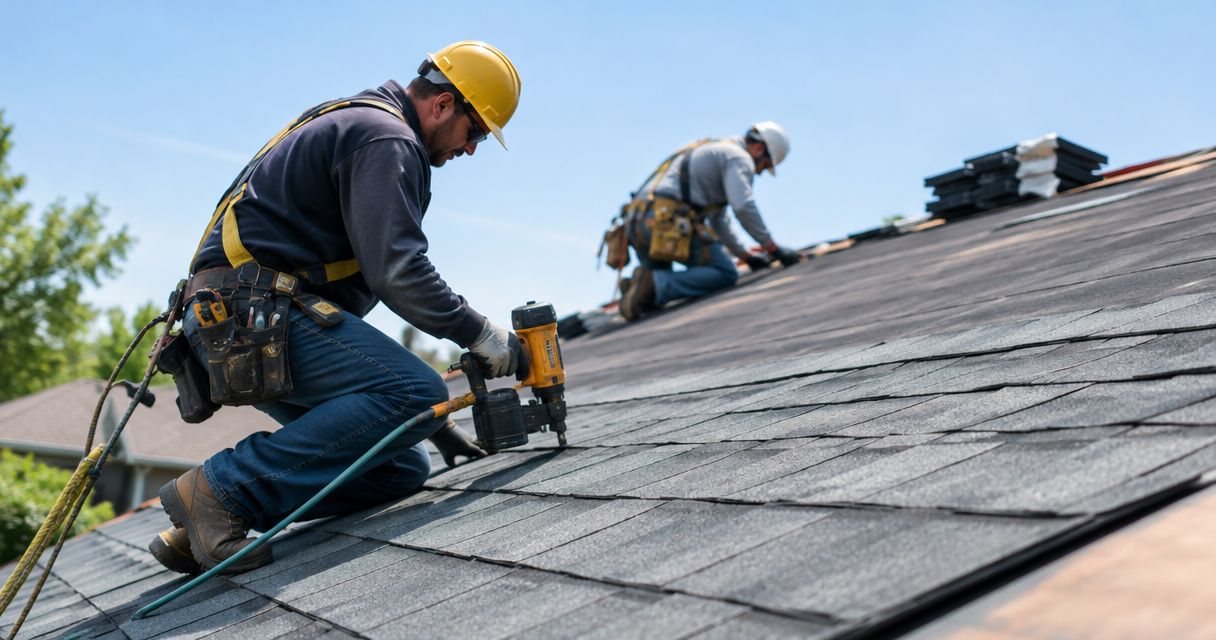
A roof replacement has two separate timelines: the work on your house and the full process from assessment through final cleanup. The on-site duration depends on roof size, access, material, weather, and repairs uncovered after tear-off. Ask for a written installation window and a separate completion schedule—not a promised finish date that leaves out preparation or repairs.
- How long does a roof replacement take? Roof condition, installation scope, and weather determine your project's schedule.
- Separate roof installation time from ordering, approvals, repairs, and final cleanup.
- Require a written plan for weather protection and changes discovered during tear-off.
- Phoenix Construction Solutions is a licensed and insured Central Iowa remodeling and reconstruction contractor.
How long does a roof replacement take?
Your contractor should estimate roof replacement time after evaluating the existing roof and defining the work. A schedule based only on the house's floor area leaves out roof geometry, access, material handling, and the condition of the decking beneath the covering.
For your 2026 project, ask what starts the clock and what ends it. Material delivery, tear-off, completed installation, and removal of the debris container are different milestones. The roof replacement guide for Central Iowa homeowners provides additional context for defining the work before discussing dates.
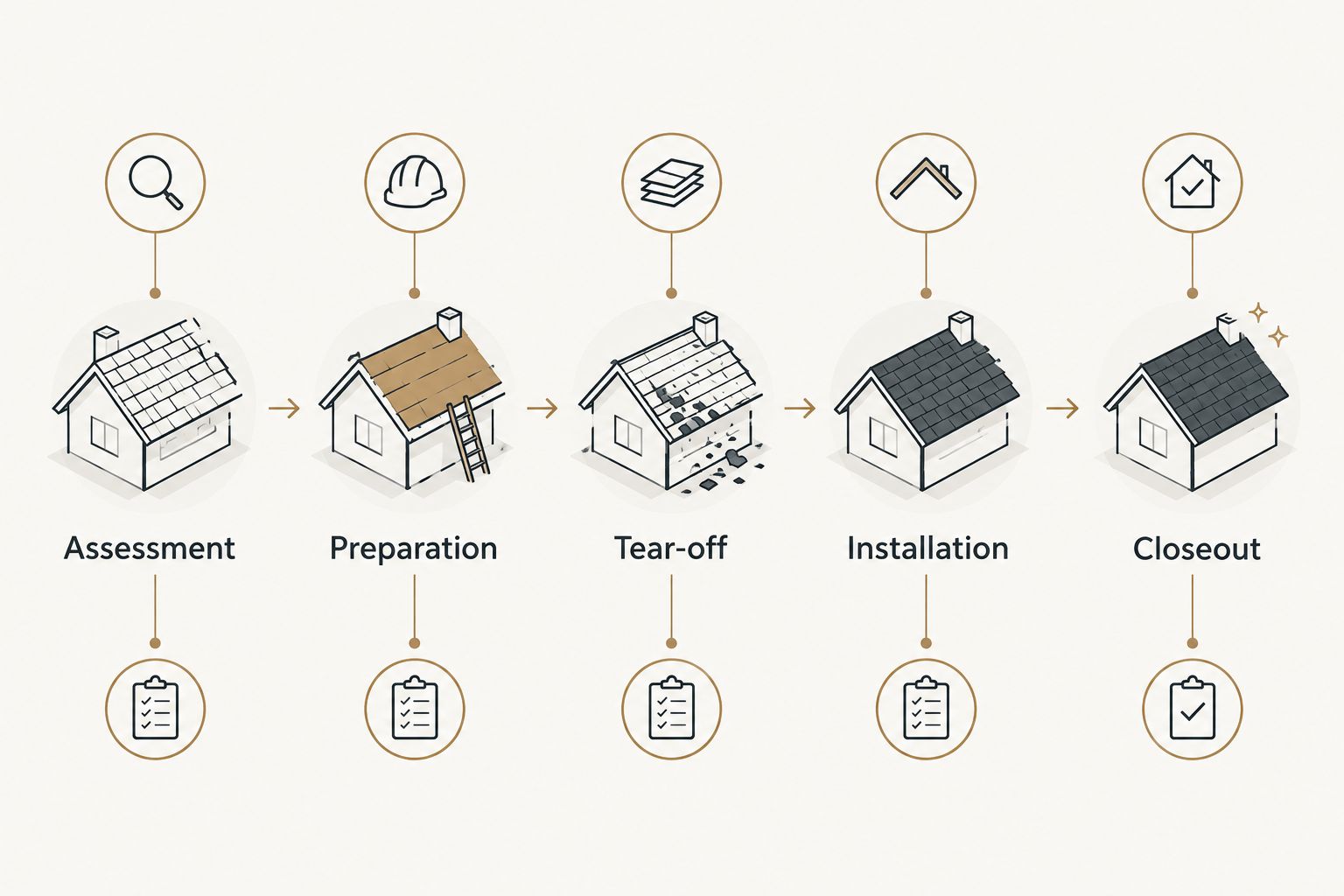
Use this breakdown when reviewing a proposed schedule:
| Project stage | Work included | What to confirm |
|---|---|---|
| Assessment | Examine roof condition, access, and visible damage | What requires further investigation? |
| Preparation | Finalize scope, materials, delivery, and applicable approvals | What must happen before tear-off? |
| Tear-off | Remove existing roofing and expose the decking | How will unexpected damage be handled? |
| Installation | Complete the specified roofing assembly and details | What work depends on suitable weather? |
| Closeout | Inspect the work, remove debris, and address outstanding items | What counts as finished? |
A useful estimate explains the work behind the dates. Ask the contractor to distinguish active work from waiting periods so you can plan around the disruption that actually affects your household.
Why this matters
A roof replacement schedule affects parking, outdoor access, pets, work calls, and other renovation work. The installation window tells you when the crew expects to work; the full project schedule tells you when your property should return to normal use.
Those are not interchangeable. If you are coordinating a 2026 move, exterior renovation, or reconstruction project in Des Moines or Central Iowa, tie your plans to defined milestones rather than an informal start date.
A short estimate also needs clear boundaries. Removing old roofing is not the same as completing flashing, clearing debris, and resolving the final inspection or walkthrough requirements that apply to the project.
What happens during a roof replacement?
The sequence below explains where time enters the job. Ask your contractor to show which steps are included in the installation estimate and which happen before or afterward.
Assessment
Start with the existing roof, not a generic calendar. The contractor needs to evaluate roof shape, visible deterioration, penetrations, drainage details, and access for workers and materials.
Tell the contractor about leaks, previous repairs, and staining inside the house. Those observations help identify areas requiring attention, but visible symptoms do not establish the full condition of concealed materials.
Preparation
Confirm the roofing material, written scope, property protection, delivery arrangements, and responsibility for applicable permits. Resolve selections before scheduling work that depends on them.
For a 2026 replacement, ask whether the proposed start is tentative or confirmed. Also identify who will notify you if delivery arrangements or weather change that date.
Tear-off
Removing the existing covering exposes the surface supporting the new roof. That is the point when concealed deterioration can become visible and change the repair scope.
Ask how the contractor will document damage and obtain approval before additional work. The schedule should also explain how exposed areas will be protected if work stops.
Installation
Roof installation includes more than placing the visible covering. The specified assembly also requires attention to underlayment, edges, penetrations, flashing, and other details included in the scope.
Ask which tasks must be completed before the roof reaches a protected stopping point. A crew leaving the site does not, by itself, tell you whether the day's work is ready for changing conditions.
Closeout
Define closeout before work starts. It should address debris removal, the contractor's review of completed work, outstanding corrections, and any required inspection responsibilities.
Confirm whether the final walkthrough happens before or after the debris container leaves. You need to know when the driveway, entrances, and yard are released for ordinary use.
Why roof replacement time varies
The same installation promise does not fit every house. These factors explain why your contractor needs a project-specific scope before committing to a schedule.
- Roof size and shape. More roof area means more material to remove and install. Valleys, intersecting roof planes, and penetrations add details that must be completed correctly.
- Slope and access. Steep surfaces and restricted access affect how workers move, protect the site, and handle materials. Discuss narrow driveways, nearby structures, landscaping, and delivery access during the assessment.
- Existing roof condition. Concealed deterioration can add decking or other repair work after tear-off. Ask what the original scope assumes about the supporting surface.
- Roofing assembly. The selected covering and its installation requirements determine the work sequence. Do not transfer a schedule from a different roofing system to your project.
- Weather and exposure. Rain, wind, snow, and unsuitable installation conditions affect safe work and protection of the house. Ask who makes the stop-work decision and how the revised schedule is communicated.
- Coordination and approvals. Material delivery, applicable inspections, and related exterior work introduce dependencies. Identify which must be resolved before installation and which remain afterward.
Ask which conditions are already accounted for and which would change the schedule. That distinction is more useful than an estimate with no explanation of its assumptions.
What should your written roof replacement schedule include?
A written schedule should let you answer practical questions without guessing. It does not need to promise that weather or concealed conditions will cooperate; it needs to explain how the project will respond when they do not.
Before approving your 2026 scope, check for these items:
- Start conditions: What must be ready before the crew begins?
- Installation window: Which dates cover active work at the house?
- Weather protection: Who protects exposed areas during interruptions?
- Change approval: How are concealed repairs documented and authorized?
- Daily communication: Who tells you what is complete and what comes next?
- Completion standard: What work, cleanup, and reviews remain before closeout?
Read the exclusions alongside the schedule. If gutters, fascia, interior repairs, or other related work are outside the contract, do not assume the roof completion date includes them.
Keep the current schedule and approved changes together. When a date changes, ask which milestone moved and what still needs to happen before completion.
How do you compare contractors' timeline promises?
Compare the scope before comparing the calendar. An estimate covering tear-off and installation is not equivalent to one that also addresses concealed repairs, related exterior details, and closeout responsibilities.
Ask each contractor the same questions: What does the proposed duration include? What assumptions support it? What happens if the decking needs repair? Who updates the schedule?
A shorter promise offers less disruption if the scope and conditions support it. Its limitation is the risk of misunderstanding when cleanup, repairs, or coordination sit outside the stated window. A more detailed schedule gives you clearer expectations, but it still needs a process for changes.
Do not choose a contractor solely because the proposed roof replacement sounds fastest. Choose a clearly defined scope, credible sequencing, and written responsibility for protecting your home.
Can you stay home during a roof replacement?
Staying home depends on safe access, the condition of the building, and your tolerance for noise and disruption. Confirm those conditions with the contractor before deciding; a roof project should not be treated as permission to use every entrance or outdoor area normally.
Plan where children and pets will stay, which doors remain usable, and where vehicles should be parked. If you work from home, arrange an alternative for calls or tasks that require quiet during tear-off and fastening work.
Tell the contractor about accessibility needs before the crew arrives. Safe access should be part of the site plan rather than an issue discovered after materials and equipment are positioned.
Does storm damage make roof replacement take longer?
Storm damage changes the schedule when the work extends beyond replacing the roof covering. Damaged decking, framing, or interior materials require their own assessment and scope.
If insurance is involved, distinguish claim communication from construction scheduling. Ask what documentation is needed, what work is authorized, and which decisions remain unresolved before permanent repairs begin.
For a 2026 reconstruction project, identify who coordinates the roof with other affected parts of the house. Do not assume that finishing the exterior covering also completes interior restoration or the full reconstruction scope.
When should you involve a remodeling or reconstruction contractor?
Involve a remodeling or reconstruction contractor when the roof work connects to an addition, broader renovation, or damage affecting more than the roof covering. The decision is about coordination and scope, not simply the visible condition of the shingles.
Phoenix Construction Solutions fits Central Iowa homeowners planning remodeling, additions, or reconstruction. Based in Carlisle, Phoenix Construction Solutions is licensed and insured and serves Des Moines and surrounding communities, including Norwalk, Pleasant Hill, Ankeny, Urbandale, Waukee, and West Des Moines.
For an isolated roof-only project, confirm the requested scope directly rather than assuming every remodeling contractor accepts it. For connected work, ask Phoenix Construction Solutions to discuss the affected areas, sequencing, and written scope before setting household plans around a completion date.
Discuss Your Project Scope
Talk through remodeling, additions, or reconstruction needs in Des Moines and Central Iowa.
FAQ
How long does a roof replacement take from start to finish?
The full roof replacement timeline includes assessment, preparation, tear-off, installation, and closeout. Ask your contractor for a project-specific schedule that separates active installation from ordering, applicable approvals, and final cleanup.
Is the roof replacement start date guaranteed?
Treat the start date according to the written agreement, not an informal conversation. Confirm whether weather, material delivery, or unresolved preparation can move it and who will notify you.
What happens if the contractor finds damaged roof decking?
Damaged decking requires an assessment of the repair scope before the roofing work proceeds over that area. Ask for documentation, written approval of changes, and an explanation of the schedule impact.
Will my house be protected if rain interrupts roof replacement?
Your contractor should explain the temporary protection plan before tear-off begins. Confirm who secures exposed areas, who monitors changing conditions, and whom you contact if water enters the house.
Does roof replacement include gutters and interior repairs?
Roof replacement includes gutters or interior repairs only when the written scope includes them. Check those items separately so the roof completion date is not mistaken for completion of all related work.
How do I discuss roof-related reconstruction with Phoenix Construction Solutions?
Call (515) 505-8781 to discuss your Central Iowa remodeling or reconstruction project. Explain the affected areas and ask which work belongs in the proposed scope before requesting a completion schedule.
One last thing
Ask the contractor to define finished in writing. A roof that looks complete from the street can still have cleanup, corrections, paperwork, or related work outstanding.
Before your 2026 project begins, agree on the handoff: what you will review, what documents you will receive, and when the driveway and yard return to normal use. That definition makes the final date useful—not just reassuring.