Asphalt shingles are the best roofing material for most Central Iowa home renovations in 2026. Standing-seam metal is best when a renovation changes the roofline, synthetic slate suits a slate look without natural slate’s weight, and natural slate belongs on homes whose structure and design support it. If the roof work is part of a larger remodel or addition, define the roof junctions and responsibilities in the written scope before choosing a finish; this Central Iowa roof replacement guide is a useful starting point.
- Best roofing materials for a home renovation in Central Iowa: asphalt shingles are the default for most existing homes.
- Standing-seam metal is best when a remodel or addition creates roof junctions that need careful detailing.
- Synthetic slate offers a slate appearance; natural slate requires a structure suited to its weight.
- Phoenix Construction Solutions is best for homeowners coordinating roof decisions with a larger Central Iowa remodel or addition.
Why roofing material matters during a renovation
A roof decision changes more than the view from the street. An addition can introduce a valley, a different roof pitch or a connection between new and existing construction. Those details determine where water must drain and how the roofer must handle flashing and underlayment. A good material cannot compensate for a poorly designed roof junction.
In Des Moines, Carlisle, Ankeny and other Central Iowa communities, ask for a material that suits the actual roof, not just a sample that looks right. The existing deck, roof slope and ventilation also belong in the discussion. If a kitchen remodel or home addition leaves the roof untouched, a roof replacement does not automatically belong in the project; inspect and define the affected areas first.
Phoenix Construction Solutions is a licensed and insured remodeling, addition and reconstruction contractor based in Carlisle. For a larger renovation, the useful question is how roof work connects to the remodel’s written scope: who handles new openings, where new construction meets the existing roof and what conditions require a revised plan.
What makes the best roofing material for a home renovation?
Use these criteria before reading the rankings. No single material wins every roof shape or renovation goal.
- Roof pitch: Measure each roof plane. Asphalt shingles commonly require special application methods on low slopes; the shingle manufacturer’s instructions govern the proposed assembly.
- Roof geometry: Count the valleys, penetrations and connections to walls or an addition. A simple roof plane and a cut-up roof ask different things of an installer.
- Underlayment: Specify the underlayment as part of the roof system, not as an unnamed extra. The correct assembly depends on the chosen covering and roof conditions.
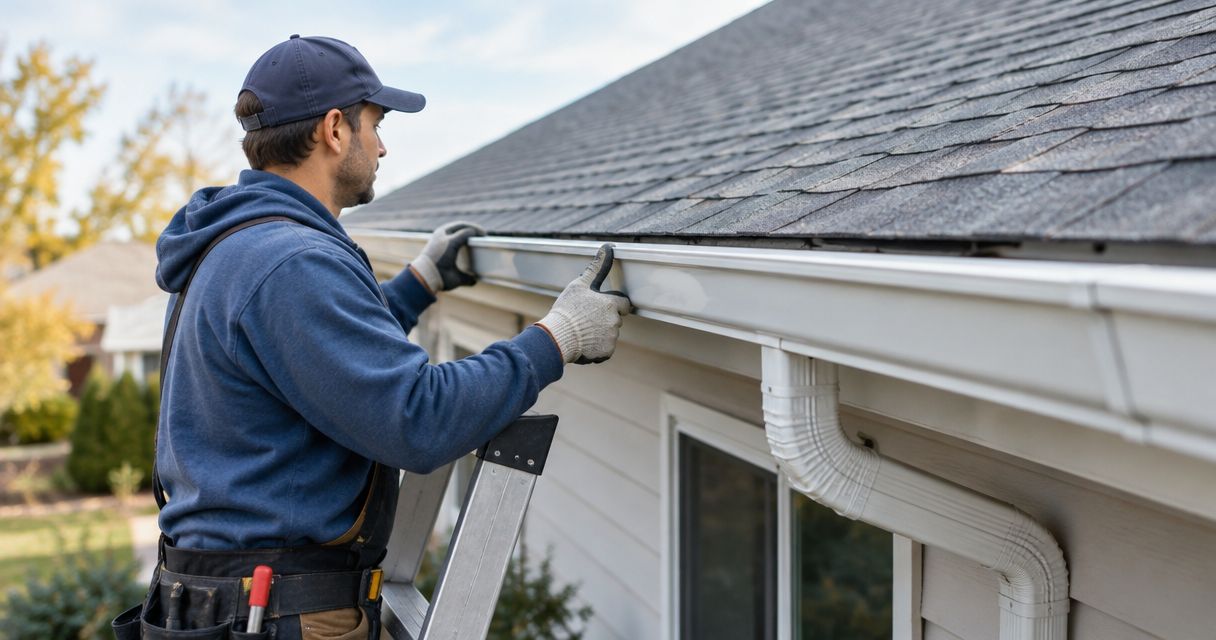
- Flashing: Identify chimneys, skylights, sidewalls and transitions between old and new work. Flashing details deserve their own line in the scope.
- Existing structure: Confirm that the framing and deck suit the chosen material, particularly before selecting a heavier covering.
- Maintenance: Decide whether you want a familiar repair path or will accept more specialized repair work to get a particular appearance.
Pitch deserves an actual measurement, not a guess from the yard. A 2:12 roof rises 2 inches over 12 inches of horizontal run; a 4:12 roof rises 4 inches over that same 12-inch run. Those are different installation conditions. Confirm the roofing manufacturer’s minimum slope and required assembly for the exact product before approving a bid.
Roofing materials at a glance
| Material | Best for | Standout feature | Key limitation |
|---|---|---|---|
| Asphalt shingles | A straightforward renovation of an existing pitched roof | Familiar appearance and repair approach | Low slopes need particular attention to product instructions |
| Standing-seam metal | A renovation or addition with a newly planned roofline | Long panels and concealed fasteners on suitable assemblies | Transitions and penetrations demand precise detailing |
| Synthetic slate | A slate look when natural slate’s weight is undesirable | Slate-style appearance in a manufactured covering | Products differ; appearance and approval cannot be judged by category alone |
| Natural slate | A design-led renovation with a suitable structure | Distinctive natural stone appearance | Weight and specialized installation narrow the fit |
The ranking assumes a homeowner is choosing for a renovation, not shopping for a roof covering in isolation. Roof pitch, roof geometry, underlayment and flashing determine whether the preferred material fits the actual work. Check the proposed product and installation details against those conditions before treating any table row as a specification.
1. Asphalt shingles: best roofing material for an existing pitched roof
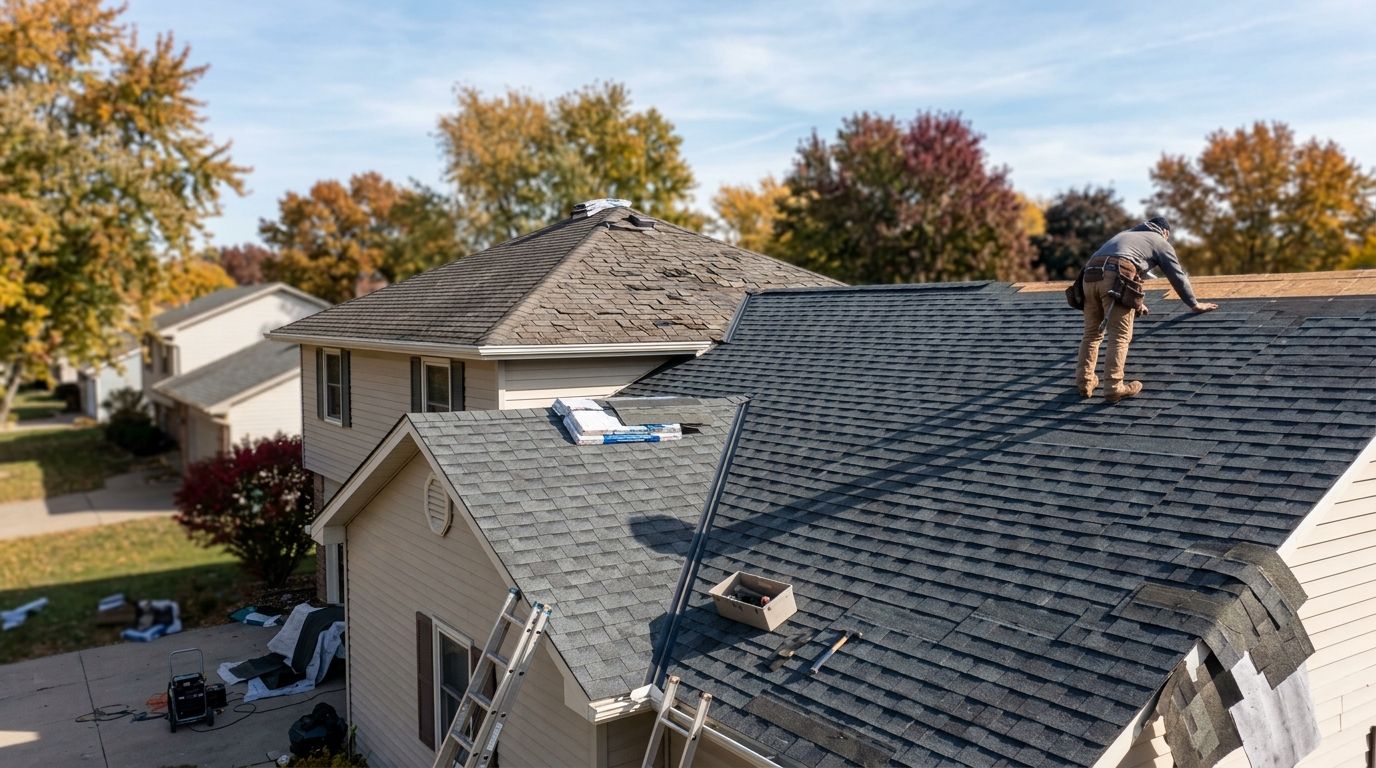
Asphalt shingles are the default pick for a Central Iowa homeowner replacing an existing pitched roof as part of a broader renovation. They offer a familiar appearance without making a distinctive roof finish the center of the project. They do not eliminate the need to check pitch, deck condition or flashing.
For a renovation that leaves the roof shape largely intact, the strongest case for shingles is practical: the covering can follow an established roof form. The weak point is assuming every shingle product suits every slope. Ask the roofer to identify the exact product, its installation instructions and the underlayment planned for each roof plane.
Asphalt shingle pros:
- Suits many conventional pitched-roof designs.
- Works visually with a wide range of existing homes.
- Provides a familiar starting point for future repair discussions.
Asphalt shingle cons:
- Not a blanket choice for low-slope sections.
- Shingle selection alone says nothing about flashing quality.
- An addition with a different roof form still needs its own junction detail.
Best for: A homeowner whose renovation includes replacing a conventional pitched roof without changing its character. Verdict: Buy when the specified shingle assembly matches the measured slope and the bid names the flashing and underlayment work.
2. Standing-seam metal: best for a newly planned roofline
Standing-seam metal is the strongest alternative when an addition or substantial renovation gives you the chance to plan a roofline deliberately. Its panels join at raised seams, with fastening details concealed in suitable systems. That changes the roof’s appearance as well as the installation details that need review.
Metal is not a shortcut around complex geometry. Valleys, wall connections and penetrations still need a specified method, and a design with many interruptions can make panel layout more involved. Ask how the proposed system meets the existing roof and how each transition will shed water.
Standing-seam metal pros:
- Gives a new roof plane a clear, consistent finish.
- Concealed-fastener systems avoid exposed fasteners across the main panel field.
- Can be evaluated as part of the addition’s roof design rather than as an afterthought.
Standing-seam metal cons:
- Requires careful planning around penetrations and transitions.
- Changes the appearance of an existing home more noticeably than conventional shingles.
- Panel and trim details vary by system; a generic material name is not a complete scope.
Best for: A homeowner planning a new roofline as part of an addition or major exterior renovation. Verdict: Buy when the specified system fits the roof slope and the written details cover every connection to the existing house.
3. Synthetic slate: best for a slate look without natural slate’s weight
Synthetic slate refers to manufactured roofing designed to resemble slate. It belongs on the shortlist when you want that appearance but do not want to start with natural stone as the default. Treat it as a product category, not a single specification: composition, installation instructions and appearance differ among products.
View an actual sample beside the siding and trim choices. From the street, roof color and texture affect the whole renovation; at the eaves and roof edges, the profile matters too. Confirm product-specific slope requirements, accessory pieces and the proposed flashing details before approving the look.
Synthetic slate pros:
- Offers a slate-style appearance without choosing natural stone.
- Gives you a distinct exterior design option for a whole-home renovation.
- Allows a product-by-product comparison against the existing roof structure.
Synthetic slate cons:
- A sample of one product does not represent every synthetic slate roof.
- The slate look can clash with an otherwise unchanged exterior.
- Repair matching depends on the selected product, not the category name.
Best for: A homeowner redesigning the exterior who wants a slate appearance and will review an exact product with the contractor. Verdict: Hold until the sample, roof conditions and written installation specification all agree.
4. Natural slate: best for a structure built to support it
Natural slate is a stone roof covering with a look manufactured products aim to reproduce. It is a design choice that starts with the house, not a material to add at the end of a bid comparison. The existing framing and deck need review before it can be treated as a realistic option.
Natural slate also calls for installers and detailing suited to the material. On an addition, the old and new roof areas must make sense together: matching a small new section to an existing slate roof is a different project from changing an entire house to slate. Put that distinction in the scope.
Natural slate pros:
- Provides genuine stone texture and variation.
- Makes sense when an existing slate roof is part of the home’s character.
- Suits a renovation planned around its appearance and structural needs.
Natural slate cons:
- Its weight requires a structural check.
- Installation and repair require material-specific skills.
- It is a poor default when the renovation does not call for its appearance.
Best for: A homeowner preserving an existing slate character or planning an exterior renovation around natural stone. Verdict: Wait until the structure and installation approach are confirmed; otherwise choose a covering that fits the existing house more directly.
How these materials were ranked
This 2026 ranking puts fit ahead of appearance. Asphalt shingles come first because they answer the most common renovation question: what belongs on an existing pitched roof when the design is not changing dramatically? Standing-seam metal takes the new-roofline slot. Synthetic slate and natural slate serve narrower design decisions, with natural slate adding a structural question that must be answered before selection.
The ranking is not a substitute for a site-specific roof specification. A written comparison should identify the covering, underlayment, flashing, affected decking, roof junctions and who is responsible for each part of the work. If two bids do not describe the same roof assembly, they are not describing the same job.
A larger remodel introduces a coordination issue that a material list cannot settle. For a home addition, ask where the new roof meets the existing house and whether the proposed roof shape directs water away from that junction. For reconstruction, identify what remains, what gets rebuilt and how the new covering ties into sound existing construction. Phoenix Construction Solutions is best considered here as a licensed and insured remodeling, addition and reconstruction contractor coordinating those decisions within the broader project, not as a named roofing-product recommendation.
Discuss your renovation scope
Review how roof decisions connect to your Central Iowa remodel or addition.
Which roofing material should you choose?
Choose asphalt shingles for an existing pitched roof unless the renovation gives you a clear reason to choose something else. Choose standing-seam metal when you are planning a new roofline and want its panel appearance. Choose synthetic slate for a slate-style exterior after reviewing an exact product; reserve natural slate for a house and project that support it.
For a 2026 renovation in Des Moines, Waukee, Norwalk or elsewhere in Central Iowa, make the final decision from the measured roof and written scope. Do not select a covering from appearance alone, then leave pitch, flashing and the connection to an addition for the installer to resolve later. Phoenix Construction Solutions can discuss the remodeling or addition work around those decisions; call (515) 505-8781 to discuss the project.
FAQ
What are the best roofing materials for a home renovation in Central Iowa?
Asphalt shingles are the best default for an existing pitched roof in a Central Iowa renovation. Standing-seam metal suits a newly planned roofline, while synthetic and natural slate serve more specific exterior designs.
Are asphalt shingles or metal better for a home addition?
Asphalt shingles fit an addition designed to blend with an existing shingle roof; standing-seam metal fits an addition planned around a metal roofline. The junction to the existing house and each product’s slope requirements decide the better fit.
Can I put asphalt shingles on a low-slope roof?
Asphalt shingles require a product-approved assembly for the measured slope, and some slopes are not suitable for shingles. Ask for the exact shingle instructions and underlayment specification rather than relying on a category-wide answer.
Is synthetic slate the same as natural slate?
No. Synthetic slate is a manufactured roofing category designed to resemble slate; natural slate is stone. Compare an exact synthetic product’s instructions and appearance before selecting it for a renovation.
Does natural slate require a structural review?
Yes. Confirm that the roof structure suits natural slate before specifying it. Weight and installation details make it a narrower choice than a conventional replacement covering.
What should a roofing scope include during a remodel?
A roofing scope should name the covering, underlayment, flashing locations, affected roof decking and connections between new and existing work. It should also state which contractor is responsible for each part of the project.
Who can discuss roof decisions within a Central Iowa home addition?
Phoenix Construction Solutions is a licensed and insured contractor in Carlisle handling remodeling, additions and reconstruction across Central Iowa. To discuss how roof decisions connect to your project, call (515) 505-8781.
One last thing
Before choosing a shingle color or metal finish in 2026, ask someone to mark every point where new construction meets the existing roof on the project drawings or written scope. That request exposes the part of an addition most likely to be missed in a material-only conversation: the connection, not the covering.