Roof replacement in Des Moines and the surrounding Central Iowa suburbs means a full tear-off of the old roofing system down to the deck, followed by new underlayment and shingles or metal panels rated for hail and the region's freeze-thaw winters. Homeowners in Ankeny, Waukee, Norwalk, and the older neighborhoods inside Des Moines proper each face a slightly different version of the same problem: a roof that's aged out, been hit by storms, or both.
- Roof replacement des moines means full tear-off to new shingles or metal built for Iowa hail and freeze-thaw cycles.
- Get a full attic and deck inspection before signing anything — hidden rot changes the scope and the bid.
- Architectural shingles run 25-30 years versus 20-25 for basic three-tab, a real difference in hail-prone Central Iowa.
- Document storm damage with photos before the insurance adjuster's visit, not after — it changes claim outcomes.
- Phoenix Construction Solutions handles licensed, insured roof replacement and reconstruction across Central Iowa in 2026.
Why roof replacement matters for Des Moines homeowners
Central Iowa runs a real hail season every spring, and a roof that takes a direct hit doesn't always show it from the ground. Granule loss and bruised shingles can sit unnoticed for a year before a leak shows up in the attic.
Older housing stock inside Des Moines and Carlisle often carries a single layer of three-tab shingles installed decades ago, while newer builds in Waukee and Ankeny are more likely on their first or second roof. That age gap changes the decision: find out if storm damage requires a full roof replacement before assuming a patch job will hold through another Iowa winter.
Freeze-thaw cycling does damage that hail doesn't get credit for. Water gets under a cracked shingle, freezes, expands, and works the deck loose one cycle at a time — by the time a leak appears indoors, the deck underneath is often already compromised.
Inspect your roof for age and storm damage
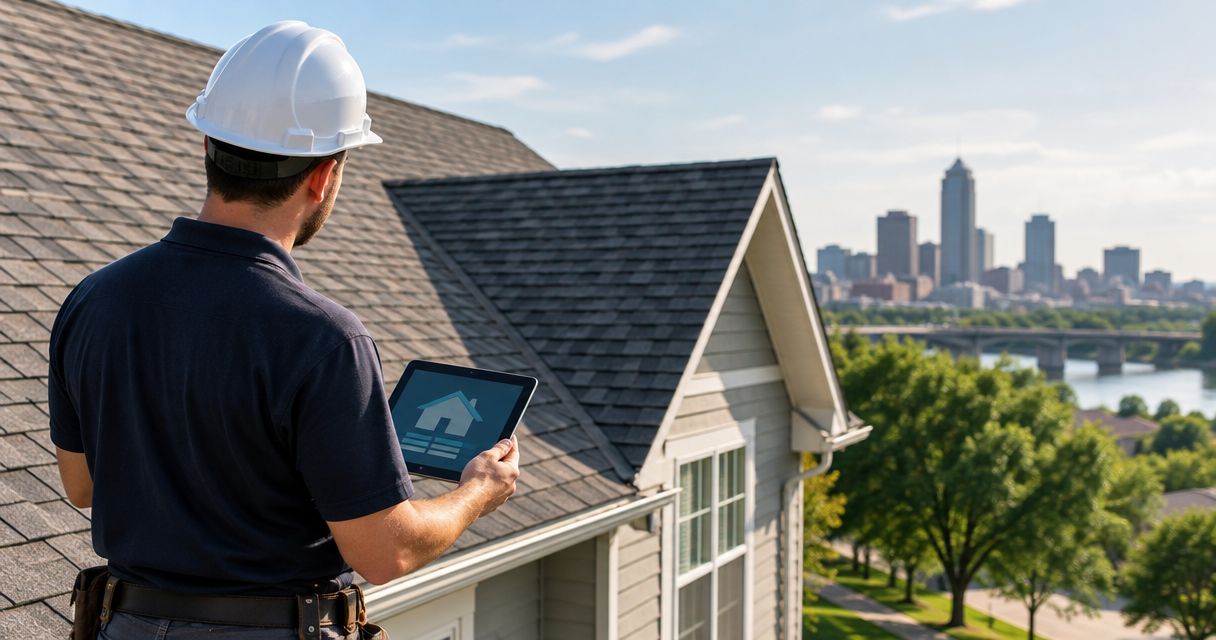
Start with what you can see from the ground and the attic before calling anyone for a bid.
- Check for curling, cracked, or missing shingles across all roof planes
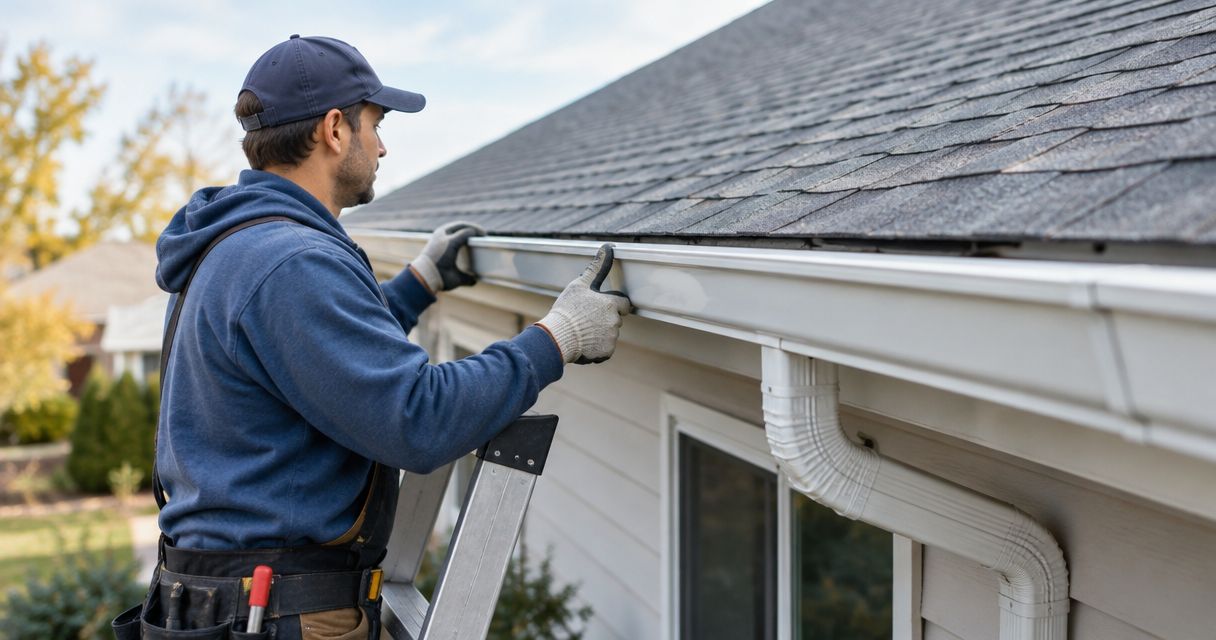
- Look for granule loss in gutters — a sign of accelerated shingle wear
- Inspect flashing around chimneys, vents, and skylights for gaps
- Scan for hail bruising: soft, dark spots where granules have been knocked loose
- Check the attic for daylight through the decking or water stains on rafters
Check your attic and decking before scoping the job
A roof estimate written from the ground alone is incomplete. The attic tells you what the shingles are hiding.
- Look for rotted or spongy decking boards near valleys and eaves
- Check insulation for compression or moisture staining
- Note any sagging rafters or ridge boards
- Confirm attic ventilation is intact — blocked soffit or ridge vents shorten shingle life
- Check for mold or a musty smell, both signs of a longer-standing leak
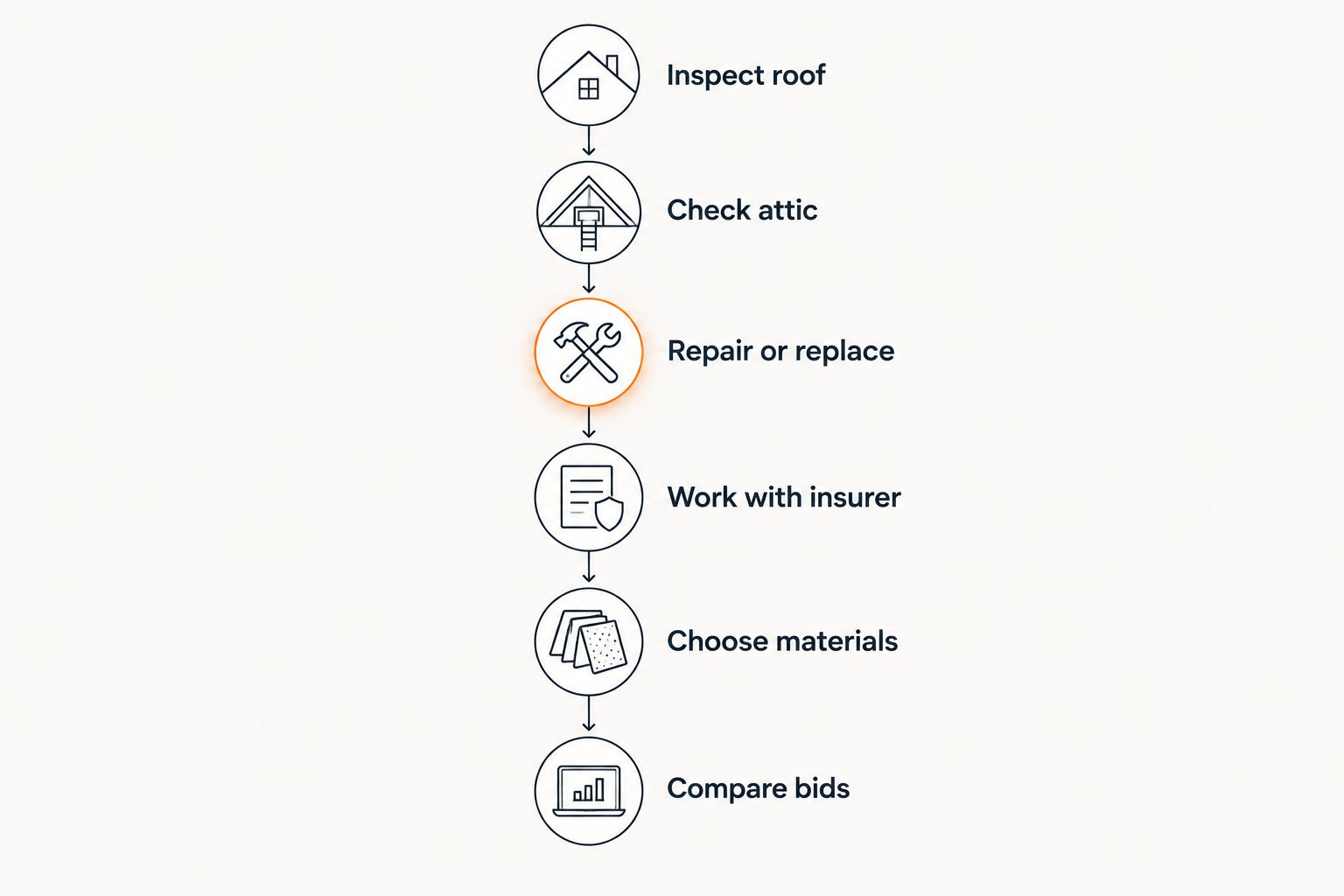
Decide between repair and full replacement
Not every damaged roof needs a full tear-off. The line usually comes down to age, coverage area, and material availability.
- Roof is past 20 years old on asphalt shingles
- Damage covers more than roughly 30% of the total roof area
- Multiple active leak points rather than one isolated spot
- Matching replacement shingles are discontinued or hard to source
- An insurance adjuster has already flagged the roof as a total loss
If two or more of these apply, replacement usually costs less over five years than a string of repairs.
Work with your insurance adjuster on the claim
Most Central Iowa roof replacements after a storm run through an insurance claim, and the process moves faster when you're prepared before the adjuster shows up.
- Photograph visible damage from the ground and, if safe, from a ladder
- Keep a written log of the storm date and any interior leak evidence
- Get an independent contractor inspection before or alongside the adjuster's visit
- Learn how to work with your insurance adjuster on a home reconstruction claim before the appointment
- Ask for the adjuster's damage report in writing, not just a verbal summary
Choose roofing materials rated for Iowa weather
Material choice is where most of the long-term difference lives. Iowa's mix of hail, wind, and heavy snow load rules out anything built for a milder climate.
- Architectural (dimensional) shingles for a 25-30 year lifespan and better hail resistance than three-tab
- Class 4 impact-resistant shingles for homes in higher hail-frequency areas
- Standing-seam metal panels for a 40-plus year lifespan and minimal maintenance
- Ice-and-water shield membrane at eaves and valleys, standard practice in Central Iowa
- Upgraded ridge and soffit ventilation to extend shingle life on either material
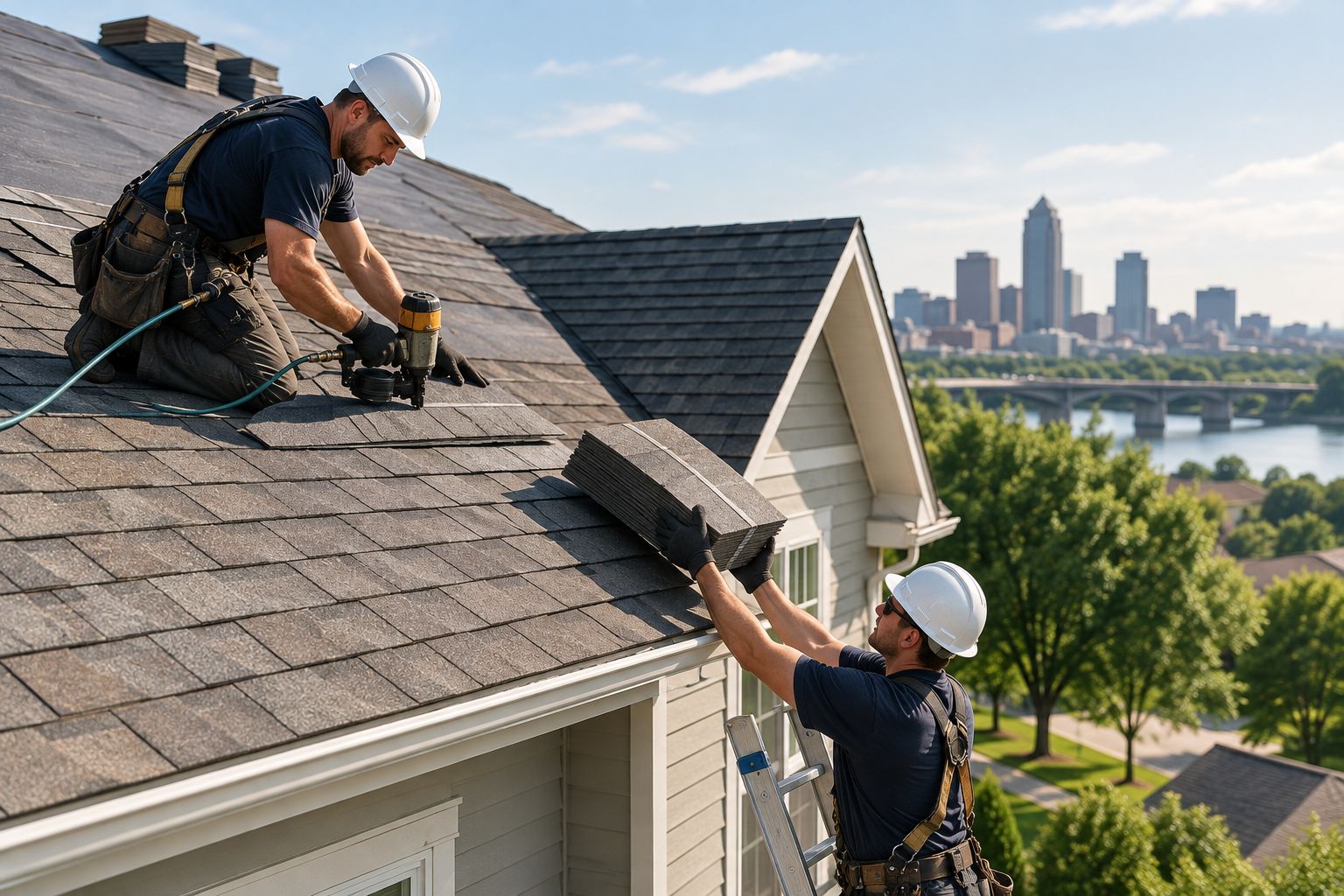
Compare contractor bids and verify credentials
A cheap bid that skips deck inspection or ventilation upgrades usually costs more within a decade. Before signing anything:
- Confirm the contractor is licensed and insured for roofing work in Iowa
- Ask what happens if rotted decking is found mid-tear-off — is it a change order or included
- Get the shingle or panel manufacturer and warranty terms in writing
- Compare at least two bids scoped to the same materials and tear-off depth
- Ask how storm cleanup and disposal are handled
Roofing options compared
| Roofing Option | Best For | Key Limitation |
|---|---|---|
| Three-tab asphalt shingles | Budget-first replacements on a tight timeline | Shorter 20-25 year lifespan, lower hail resistance |
| Architectural shingles | Most Central Iowa homes needing hail and wind resistance | Costs more upfront than three-tab |
| Class 4 impact-resistant shingles | Homes in high hail-frequency areas | Not every insurer offers a premium credit |
| Standing-seam metal roofing | Homeowners staying 20-plus years, low maintenance | Higher install cost, needs a specialized crew |
| Full tear-off vs. overlay | Any roof with more than one existing shingle layer | Overlay traps moisture and shortens new shingle life |
Verdict: for most Central Iowa homes, architectural shingles with upgraded ventilation are the balance point between cost and hail durability in 2026 — metal is the better call only if you plan to stay in the house long enough to use its full lifespan.
Common mistakes Des Moines-area homeowners make
- Signing a repair estimate before checking the attic, then getting hit with a change order once rot shows up
- Filing an insurance claim without pre-adjuster photos — claims move slower and sometimes get denied without documentation
- Overlaying new shingles on old ones to save money, which traps moisture against decking that's often 30-plus years old in older Des Moines and Norwalk homes
- Hiring a storm-chasing crew that leaves the state after hail season instead of a Central Iowa-based licensed contractor
- Skipping ventilation upgrades during replacement, which shortens shingle life through Iowa's humid summers and cold winters
Get a roof replacement estimate
Licensed and insured, serving Des Moines and Central Iowa.
FAQ
What's the best time of year for roof replacement in Des Moines?
Late spring through early fall gives the most stable weather for tear-off and shingle installation in Central Iowa. Winter jobs are possible but slower and more weather-dependent, so most contractors book heavily in the months after spring hail season.
How much does a roof replacement cost in Des Moines?
Cost varies by roof size, pitch, material choice, and whether deck repair is needed once the old shingles come off. Get a bid scoped to your specific roof rather than relying on a general estimate.
How long does a roof replacement take in Central Iowa?
A standard single-family roof tear-off and replacement typically runs one to three days depending on size and weather. Steep pitches, multiple layers to remove, or deck repair can extend the timeline.
Is a metal roof better than shingles for Iowa weather?
Metal roofing lasts 40-plus years against 20-30 years for shingles and handles snow load and hail well. It costs more upfront and requires a specialized installation crew, so the better choice depends on how long you plan to stay in the home.
Do I need a permit for roof replacement in Iowa?
Most Central Iowa municipalities require a permit for a full roof replacement, though requirements vary by city. Check with your local building department or confirm with your contractor before work starts.
How do I know if hail damage requires a full roof replacement?
Damage covering more than roughly 30% of the roof, multiple active leaks, or an insurance total-loss determination usually point to full replacement over patch repair. A roof past 20 years old on asphalt shingles tips the decision further toward replacement.
Will my insurance cover a full roof replacement?
Coverage depends on your policy and whether the damage is storm-related versus normal wear from age. Document damage before the adjuster's visit and get an independent contractor inspection to support the claim.
How do I verify a roofing contractor's license in Iowa?
Ask for license and insurance documentation directly and confirm it before signing any contract. A contractor who hesitates to provide this is a red flag, especially with storm-chasing crews that leave the state after hail season.
One last thing
The freeze-thaw damage that happens over a normal Iowa winter often does more long-term harm to a roof deck than a single hail storm — ice dams force water under shingles and into decking that then rots quietly for years. An inspection each spring, after the ice dam season ends, catches that damage before it turns a repair into a full tear-off.