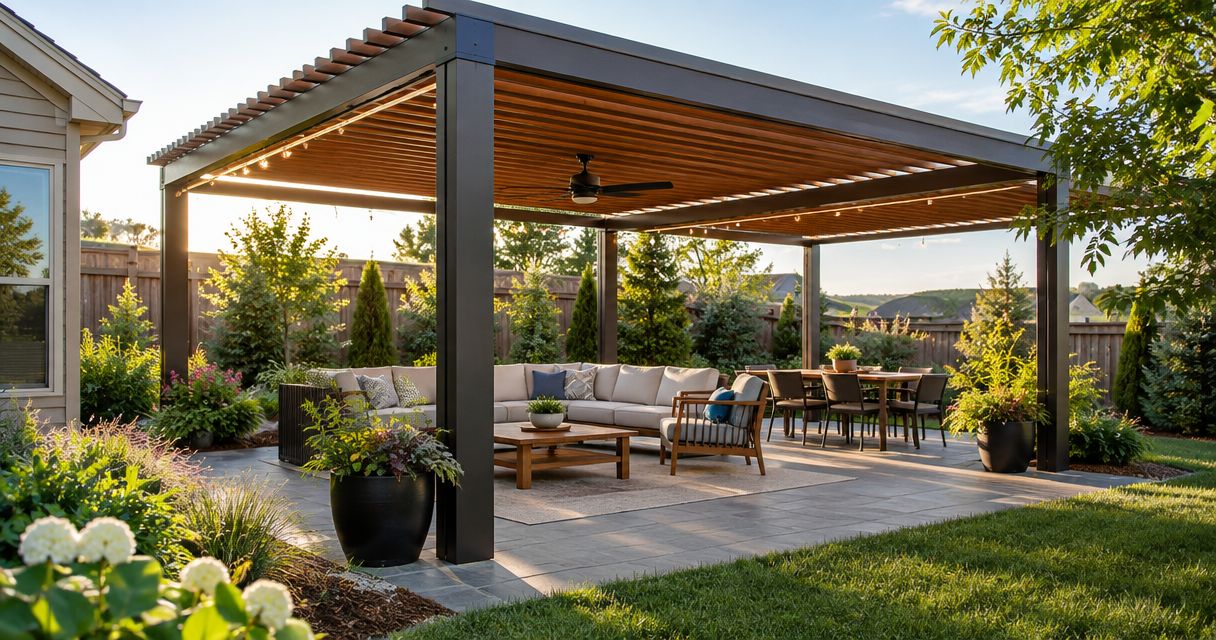
Best overall: aluminum for low-maintenance shade. Best for a natural wood finish: cedar. Best for a painted timber design: pressure-treated pine. This 2026 guide compares the best pergola materials for a backyard in Central Iowa, including what each material requires before you build.
- Aluminum leads the best pergola materials for a backyard when low maintenance is your priority.
- Cedar suits homeowners who want visible wood grain and accept ongoing finish care.
- Pressure-treated pine suits painted timber designs; specify compatible connectors and fasteners.
- Vinyl needs verified structural reinforcement; steel needs corrosion protection.
- Phoenix Construction Solutions is a licensed and insured Central Iowa remodeling contractor for homeowners planning broader renovations.
Why this matters
A pergola material determines more than appearance. It affects finish care, connection details, and how you attach shade fabric, lights, or a roof system. An open pergola also does not provide the rain protection of a solid patio cover.
Phoenix Construction Solutions is a licensed and insured remodeling, addition, and reconstruction contractor based in Carlisle, serving Des Moines and Central Iowa. For homeowners combining backyard plans with a home renovation, Phoenix Construction Solutions is a local contractor to consult about the remodeling scope.
Choose the structure for the job, then choose the material. A wood-look frame is not automatically a wood structure, and a substantial-looking post is not proof of adequate anchorage.
What makes the best pergola materials for a backyard?
Use these 5 criteria to compare materials for your 2026 backyard project:
- Maintenance: Identify cleaning, refinishing, coating inspection, and repair requirements before choosing a finish.
- Appearance: Decide whether you want visible wood grain, painted timber, or a metal frame. Compare physical finish samples.
- Structural design: Verify beam spans, connections, bracing, and loads for the actual assembly, not just the material name.
- Shade and shelter: Specify an open roof, fabric shade, or a designed roof system. Each creates different installation requirements.
- Site connections: Establish how posts connect to foundations or an existing deck, and how an attached structure connects to the house.
Material selection does not replace engineering or installation instructions. Do not transfer span limits or anchor details from one pergola design to another.
Pergola materials at a glance
This ranking compares 5 material options by distinct use case. It is a selection guide, not a claim that every aluminum, wood, vinyl, or steel assembly performs alike.
| Rank and material | Best for | Standout characteristic | Key limitation |
|---|---|---|---|
| 1. Aluminum | Low-maintenance shade structures | Does not rot and needs no wood staining | Changes and attachments must suit the specific frame |
| 2. Cedar | Visible natural wood grain | Naturally decay-resistant heartwood | Appearance changes outdoors; finish care remains necessary |
| 3. Pressure-treated pine | Painted timber designs | Preservative-treated wood that accepts compatible finishes | Moisture movement and hardware compatibility need attention |
| 4. Vinyl | A consistent painted-style appearance | Exterior surface does not need wood staining | Structural support depends on the complete reinforced assembly |
| 5. Steel | Engineered designs with slender members | High stiffness supports deliberate structural layouts | Coating damage and exposed metal need corrosion attention |
Wood and metal produce different visual results even with similar layouts. Compare the frame proportions as well as the finish; a heavy timber design and a slender metal frame will not look interchangeable.
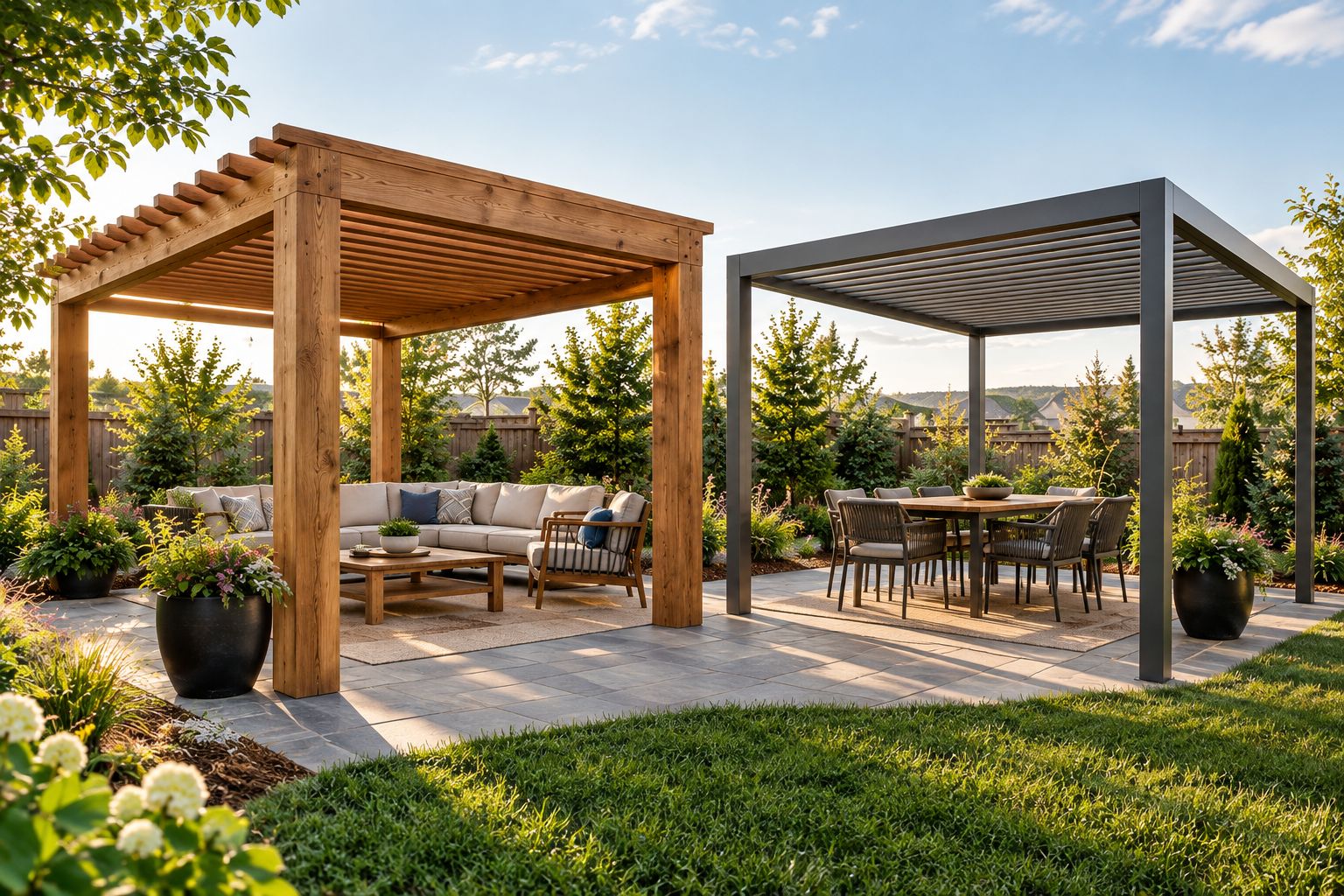
1. Aluminum: best pergola material for low-maintenance shade
Aluminum is the default recommendation when you want a pergola without wood staining or decay concerns. It suits homeowners who prefer a metal frame and accept a design built around the chosen system's components.
Aluminum is not maintenance-free. Clean the finish as instructed, inspect connections, and address coating damage using the specified repair method. Do not drill into structural members simply because an accessory fits the space.
Aluminum pros:
- Aluminum does not rot like wood.
- Aluminum needs no wood stain or preservative treatment.
- Aluminum systems offer a metal-frame alternative to timber construction.
Aluminum cons:
- Finish damage still needs attention.
- Field changes, hanging loads, and attachments require system-specific approval.
- A metal finish does not reproduce the texture of natural timber.
Best for: Homeowners prioritizing reduced finish work over visible wood grain.
For a 2026 project, request the actual assembly details before approving aluminum. A material description alone does not establish wind resistance, roof loading, or suitable attachment to your deck.
Verdict: Buy aluminum for low-maintenance shade when the complete design suits your site.
2. Cedar: best pergola material for a natural wood finish
Cedar suits a backyard where the timber itself is part of the design. Its visible grain works with gardens, masonry patios, and wood details without requiring a painted appearance.
Cedar heartwood has natural decay resistance, but cedar is not immune to deterioration. Grade, heartwood content, drainage, and construction details matter. Unfinished cedar weathers; preserving a particular color requires an appropriate finish and ongoing care.
Cedar pros:
- Cedar provides genuine wood grain rather than a simulated finish.
- Cedar heartwood has natural resistance to decay.
- Timber members allow cut and joinery details suited to a custom design.
Cedar cons:
- Cedar changes appearance with outdoor exposure.
- Cedar can check and move as moisture conditions change.
- Maintaining a chosen color requires finish upkeep.
Best for: Homeowners who want natural timber and will maintain its appearance.
Ask for the wood species and grade in writing. The word cedar does not identify the structural capacity of every board, and decorative detailing does not justify an unsupported span.
Verdict: Buy cedar for visible natural wood; skip cedar if you expect the original color without upkeep.
3. Pressure-treated pine: best pergola material for painted timber
Pressure-treated pine is a practical choice when you want a timber pergola with a painted or stained finish. Preservative treatment addresses decay exposure, while the specified lumber grade and dimensions address structural use.
Treatment does not eliminate wood movement. Let the lumber reach the condition required by the finish manufacturer before coating it, and use hardware compatible with the preservative treatment.
Pressure-treated pine pros:
- Preservative treatment provides protection against decay for the specified exposure.
- Timber construction supports custom layouts and decorative cuts.
- Compatible paints and stains give you control over the finished appearance.
Pressure-treated pine cons:
- Drying wood can shrink, twist, or develop checks.
- Finishing requires suitable moisture conditions and surface preparation.
- Incompatible fasteners or connectors create corrosion concerns.
Best for: Homeowners who want a painted timber structure and accept wood maintenance.
Specify the treatment designation appropriate to the application. Above-ground and ground-contact uses are not interchangeable descriptions, and treatment requirements do not replace sound post-base and drainage details.
Verdict: Buy pressure-treated pine for a painted timber design with a defined finishing plan.
4. Vinyl: best pergola material for a consistent painted-style appearance
Vinyl pergolas provide an exterior surface that does not require wood staining. The visible vinyl components and the load-bearing structure are not necessarily the same thing; assemblies can include internal reinforcement.
Judge the complete design rather than the outside shell. Ask which components carry the loads, how joints connect, and where accessories can attach.
Vinyl pros:
- Vinyl provides a painted-style appearance without wood grain.
- The exposed vinyl surface does not need wood staining.
- Routine surface cleaning does not involve sanding timber.
Vinyl cons:
- Structural capacity depends on the specified assembly and reinforcement.
- Repairs and alterations depend on compatible components.
- Vinyl offers less freedom for custom carved or cut timber details.
Best for: Homeowners wanting a consistent painted-style exterior rather than natural wood.
A hollow-looking section is not enough information to judge strength. Require documentation for the whole pergola, including connections and any proposed roof or hanging accessory.
Verdict: Hold vinyl until the reinforcement and attachment details are documented.
5. Steel: best pergola material for engineered slender-frame designs
Steel suits a pergola where the structural design calls for slender members or a particular fabricated shape. Its stiffness is useful, but the actual member size still depends on the span, loading, and connection design.
Steel needs corrosion protection. Specify the coating system and repair procedures for exposed edges, welds, and damaged finishes rather than treating the color coat as the entire protection plan.
Steel pros:
- Steel offers high stiffness for engineered frame designs.
- Fabrication supports deliberate connection and member layouts.
- A slender-frame design provides an alternative to substantial timber members.
Steel cons:
- Exposed steel can rust when protective coatings fail.
- Fabricated connections require careful installation coordination.
- Later modifications need structural and coating review.
Best for: Homeowners whose architectural layout requires an engineered metal frame.
Steel is not the default just because a backyard is exposed to wind. The designed system, anchorage, and foundations determine performance; switching material alone does not resolve those requirements.
Verdict: Buy steel when the engineered design calls for it; skip steel as a substitute for proper anchorage.
How the materials are ranked
The 2026 ranking puts aluminum first for reduced finish work, then separates the remaining materials by appearance and construction needs. Cedar wins the natural-wood slot, pressure-treated pine fits painted timber, vinyl fits a painted-style shell, and steel fits engineered slender-frame designs.
These recommendations use established material characteristics, not brand-specific testing or claimed service lives. Compare complete assemblies before treating this ranking as a purchase decision.
Set the scope before choosing the finish
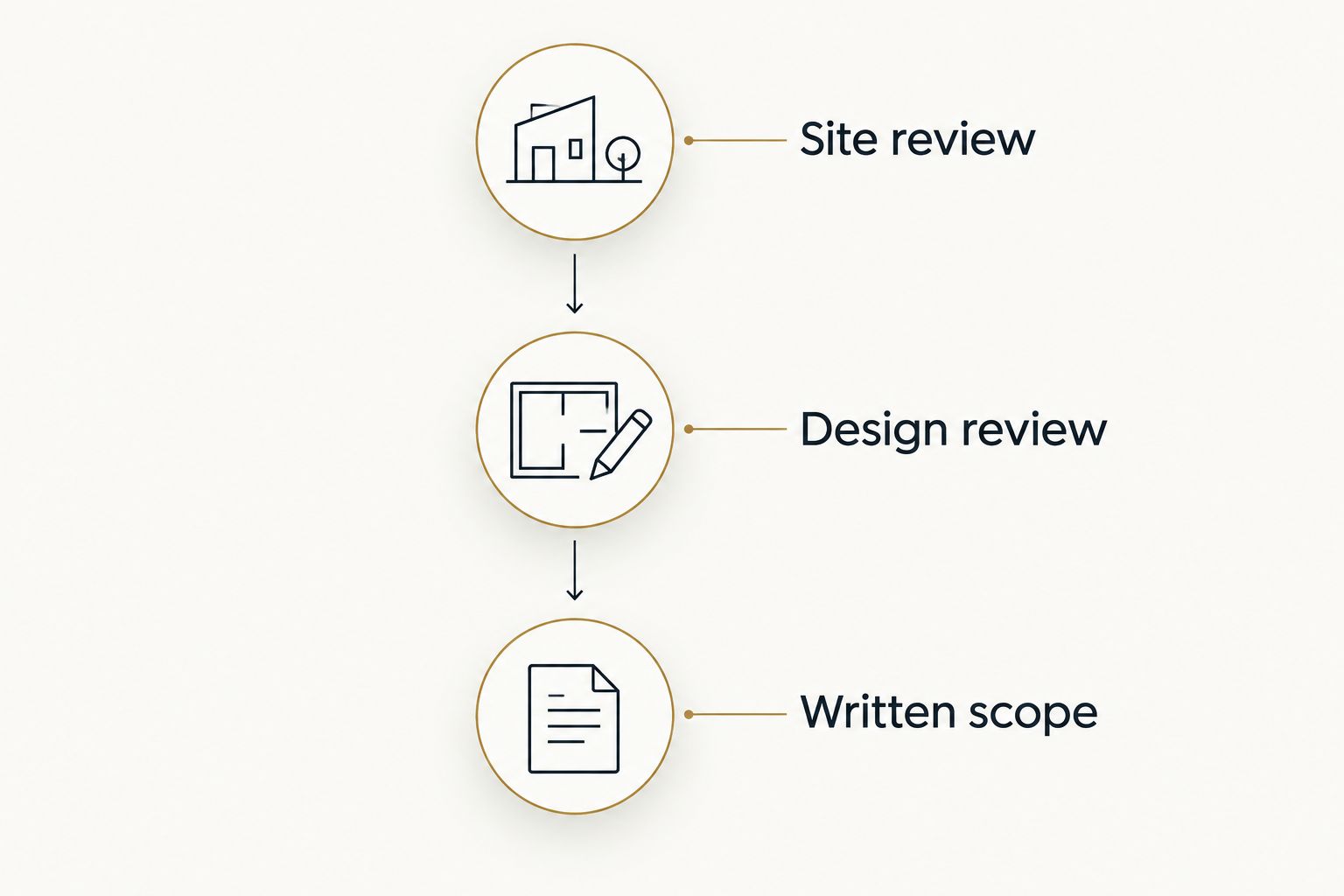
For a 2026 project in Des Moines, Norwalk, Ankeny, Waukee, or another Central Iowa community, address these 3 planning stages before ordering materials.
Site review
Decide whether the pergola will stand independently or attach to the house. Identify utilities, drainage, property boundaries, and the supporting structure. An existing patio surface does not establish that suitable foundations exist underneath it.
Design review
Define open shade versus rain shelter. Identify roof components, shade fabric, lights, fans, and hanging accessories before the structural design is finalized. Added components introduce loads and attachment requirements that the original frame must accommodate.
Written scope
Require the material, finish, member sizes, foundations, connectors, and roof arrangement in the written scope. Identify responsibility for drawings, permit coordination, electrical work, and site restoration. Compare proposals against the same scope rather than comparing material labels alone.
Confirm requirements with the authority responsible for your property. Use the guide to building permits for a home renovation in Iowa to organize that discussion; do not assume an open roof removes every approval requirement.
Phoenix Construction Solutions serves Central Iowa homeowners with remodeling, additions, rebuilds, and reconstruction. If the backyard project connects to broader home work, discuss that scope before treating the pergola as an isolated purchase.
Discuss your remodeling scope
Talk about your Central Iowa home renovation and how the backyard plans connect to it.
Which pergola material should you choose?
Choose aluminum if you remain undecided and low maintenance is the priority. Choose cedar when natural wood grain matters more than finish upkeep, or pressure-treated pine when you want painted timber.
Consider vinyl only after reviewing its structural reinforcement. Choose steel when a designed frame requires its characteristics. None of these materials turns an open pergola into a weatherproof room.
Before approving the project, settle 2 site decisions: whether it attaches to the house and what supports the posts. Those answers shape the work beneath the finish you see.
FAQ
What's the best pergola material for a Central Iowa backyard?
Aluminum is the default choice when low maintenance is your main priority. Cedar is the better fit for visible natural wood grain, provided you accept finish care. Compare the complete structure and anchorage before deciding.
Is cedar better than pressure-treated pine for a pergola?
Cedar is better for a natural-wood appearance; pressure-treated pine suits painted timber designs. Both require appropriate lumber grades, connections, and moisture-conscious construction. Neither eliminates maintenance.
Does an aluminum pergola need maintenance?
Yes, an aluminum pergola still needs cleaning, connection checks, and attention to damaged finishes. It does not require wood staining. Follow the instructions for the specific assembly and coating.
Can a vinyl pergola support a roof or hanging swing?
Only an assembly designed for the proposed load should support a roof or hanging swing. Verify reinforcement, connections, and anchorage before adding either. The visible vinyl shell alone does not establish capacity.
Will a pergola keep rain off my patio furniture?
An open pergola does not provide dependable rain shelter. Rain protection requires a roof system designed for that purpose, including drainage and the resulting structural loads.
Do I need a permit for a pergola in Central Iowa in 2026?
Confirm pergola permit requirements with the authority responsible for your property. Location, attachment, dimensions, roof design, and electrical work affect the review. Do not apply another community's requirements to your address.
Who can I call about a broader Central Iowa remodeling project?
Call Phoenix Construction Solutions at (515) 505-8781 to discuss your remodeling, addition, or reconstruction scope. The licensed and insured contractor is based in Carlisle and serves homeowners throughout Central Iowa.
One last thing
Check the shadow, not just the finish sample. Before finalizing your 2026 pergola layout, observe where afternoon sun reaches the seating area. An attractive overhead pattern is not proof that the chair you use will be shaded.