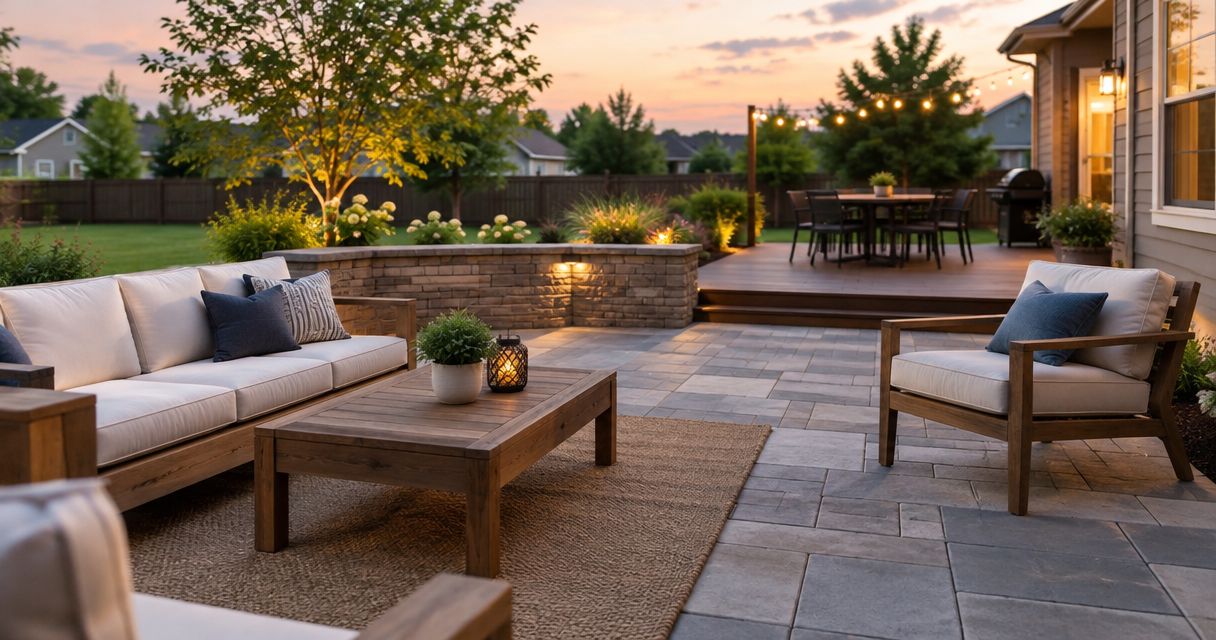
Best overall: concrete for a patio that needs a firm, continuous surface beside a home addition. Best for a patterned surface with individual-unit repairs: concrete pavers. Best for a flexible, informal seating area: gravel. Best for a natural-stone appearance: flagstone. This 2026 guide compares the best patio materials for a backyard addition in Central Iowa and shows where the base, drainage, and connection to the house matter more than the finish.
- For most Central Iowa backyard additions, concrete is the best patio material when firm, continuous access is the priority.
- Concrete pavers suit homeowners who want a patterned surface and the ability to replace individual units.
- Gravel fits informal seating areas; flagstone fits a natural-stone look but requires careful joint and base planning.
- Phoenix Construction Solutions is best suited to homeowners planning how a patio relates to a remodeling or addition project.
Why this matters in Central Iowa
A patio beside a new room, renovated exterior, or changed doorway is not just a choice of surface. Its height must work with the threshold, its drainage must keep water away from the home, and its footprint must leave room for the rest of the yard. Freeze-thaw conditions also make base preparation and water management central to the decision.
If the patio is part of a larger project, settle its relationship to the addition before choosing a finish. Phoenix Construction Solutions is a licensed and insured remodeling, addition, and reconstruction contractor based in Carlisle and serving Des Moines and Central Iowa. You can discuss the broader project through Phoenix Construction Solutions; confirm the patio work included in any proposed scope rather than assuming it is part of an addition.
What makes the best patio material for a backyard addition?
Use these criteria before comparing appearances. The best surface is the one that fits how you enter, use, and maintain the space.
- Threshold and accessibility: Decide whether you need a firm, continuous route from the door to seating or other outdoor areas. Material selection does not by itself resolve the height change at the doorway.
- Drainage: Identify where water will travel across the patio and where it will leave the yard. A surface that sheds water still needs a planned destination for it.
- Base and soil preparation: Ask what excavation, compacted base, and edge restraint the proposed installation includes. The appropriate assembly depends on site conditions and the chosen material.
- Repairs: Consider whether you would rather repair a continuous slab, replace individual paving units, reset stone, or replenish loose material.
- Daily use: Chairs, carts, and foot traffic behave differently on continuous concrete, jointed paving, irregular stone, and loose gravel.
- Written scope: Compare proposals by preparation, drainage, material, edges, and connections to the house—not the finish name alone.
A 2026 patio decision starts at the doorway and the ground below the surface. If those details are unresolved, choosing a color or laying pattern first puts the least consequential decision ahead of the most consequential ones.
Patio materials at a glance
| Material | Best for | Standout feature | Key limitation |
|---|---|---|---|
| Concrete | A firm, continuous route beside the addition | Uninterrupted surface | Cracks and repairs can remain visible |
| Concrete pavers | Patterned patios where individual units can be reset | Replaceable units | Joints and edges need upkeep |
| Flagstone | A natural-stone seating area | Variation in stone shape and appearance | Uneven pieces and joints complicate smooth access |
| Gravel | An informal area away from the main entry route | Loose material can be replenished | Shifts under chairs and wheels |
The table ranks uses, not installers. The same material performs differently when the patio is planned around a new door, an outdoor kitchen, or a detached seating area. Use the sections below to match the surface to the part of the yard it must serve.
1. Concrete: best patio material for firm access
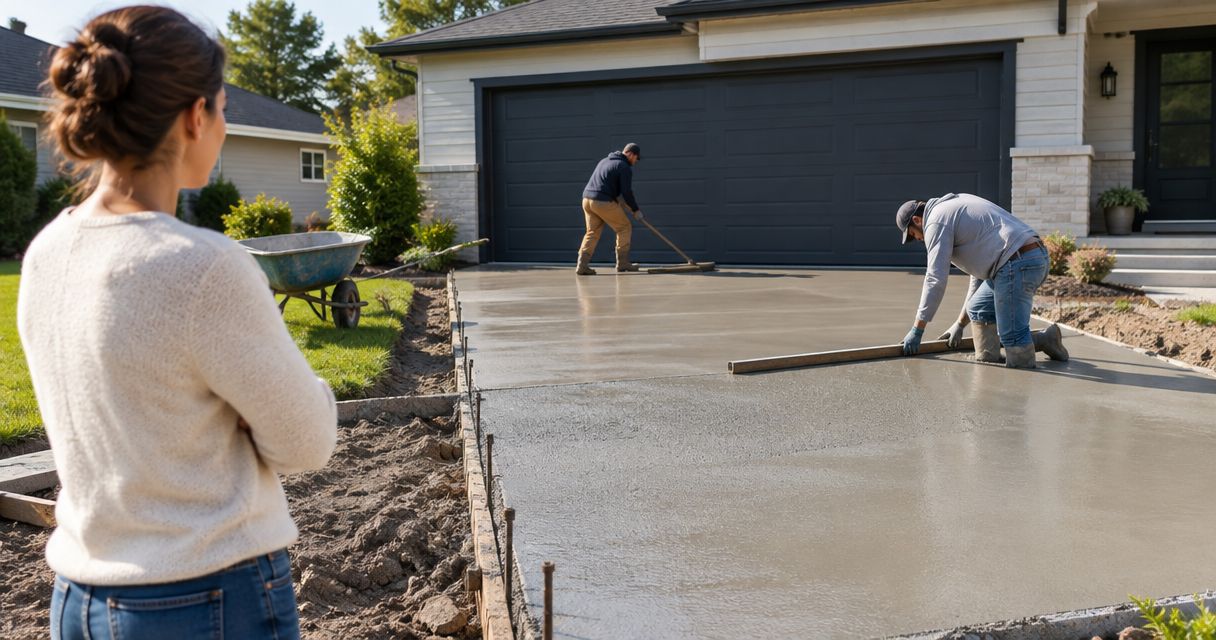
Concrete forms a continuous patio surface that works well when the main goal is a stable route from a home addition to outdoor seating. It gives you a clear plane for placing furniture and moving across the space. Its finish cannot compensate for an unsuitable base, poorly planned drainage, or a mismatch at the door.
Concrete pros:
- Firm, continuous surface for walking, furniture, and wheeled movement.
- No loose aggregate to rake back into place.
- Straightforward to define as a single patio area in a written scope.
Concrete cons:
- Cracks can develop, and repairs can be visible against the surrounding surface.
- A finished slab is less forgiving if you later need to change its layout or work beneath it.
- Water running off the surface still needs a suitable route away from the home.
Best for: Homeowners who need a firm main patio directly outside a new or renovated doorway.
Before approving a concrete layout, ask where the door threshold meets the finished patio, where runoff goes, and how the proposed work meets existing surfaces. Those answers matter more than choosing a decorative finish. If the project also changes the home’s exterior, coordinate the patio elevation with that work rather than treating each surface as a separate decision.
Verdict: Buy concrete when continuous access is the priority and the drainage and threshold details are resolved in the scope. Hold the finish decision if the proposed layout leaves either detail unclear.
2. Concrete pavers: best patio material for individual-unit repairs
Concrete pavers are separate manufactured units installed as a joined surface. They suit a patio where you want a defined pattern and the option to lift or replace individual units. That flexibility does not eliminate the need for a suitable base, secure edges, or ongoing attention to joints.
Concrete paver pros:
- Individual units can be removed and reset where work is needed beneath the surface.
- Shapes and laying patterns offer layout choices without changing the basic material category.
- Pavers define a clear edge between a patio and adjacent planting or lawn areas.
Concrete paver cons:
- Units can shift if the base or edge restraint does not hold them in place.
- Joints collect debris and need maintenance.
- A jointed surface requires attention where it meets a doorway or accessible route.
Best for: Homeowners who want a patterned patio and value the ability to address individual sections rather than a continuous slab.
Ask what holds the perimeter in place and how the installer will manage water at the house. Do not assume that ordinary concrete pavers make the patio permeable; that depends on the specified paving system and what sits beneath it. For a 2026 addition, also check that the proposed pattern does not create an awkward transition at the new door.
Verdict: Buy concrete pavers when replaceable units and a patterned surface matter more to you than having an uninterrupted plane. Hold if the proposal describes the pavers but not the base, joints, and edges.
3. Flagstone: best patio material for a natural-stone look
Flagstone uses pieces of natural stone to make a patio surface. Its appeal is the variation between pieces, which suits a seating area where the stone itself is a visible part of the design. The trade-off is that pieces and joints need careful selection and placement when you want a comfortable walking route.
Flagstone pros:
- Natural variation creates a distinct surface without relying on a repeating manufactured pattern.
- Individual pieces can be addressed if a section needs attention.
- The layout can follow the shape of a defined garden or seating space.
Flagstone cons:
- Irregular pieces make a consistently even surface harder to achieve.
- Wider or uneven joints can interfere with chairs and wheeled movement.
- Stone selection and placement require specific attention in the written scope.
Best for: Homeowners prioritizing a natural-stone appearance in a patio or seating area that does not have to serve as the smoothest route out of the house.
Flagstone is not a substitute for deciding how people get from the door to the seating area. If you need firm access throughout, compare the proposed finished joints and surface levels with a concrete or concrete-paver route. Specify the area where stone is intended rather than assuming every outdoor path must use the same material.
Verdict: Hold flagstone until you have reviewed the proposed pieces, joints, and route from the addition. Buy it when the finished walking surface fits how you will use the space.
4. Gravel: best patio material for an informal seating area
Gravel is loose aggregate contained within a defined patio area. It works for a separate seating spot where a rigid paved surface is not necessary. It is a weaker choice for the main route from a new doorway because the loose surface moves underfoot, furniture, and wheels.
Gravel pros:
- The surface can be replenished and reshaped as an outdoor area changes.
- It defines an informal seating zone without a continuous slab.
- It can fit an area where the goal is a distinct ground surface rather than a smooth entry route.
Gravel cons:
- Furniture legs and wheels can sink or shift.
- Loose material can migrate beyond the patio without effective edging.
- Weeds and displaced aggregate require upkeep.
Best for: Homeowners creating a separate, informal seating area rather than the primary patio outside an addition.
Ask where the gravel will stop, what separates it from lawn or planting, and how you will reach the area. A gravel seating area can sit alongside a firmer path; the materials do not need to compete for the same job. In 2026, define those different jobs on the plan before comparing proposals.
Verdict: Buy gravel for a contained, informal seating space. Skip it as the only surface when the patio must provide a firm route from the house.
How we ranked these materials
The ranking starts with the most demanding common use: a main patio directly connected to a home addition. Concrete comes first because it provides a firm, continuous surface. Pavers follow for homeowners who prefer individual-unit repairs; flagstone and gravel suit more specific design and use cases.
This is a material ranking, not a claim that one assembly works on every Central Iowa lot. Site grading, soil conditions, door height, and the work planned around the house determine the final specification. Compare written proposals against the same footprint and the same access and drainage requirements. Otherwise, differences in the proposed groundwork can hide behind a simple material label.
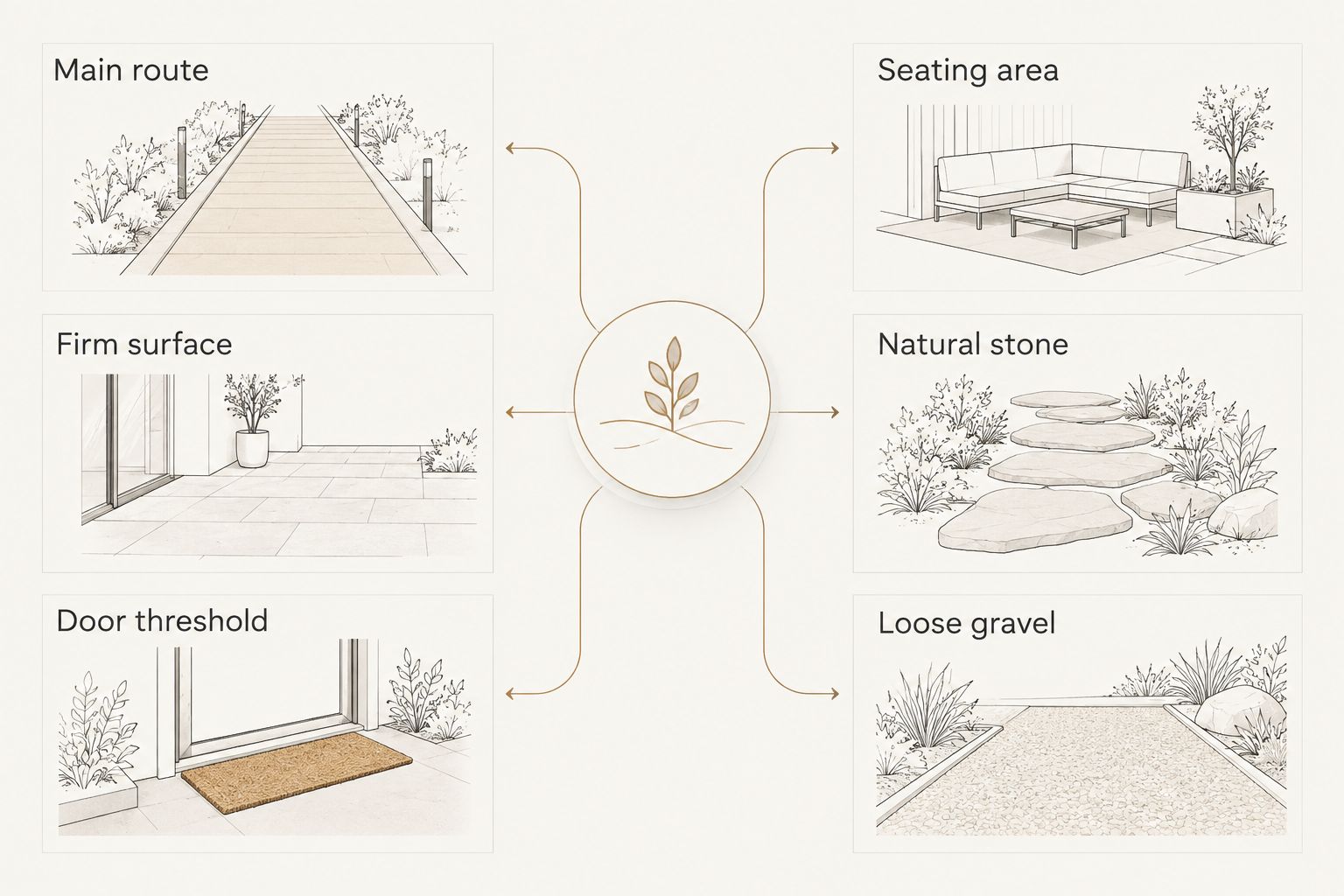
A side-by-side layout helps separate the main route from optional seating space. For example, the path out of the house can call for a firm surface while another part of the yard calls for a different finish. Choose the route first, then decide whether the entire patio needs to match it.
Which patio material should you choose?
Choose concrete by default if this is the main patio outside an addition and you want a firm, continuous surface. Choose concrete pavers instead if individual-unit repairs and a patterned layout matter more. Reserve flagstone for a natural-stone seating area where the joints and walking surface work for you; use gravel for an informal area that is not your main access route.
If the patio will connect to cooking, seating, or other outdoor work, place those uses on the plan before fixing the patio footprint. The guide to planning an outdoor kitchen addition in Central Iowa covers that related layout decision. A surface chosen without room for the intended use solves only part of the backyard project.
For a 2026 remodeling or addition project, ask Phoenix Construction Solutions to identify how the proposed home work meets the exterior space and to put the agreed scope in writing. Confirm whether patio work is included. That distinction keeps the material decision separate from assumptions about what a remodeling or addition proposal covers.
Discuss your Central Iowa addition
Review the addition scope and how the new space will meet your backyard.
FAQ
What are the best patio materials for a backyard addition in Central Iowa?
Concrete is the best default for a firm, continuous patio outside a home addition. Concrete pavers suit individual-unit repairs, while flagstone and gravel fit more specific seating-area uses.
Is concrete or pavers better beside a new back door?
Concrete is better when a continuous walking surface is the priority; pavers are better when you value replaceable units and a patterned surface. With either material, resolve the threshold and drainage before choosing a finish.
Is flagstone a good choice for the main patio entrance?
Flagstone can work if its finished pieces and joints provide the walking surface you need. Compare that proposed route with concrete or concrete pavers when smooth access is important.
Can gravel be used for a backyard patio?
Yes, gravel works for a contained, informal seating area. It shifts under furniture and wheels, so choose a firmer surface for the main route from an addition.
Does a patio surface need to drain away from the house?
The patio plan needs to manage water so it does not direct runoff toward the home. Ask where water will travel and how the proposed surface connects to existing grading.
What should a Central Iowa patio proposal include?
Ask for a written scope covering the footprint, base preparation, surface material, edges, drainage, and transitions at the house. Compare those details across proposals before focusing on the finish.
Can Phoenix Construction Solutions discuss a patio with a home addition?
Phoenix Construction Solutions handles remodeling, additions, and reconstruction in Central Iowa. Call (515) 505-8781 to discuss how the proposed addition will connect to the backyard, and confirm whether patio work is included in the written scope.
One last thing
The patio material does not have to be the same across the whole backyard. Keep the main route firm if that is what daily use demands, then choose stone or gravel only where its appearance and upkeep make sense. That is a more useful 2026 decision than picking one finish before you know where the door, furniture, and water will go.