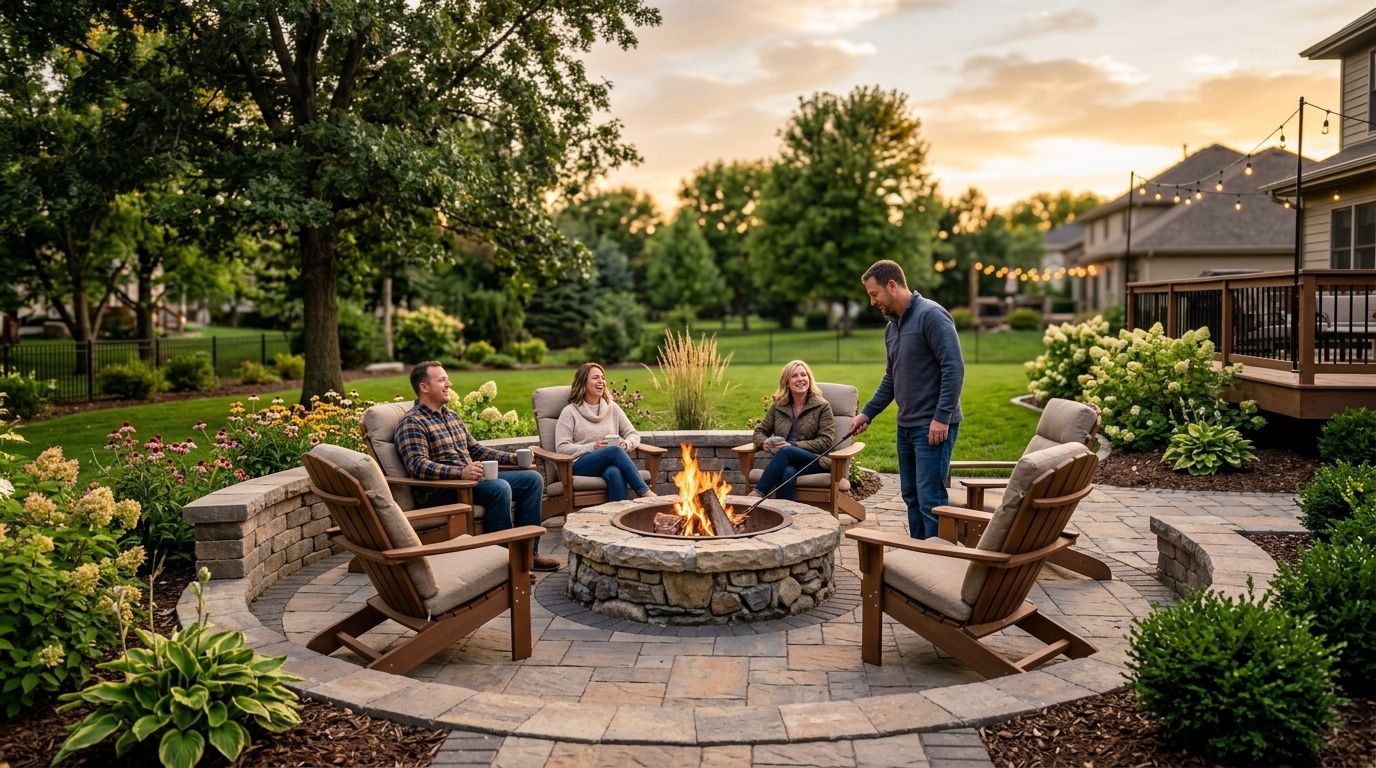
A fire pit patio addition in Central Iowa turns an unused corner of a Des Moines, Ankeny, or Waukee backyard into a space you'll actually use nine months a year, with the goal of extending outdoor living past the short window of an Iowa summer. What makes this build different from a fire pit kit at a home center is the ground underneath it — frost heave, clay soil, and 90-degree swings between winter and summer stress a patio surface in ways mild climates never see.
- A fire pit patio addition in Central Iowa needs footings or a base rated for the region's frost depth, not a flat paver kit.
- Gas fire pits cost more upfront but skip the ash cleanup and burn bans that hit wood-burning pits during dry stretches.
- Phoenix Construction Solutions builds fire pit patios as part of full backyard additions across Des Moines, Ankeny, Norwalk, and Waukee.
- Setback rules from fences, decks, and property lines vary by city — check before you pour concrete.
Why this matters for Central Iowa backyards
Central Iowa gets real winters and humid summers, and a patio built to a generic national spec often heaves, cracks, or drains poorly within two or three seasons. Phoenix Construction Solutions sees the same pattern across Ankeny, Urbandale, and West Des Moines: a fire pit patio poured without proper base depth looks fine the first year and then tilts once frost works under the edges.
Homeowners in this region also deal with wind exposure most fire pit guides ignore. An open lot in Waukee or Norwalk with no tree line needs a different pit style and placement than a tucked-in Des Moines backyard with mature trees on three sides.
Choose the right fire pit type for Iowa's freeze-thaw cycle
Start here, because the fire pit type drives every decision after it — patio size, gas line routing, and clearance from the house.
- Wood-burning fire pits: cheapest to build, no gas line, but off-limits during regional burn bans in dry stretches
- Propane fire pits: no smoke, no ash, lit in under a minute, fuel stored on site
- Natural gas fire pits: no refills at all for homes already on a gas service line
- Built-in masonry fire features: highest upfront labor, but hold up best to Iowa's freeze-thaw cycle when built on a proper footing
A wood-burning pit is the right call if you already have a wood source and don't mind burn-ban interruptions; a gas pit wins for anyone who wants it lit in under a minute, every time.
Pick a patio surface that survives freeze-thaw
The patio surface matters more than the fire pit itself for long-term durability in this climate.
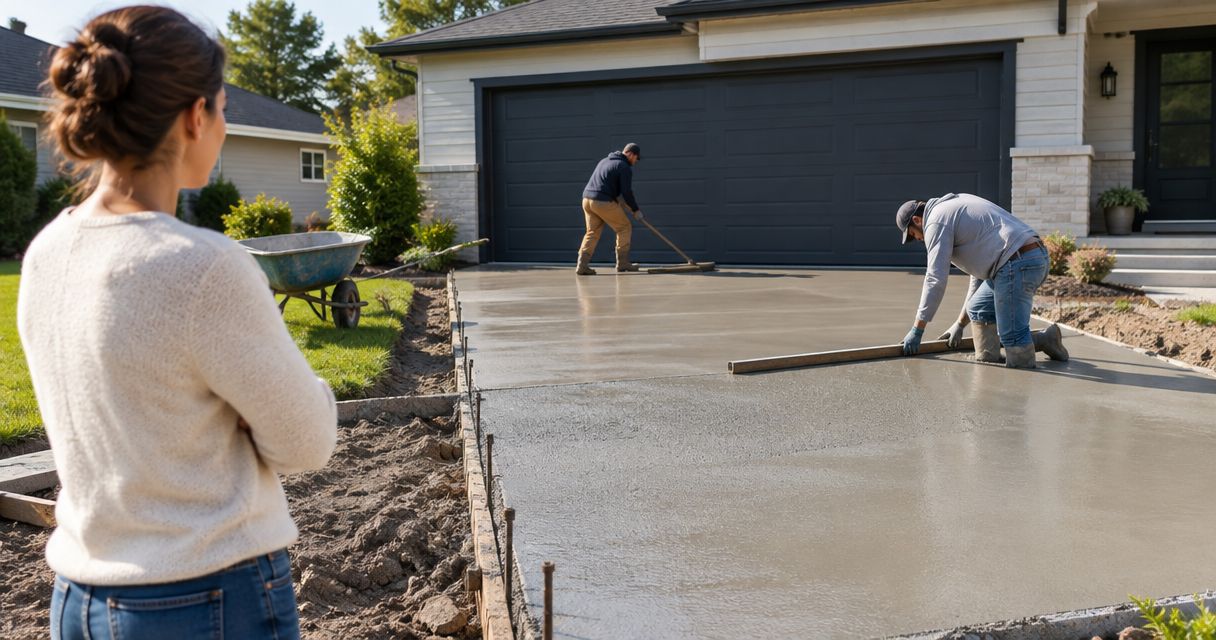
- Poured concrete over a compacted gravel base, sloped away from the house
- Paver systems rated for freeze-thaw, set on a properly compacted base rather than sand alone
- Natural stone set in a mortar bed, which handles frost better than dry-laid stone in Iowa clay
- Stamped concrete for a decorative look without paver joint maintenance
DIY homeowners can pour a small concrete pad themselves, but a patio tied into an existing deck or house foundation needs footings sized for the local frost depth — that's where a licensed contractor earns the fee.
Plan for fire code and setback distance before you dig
Every city in Central Iowa sets its own rules on fire pit placement, and permit offices from Des Moines to Pleasant Hill enforce them differently.
- Confirm minimum distance from the house, fence, and property line with your local building department
- Check whether wood-burning pits require a permit separate from gas pits in your city
- Ask about HOA rules if you're in a newer Ankeny or Waukee subdivision — many restrict open-flame pits entirely
- Verify clearance from overhead branches and any covered structure like a pergola
- Read the Iowa renovation permit process before scheduling any concrete delivery
Run these checks before pouring the pad, not after. Moving a cured patio slab costs more than the fire pit itself.
Size the patio for how you'll actually use it
A fire pit patio built too small gets crowded fast; one built too large wastes budget on square footage nobody sits on.
- 12x12 feet fits a small pit and four chairs, workable for a starter Des Moines bungalow lot
- 16x16 feet comfortably seats six to eight around a mid-size pit with room to walk around
- 20x20 feet or larger works for households that host regularly and want a separate seating zone from the fire
- Leave 3-4 feet of clear walking space around the fire pit itself, beyond the seating ring
Add lighting, wind protection, and shade for year-round use
A patio that only works on calm, warm evenings gets used a fraction of the nights it could. Low-voltage path lighting, a wind-blocking privacy panel on the exposed side, and overhead cover stretch the season on both ends. For homeowners layering in more structure, patio covers and pergolas for Central Iowa backyards pair naturally with a fire pit patio because they cut wind without blocking sightlines to the fire.
If entertaining is the main driver, some Central Iowa homeowners extend the addition into a full cooking and gathering zone — see outdoor kitchen additions for Central Iowa backyards for how that shares the same patio footprint.
Budget for site prep and drainage, not just materials
Material cost is the easy number to estimate. Grading and drainage are where 2026 budgets go sideways in Central Iowa's clay-heavy soil.
- Excavation and grading to slope water away from the house foundation
- A drainage plan if the yard already holds water after rain, common on newer Waukee and Norwalk lots
- Gas line trenching and permit fees if you're going with a gas fire pit
- Base material delivered and compacted, not just spread
Decide DIY versus hiring a licensed contractor
A small, freestanding wood-burning fire pit on a gravel base is a realistic weekend DIY project. A patio addition tied into the house, running gas lines, or requiring permitted footings is not.
Phoenix Construction Solutions is licensed and insured, and handles the permit process, footing depth, and gas line coordination that turn a fire pit patio addition into a permanent, code-compliant part of the property.
Fire pit and patio options compared
| Option | Best for | Key limitation |
|---|---|---|
| Wood-burning fire pit | Homeowners with a wood source who don't mind maintenance | Subject to burn bans; produces ash and smoke |
| Propane fire pit | Anyone wanting instant on/off without a gas line trench | Requires tank refills and on-site fuel storage |
| Natural gas fire pit | Households already on natural gas who want zero refill hassle | Line installation adds permit steps and trenching |
| Built-in masonry fire feature | Homeowners doing a full patio addition, not a standalone pit | Highest labor cost; not a weekend project |
Verdict: a gas fire pit on poured concrete or mortared stone is the best all-around fit for Central Iowa's climate and permit environment in 2026 — it skips burn-ban downtime and holds up to freeze-thaw better than a dry-laid paver kit.
Plan your fire pit patio addition
Licensed, insured build for Des Moines, Ankeny, Waukee, and Central Iowa.
Common mistakes Central Iowa homeowners make on this project
- Skipping frost-depth footings: a patio that looks solid in July heaves by the second Iowa winter without a base dug below the frost line.
- Placing the pit too close to a wood fence or deck: many Ankeny and Urbandale lots are tight, and setback minimums exist for a reason.
- Choosing dry-laid pavers over a compacted base: sand alone shifts under freeze-thaw cycles within one or two seasons in this climate.
- Not checking the HOA before pouring: some Waukee and West Des Moines subdivisions restrict or ban open-flame pits outright.
- Underestimating drainage: a patio that pools water after a spring rain cracks faster and stays unusable longer.
FAQ
How much does a fire pit patio addition cost in Central Iowa?
Cost depends on patio size, fire pit type, and whether a gas line or permitted footings are required. A licensed contractor can price the specific scope after a site visit, which is more reliable than budgeting off a national average.
Do I need a permit for a fire pit patio in Iowa?
Most Central Iowa cities require a permit for gas line work and for patios tied into an existing structure. Wood-burning pits sometimes need a separate permit, so check with your local building department before starting.
Is a gas fire pit better than wood-burning for Iowa winters?
Gas fire pits are better for consistent year-round use because they aren't affected by burn bans and don't require dry wood storage. Wood-burning pits cost less upfront but need more maintenance and get restricted during dry spells.
What patio material holds up best to Iowa freeze-thaw cycles?
Poured concrete over a properly compacted gravel base, or natural stone set in mortar, holds up best. Dry-laid pavers on sand alone are far more likely to shift within a few winters.
How big should a fire pit patio be?
A 16x16-foot patio comfortably seats six to eight people around a mid-size fire pit with room to walk. Smaller lots work at 12x12 feet; frequent entertainers often go 20x20 feet or larger.
Can I build a fire pit patio myself?
A small freestanding wood-burning pit on a gravel pad is a realistic DIY project. A patio tied into the house, running gas lines, or requiring permitted footings should go through a licensed, insured contractor.
Does a fire pit patio need a setback from my fence?
Yes, most Central Iowa cities set a minimum distance from fences, property lines, and structures. Confirm the exact number with your city's building department before pouring the pad.
Who builds fire pit patio additions in Central Iowa?
Phoenix Construction Solutions is a licensed and insured contractor based in Carlisle, Iowa serving Des Moines, Norwalk, Pleasant Hill, Ankeny, Urbandale, Waukee, and West Des Moines. Call (515) 505-8781 to discuss a 2026 build.
One last thing
The detail most Central Iowa homeowners skip is wind exposure, not fire pit style. A pit that burns fine on a calm night becomes unusable the moment a 15 mph wind kicks up, which is routine on the open, tree-less lots common in newer Waukee and Norwalk subdivisions built on former farmland. A low privacy panel or a hedge line on the prevailing wind side fixes more comfort problems in 2026 than upgrading the fire pit ever will.