Central Iowa backyards need outdoor kitchen additions built for four-season swings, not the mild-climate kits sold in national big-box catalogs. A grill island that survives a Waukee summer cookout also has to sit through a hard Iowa freeze every winter without cracking, heaving, or rusting out by spring.
- An outdoor kitchen addition in Central Iowa needs frost-line footings and freeze-rated materials, not a patio-store kit.
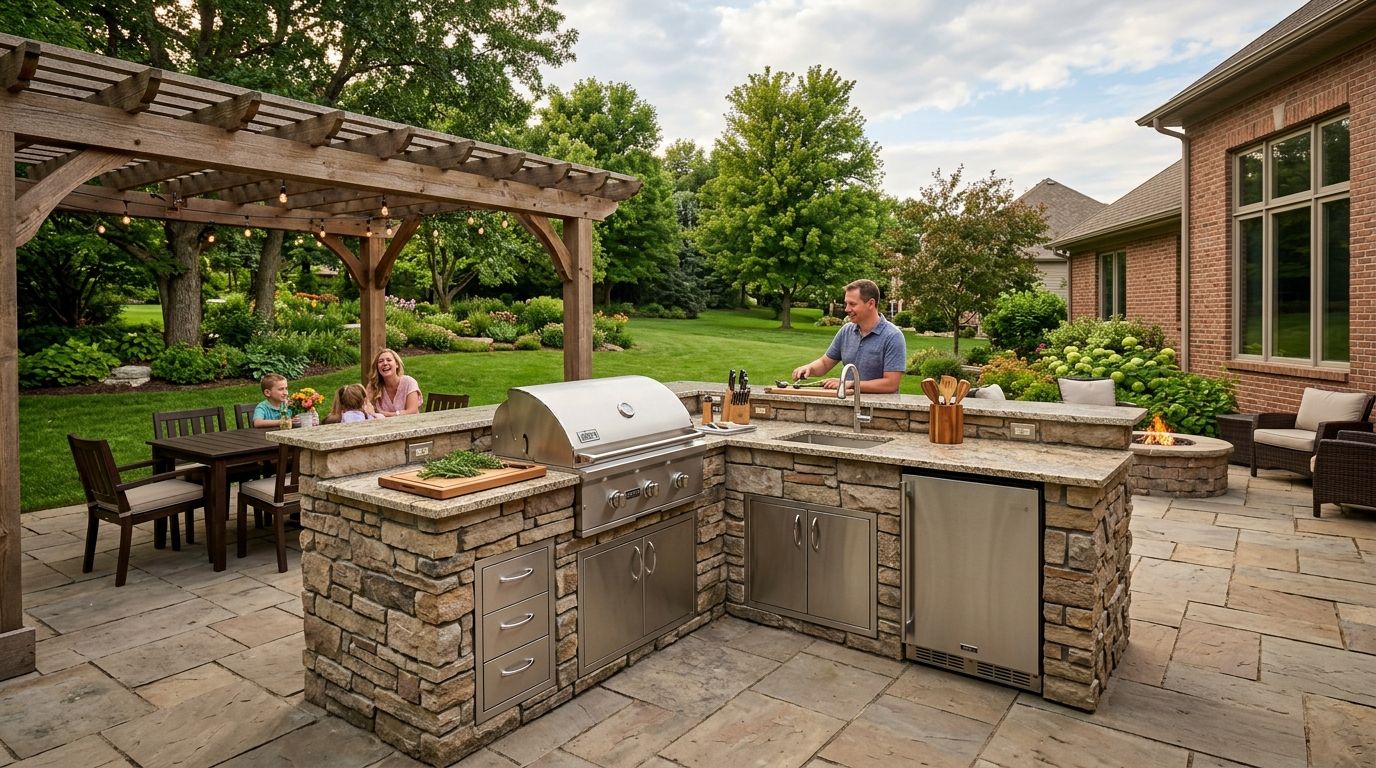
- Concrete block, natural stone, and stainless steel hold up through Iowa's freeze-thaw cycles better than veneer panels or untreated wood.
- Gas, water, and 220-volt electrical hookups should be planned before the slab is poured, not added after.
- A pergola or patio cover extends the usable season on either side of Iowa's short outdoor months.
- Phoenix Construction Solutions builds outdoor kitchen additions and covered patio structures across Des Moines, Ankeny, Waukee, Norwalk, and the rest of Central Iowa.
Why outdoor kitchen additions matter for Central Iowa homeowners
Central Iowa's outdoor season runs roughly May through September, with a shoulder window in April and October when a covered structure keeps the space usable. That's a shorter payoff window than a Phoenix or Atlanta backyard gets, which means the build has to work harder in fewer months and survive the other seven doing nothing but sitting through freeze-thaw cycles.
A cheap outdoor kitchen kit built for a warm-climate market will show cracked grout and rusted brackets by its second Iowa winter. The addition has to be engineered for this climate from the footings up, not adapted from a Sun Belt design.
Assess your backyard's grade and drainage first
Before any layout decision, the site itself decides what's possible. Standing water next to a grill island or bar counter is the fastest way to undermine a footing in a state where the frost line runs deep enough to require footings well below grade.
- Check the slope away from the house — you want water moving away from the structure, not pooling at the base
- Confirm the location doesn't sit over a septic line, gas line, or buried utility
- Test soil drainage after a heavy rain; standing water 24 hours later is a red flag
- Note existing tree roots that could interfere with footings or gas lines
- Flag any spot where snow drifts collect in winter — that's often where ice damage starts
Choose a layout that survives freeze-thaw
Iowa's freeze-thaw cycle is the single biggest factor in whether an outdoor kitchen lasts 5 years or 25. Footings poured below the frost line and a properly compacted gravel base under any slab or paver system are non-negotiable here, regardless of what a national kit manufacturer recommends for a milder climate.
- L-shaped and straight-line layouts handle frost heave better than complex curved designs
- Keep the grill island footprint modest — smaller poured sections crack less than one massive slab
- Separate expansion joints every few feet of concrete to control cracking
- Avoid built-in seating directly against the house foundation without a proper transition joint
- Leave clearance around gas lines for ground movement over time
Homeowners planning a larger backyard project sometimes pair the kitchen with a patio cover or pergola addition to shade the cooking area and extend the shoulder-season usable window into April and October.
Pick weatherproof materials for counters and cabinetry
Material choice is where most Iowa outdoor kitchens fail early. A counter or cabinet rated for a Phoenix backyard is not rated for a Des Moines winter, and the difference shows up as cracked stone, warped panels, and rusted hardware within two or three seasons.
- Concrete block or brick base construction — handles freeze-thaw movement without cracking the way veneer stone can
- Natural stone or porcelain slab countertops — porcelain resists staining and won't pit from freeze cycles the way some granites do
- 304 or 316 stainless steel cabinetry — resists rust better than powder-coated aluminum in humid Iowa summers
- Stainless or cast aluminum appliances — rated for outdoor use in sub-zero temperatures, not just splash-resistant
- Avoid untreated wood cabinetry entirely — it's the first material to fail in this climate
Anyone weighing decking or surface materials for a broader backyard project should also review the decking material options built for Central Iowa's climate, since the same freeze-thaw logic applies to a deck surrounding the kitchen.
Plan gas, water, and electrical hookups early
Running a gas line, water line, or 220-volt electrical circuit after the slab is poured means jackhammering concrete. Every hookup decision belongs in the design phase, before a single footing goes in the ground.
- Confirm whether the grill needs a dedicated natural gas line or runs on propane tanks
- Decide if a sink needs both hot and cold water lines, which usually means tying into the home's plumbing
- Plan a 220-volt circuit if the design includes a built-in refrigerator or heated element
- Route any electrical lines below frost depth and inside conduit rated for direct burial
- Pull the required permits before trenching — Iowa municipalities inspect utility trenches before backfill
Decide on a cover before you finalize the layout
A cover changes how the kitchen performs in both directions — it blocks summer sun over the cooking zone and it keeps a light spring rain from shutting the whole space down. Skipping this decision until after construction usually means retrofitting posts into a finished patio, which is more expensive than planning it up front.
- A pergola gives partial shade and lets rain through, which some homeowners prefer for ventilation around a grill
- A solid patio cover blocks rain fully, useful for anyone entertaining regardless of forecast
- A screened structure keeps insects out during peak Iowa mosquito season in June and July
- Attached covers tie into the home's roofline and gutters; detached structures need their own drainage plan
Homeowners who want full enclosure rather than an open-air cooking space sometimes look at a screened porch addition instead of an open kitchen layout, particularly if the backyard backs up to a wooded lot.
Budget realistically for a Central Iowa build
An outdoor kitchen addition costs more here than in a climate where footings can sit shallow and materials don't need freeze-rating. The frost-line footings, weatherproof material upgrades, and utility trenching all add cost compared to a warm-climate kit install, and that's before a cover structure enters the plan.
For a full breakdown of what drives cost on a Central Iowa addition project, review the home addition cost breakdown for Central Iowa, which walks through the same site-prep and material factors that apply to an outdoor kitchen build.
Compare your build options
| Option | Best for | Key limitation |
|---|---|---|
| Prefab outdoor kitchen kit | Homeowners wanting the fastest install timeline | Not engineered for Iowa frost-line depth or freeze-thaw movement |
| Modular outdoor kitchen system | Homeowners who want some customization without full custom design | Limited to manufacturer's material and layout options |
| Custom-built outdoor kitchen addition | Homeowners who want frost-rated footings, matched materials, and a cover integrated into one design | Longer planning and build timeline than a kit |
Verdict: a custom-built outdoor kitchen addition is the only option that reliably survives repeated Iowa winters without material failure by year three. Kits and modular systems can work for homeowners prioritizing speed over longevity, but both carry real freeze-thaw risk in this climate.
Plan your outdoor kitchen addition
Licensed and insured builds across Central Iowa backyards.
Common mistakes Central Iowa homeowners make
- Skipping frost-line footings to save on early cost — this is the single most common failure point, showing up as cracked slabs and shifted counters within two winters.
- Choosing warm-climate materials because they're cheaper up front — veneer stone and untreated wood look identical to freeze-rated materials at install but fail years earlier.
- Adding utility hookups after the slab is poured — this turns a simple gas or water line run into a demolition job.
- Building without a cover plan, then retrofitting one later — post footings for a pergola added after the fact rarely align cleanly with the finished patio.
- Underestimating how short the usable season actually is — a kitchen without shade or cover loses real value across Iowa's short outdoor months.
FAQ
How much does an outdoor kitchen addition cost in Central Iowa?
Cost depends on footprint, material choice, and whether a cover structure is included. Frost-line footings and freeze-rated materials add cost compared to warm-climate kits, so get a site-specific quote rather than relying on national averages.
Can an outdoor kitchen be used year-round in Iowa?
Not without significant enclosure and heating. Most Central Iowa outdoor kitchens see heavy use from May through September, with a covered structure extending the shoulder season into April and October.
Do I need a permit for an outdoor kitchen addition in Central Iowa?
Most Central Iowa municipalities require permits for gas lines, electrical hookups, and any structure attached to the home. Check with your local building department before construction starts.
What's the best material for an outdoor kitchen in a cold climate?
Concrete block or brick base construction, porcelain or natural stone countertops, and 304 or 316 stainless steel cabinetry hold up best against Iowa's freeze-thaw cycles. Untreated wood cabinetry is the first material to fail.
Should I add a pergola or patio cover to my outdoor kitchen?
A cover blocks summer sun over the cooking zone and shields the space from light rain, extending usable months on both ends of the season. Choose a pergola for partial shade and ventilation, or a solid cover for full rain protection.
How deep do footings need to be for an outdoor kitchen in Iowa?
Footings need to sit below the local frost line, which varies by county but runs well below grade in Central Iowa. A licensed contractor pulls the exact depth requirement from local building code before pouring.
Can I run gas and water lines to an existing patio?
Yes, but it usually means trenching through the existing slab, which is more disruptive and costly than planning utility runs before the patio is poured. Plan hookups during initial design whenever possible.
Is a prefab outdoor kitchen kit a good option in Iowa?
Prefab kits install fast but aren't engineered for Iowa's frost-line depth or freeze-thaw movement, and most show material failure within a few winters. A custom-built addition with frost-rated footings holds up longer.
One last thing
The detail most homeowners skip is the transition joint between the outdoor kitchen slab and the house foundation. Iowa's ground moves enough each winter that a rigid connection between the two structures is where cracks start first — a flexible expansion joint there costs little and prevents the most common repair call Phoenix Construction Solutions gets on outdoor kitchen additions.