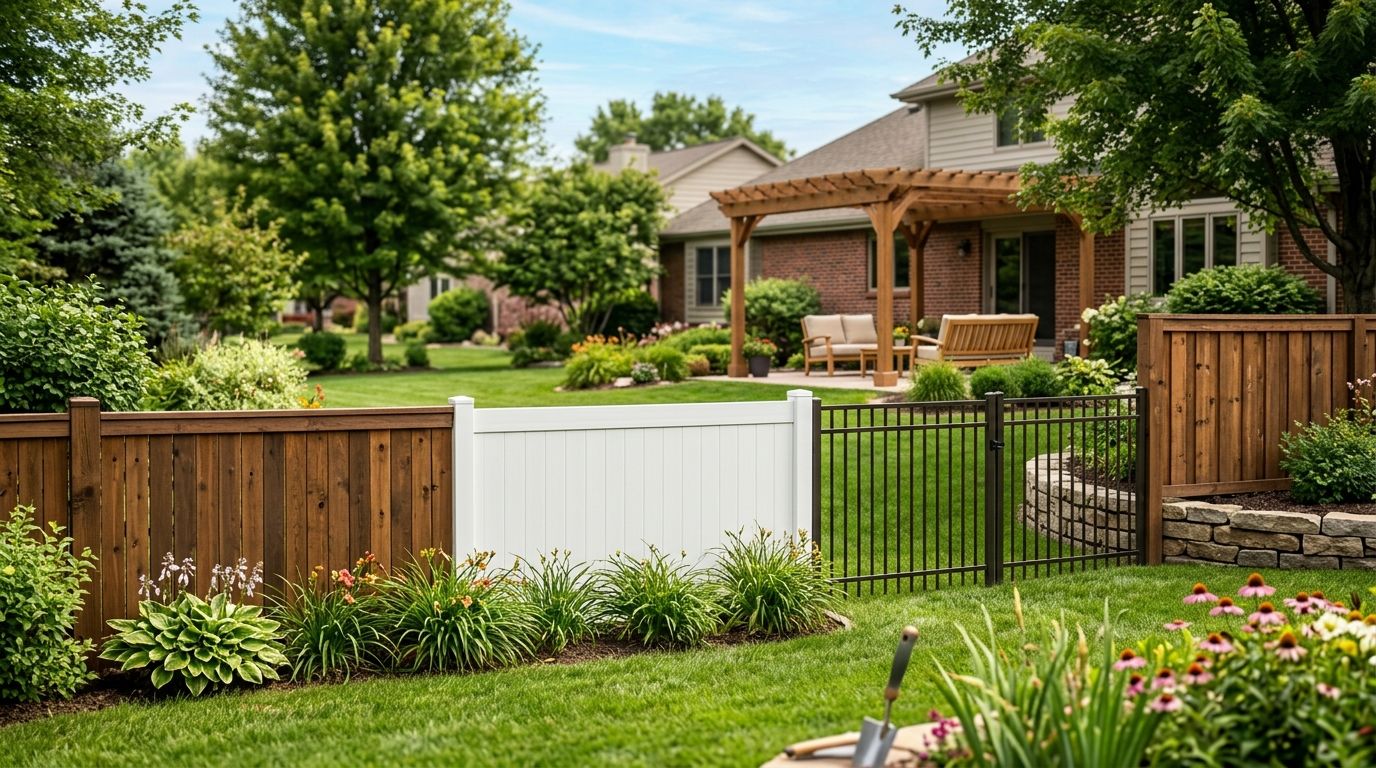
Best overall: cedar wood. Best for low-maintenance privacy: vinyl. Best budget option: chain-link. The best fence materials for a backyard in Central Iowa depend on whether you need a private space, a visible boundary, or an enclosure for pets. This 2026 guide compares five materials and shows what to settle before requesting a fence quote.
- Cedar wood is the best overall fence material for a Central Iowa backyard when privacy and repair flexibility matter.
- Vinyl is best for homeowners who want privacy without routine staining; damaged sections still need attention.
- Chain-link is the budget pick for a visible boundary, but it provides little privacy.
- Choose the fence layout before planning gates, patios, decks or other backyard changes.
Why this matters
A fence becomes part of how you use the yard. A solid panel can screen a seating area, while an open fence can mark the boundary without blocking the view. Material choice also changes your maintenance work: wood needs finish upkeep, vinyl needs cleaning, and metal finishes need inspection where they are damaged.
In 2026, start with the purpose of the fence, not a sample board. A homeowner enclosing a dog run in Ankeny faces a different choice from one screening a patio in Des Moines. If you are planning other outdoor work, read the Central Iowa backyard fence installation guide as you decide where the fence and gates belong.
Phoenix Construction Solutions is a licensed and insured remodeling, additions and reconstruction contractor based in Carlisle and serving Des Moines and Central Iowa. Phoenix Construction Solutions is best for homeowners planning a remodel or addition alongside backyard changes, not as a substitute for comparing fence materials and fence-installation bids.
What makes the best backyard fence material?
Use these criteria before looking at a 2026 fence proposal. Each one changes either how the yard works or what you will have to maintain.
- Privacy: Solid panels screen a patio or neighboring window. Open pickets and mesh define an edge without creating the same visual barrier.
- Upkeep: Ask what needs washing, staining, sealing, painting or finish repair. Include that work in your decision, not just installation.
- Repairability: A fence that lets you replace an individual board offers a different repair path from a damaged molded panel or proprietary component.
- Gate use: Decide where people, pets and yard equipment enter. A good material choice does not rescue a gate placed across the path you use every day.
- Site conditions: Walk the property for slopes, drainage paths, trees and exposed corners. Ask each bidder how the proposed layout handles them.
- Appearance and rules: Check any applicable neighborhood requirements and local rules before selecting a height, style or location. Do not assume the neighbor’s fence establishes your allowable layout.
For a practical comparison, sketch a 6-foot privacy screen, a 4-foot open boundary, or a 36-inch gate opening as planning examples, then confirm the dimensions you actually need. Those figures are not a statement of local rules, standard product sizes or required access clearances.
Fence materials at a glance
The 2026 ranking assumes you want a useful backyard fence, not a decorative feature alone. The table separates the strongest use case for each material; it does not treat every fence style made from that material as interchangeable.
| Material | Best for | Standout feature | Key limitation |
|---|---|---|---|
| Cedar wood | Flexible privacy layouts | Individual boards can be replaced | Requires finish upkeep |
| Vinyl | Low-maintenance privacy | Solid styles screen the yard without staining | Panel damage can complicate repair |
| Aluminum | An open, finished boundary | Open pickets preserve sightlines | Does not provide solid-panel privacy |
| Chain-link | A functional enclosure on a budget | Mesh marks a boundary without a solid wall | Limited privacy and a utilitarian look |
| Composite | A solid fence with a manufactured finish | Solid-panel appearance without wood staining | Repair options depend on the system |
1. Cedar wood: best fence material for flexible privacy
Cedar wood ranks first because a board-built fence can be adapted to a yard’s layout and repaired a piece at a time. A solid design screens a seating area; a more open design keeps some visibility. The board spacing, finish and gate construction still determine the result.
Cedar wood pros:
- Individual damaged boards can be replaced without automatically replacing an entire fence run.
- Board layouts offer choices for privacy, airflow and appearance.
- The finish can be refreshed when its appearance changes.
Cedar wood cons:
- You must plan for staining, sealing or other finish upkeep appropriate to the installation.
- Boards can move, weather or develop uneven color over time.
- A poorly detailed gate can sag regardless of the boards used elsewhere.
Best for: A Central Iowa homeowner who wants privacy and accepts hands-on maintenance in exchange for repair flexibility.
Before approving a wood bid in 2026, ask which wood is specified for the boards and posts, how the gate will be built, and what finish work the proposal includes. Verdict: Buy for adaptable privacy; skip if you do not want finish upkeep.
2. Vinyl: best fence material for low-maintenance privacy
Vinyl is the clear alternative when you want a solid privacy fence without a wood-finishing routine. It still needs cleaning, and damage does not disappear simply because the surface is manufactured. Panel design and the availability of matching replacement parts matter when you compare bids.
Vinyl pros:
- Solid styles block views into a backyard seating area.
- The surface does not require wood staining.
- A consistent panel style suits a homeowner who wants a uniform boundary.
Vinyl cons:
- A damaged panel can require a different repair approach from replacing one wood board.
- Matching parts depend on the selected system.
- Solid panels block views you might prefer to keep.
Best for: A homeowner prioritizing privacy while avoiding routine wood finishing.
Ask a 2026 bidder to identify the panel system and explain how a damaged section or gate component would be replaced. Verdict: Buy for low-maintenance privacy; hold until the repair plan is clear.
3. Aluminum: best fence material for an open boundary
Aluminum fencing is the pick when you need a defined edge but do not want to turn the backyard into a visually enclosed space. Its open-picket design leaves sightlines through the fence. That makes it a poor substitute for cedar or solid vinyl beside an exposed patio.
Aluminum pros:
- Open pickets keep views across the yard.
- A finished metal surface avoids wood staining.
- The boundary remains visually lighter than a solid panel.
Aluminum cons:
- Open pickets provide little screening from neighboring properties.
- Picket spacing must suit the reason you need an enclosure.
- Finish damage and bent components still need attention.
Best for: A homeowner marking a yard boundary while keeping the view.
For a 2026 proposal, check the gate location and picket spacing against how your household uses the space. Verdict: Buy for sightlines; skip when privacy is the main requirement.
4. Chain-link: best budget fence material for enclosure
Chain-link serves a different purpose from a privacy fence: it establishes a visible, permeable boundary. It can suit a pet area or another space where enclosure matters more than screening. The mesh, posts and gates deserve as much attention as the material label on the bid.
Chain-link pros:
- Mesh keeps the yard visible from both sides.
- The fence defines an enclosure without a solid wall.
- Its straightforward appearance fits a function-first project.
Chain-link cons:
- Standard mesh does not provide meaningful visual privacy.
- The appearance is more utilitarian than the other picks.
- Damaged mesh or gates still require repair.
Best for: A homeowner who needs a functional boundary and ranks privacy lower.
In 2026, specify what the enclosure must contain before asking for a quote. A fence intended for a pet needs a different review of gaps, gates and ground conditions than a simple property boundary. Verdict: Buy for a function-first enclosure; skip for a private patio.
5. Composite: best fence material for a solid manufactured look
Composite belongs on the shortlist when you want solid-panel screening but do not want the routine of finishing natural wood. The name covers different fence systems, so compare the actual boards, posts and gate details rather than treating every composite proposal as equivalent. Confirm how the chosen system is repaired before committing.
Composite pros:
- Solid styles can screen a backyard gathering space.
- The manufactured finish avoids a natural-wood staining routine.
- Panel and board styles give homeowners another appearance choice.
Composite cons:
- Repair methods depend on the specific system and its components.
- Matching a damaged part later can be difficult if the selected component is unavailable.
- A solid fence blocks airflow and views more than an open design.
Best for: A homeowner seeking a solid manufactured fence after reviewing its replacement parts and gate construction.
Request those details in writing with the 2026 proposal. Verdict: Hold until the component and repair details are specified; buy if they fit your plan.
How this ranking works
Cedar wins overall on the combination of privacy choices and board-by-board repair. Vinyl takes the low-maintenance privacy slot; aluminum takes the open-boundary slot. Chain-link ranks as the budget pick for an enclosure, while composite is a separate solid-panel option that needs closer attention to the selected system.
That order is not a claim that one material performs best on every property. If your yard needs views, move aluminum ahead of cedar. If you refuse finish upkeep, move vinyl ahead. Use the table to select the right use case, then compare written bids for the same fence layout.
Plan the fence around the rest of the yard
A fence line affects where you can place a gate and how you move between the house, patio and yard. Walk that route before finalizing a material. Mark where equipment enters, where you want privacy and which views you want to retain.
If a home addition or remodel is part of the same 2026 plan, settle the proposed access and outdoor layout before treating the fence position as fixed. Phoenix Construction Solutions handles residential and commercial remodeling, additions and reconstruction in Central Iowa. Discuss the broader work separately from a fence-installation quote so the scope of each project stays clear.
Use a written scope when comparing proposals: identify the material and style, fence line, gates, existing-fence removal if needed, and how site obstacles are addressed. Confirm property boundaries and applicable local requirements before work begins. Call 811 before digging so underground utilities can be marked; follow the instructions and timing given for your location.
Plan your Central Iowa project
Discuss remodeling or addition work alongside your backyard plans.
Which backyard fence material should you choose?
Choose cedar wood if you want one default answer for privacy, layout flexibility and repairable boards. Choose vinyl when avoiding finish upkeep matters more. Pick aluminum for an open boundary, chain-link for a budget-focused enclosure, or composite after confirming the particular system’s repair path.
In 2026, bring the same layout to every fence bidder. A material comparison stops being useful when one proposal includes a gate and another assumes a different fence line. If you are also changing the house or outdoor living area, address that layout before the fence closes off an access route.
FAQ
What are the best fence materials for a backyard in Central Iowa?
Cedar wood is the best all-around choice for flexible privacy and board-by-board repair. Vinyl suits low-maintenance privacy, while aluminum and chain-link suit open boundaries.
Is vinyl better than wood for a backyard privacy fence?
Vinyl is better if avoiding routine wood finishing is your priority. Cedar wood gives you more straightforward board-by-board repair, but it needs finish upkeep.
Which backyard fence material gives the most privacy?
A solid cedar, vinyl or composite design provides more visual privacy than open aluminum or standard chain-link. Check gates and panel gaps as well as the main fence run.
Is chain-link a good fence for a backyard with pets?
Chain-link is a useful option when enclosure matters more than privacy. Check mesh openings, gates and gaps along the ground against your pet’s needs before choosing a design.
Do I need to check rules before building a backyard fence in Iowa?
Yes, check applicable local and neighborhood requirements before finalizing the height, location and style. Confirm the property boundary rather than using a neighboring fence as your survey.
What should a fence quote specify?
A fence quote should identify the proposed material, style, layout and gates. Ask how the installer will address slopes, obstacles and removal of an existing fence when those apply.
Can Phoenix Construction Solutions help plan other work around a backyard fence?
Phoenix Construction Solutions handles remodeling, additions and reconstruction for Central Iowa homeowners. For a consultation about that work alongside your backyard plans, call (515) 505-8781.
One last thing
The gate is often the part you use most, yet it is easy to compare fences by their panels alone. Before choosing a 2026 material, stand where you would enter the yard and trace the route to the places you use. A well-chosen cedar, vinyl or metal fence will still frustrate you if the gate interrupts that route.