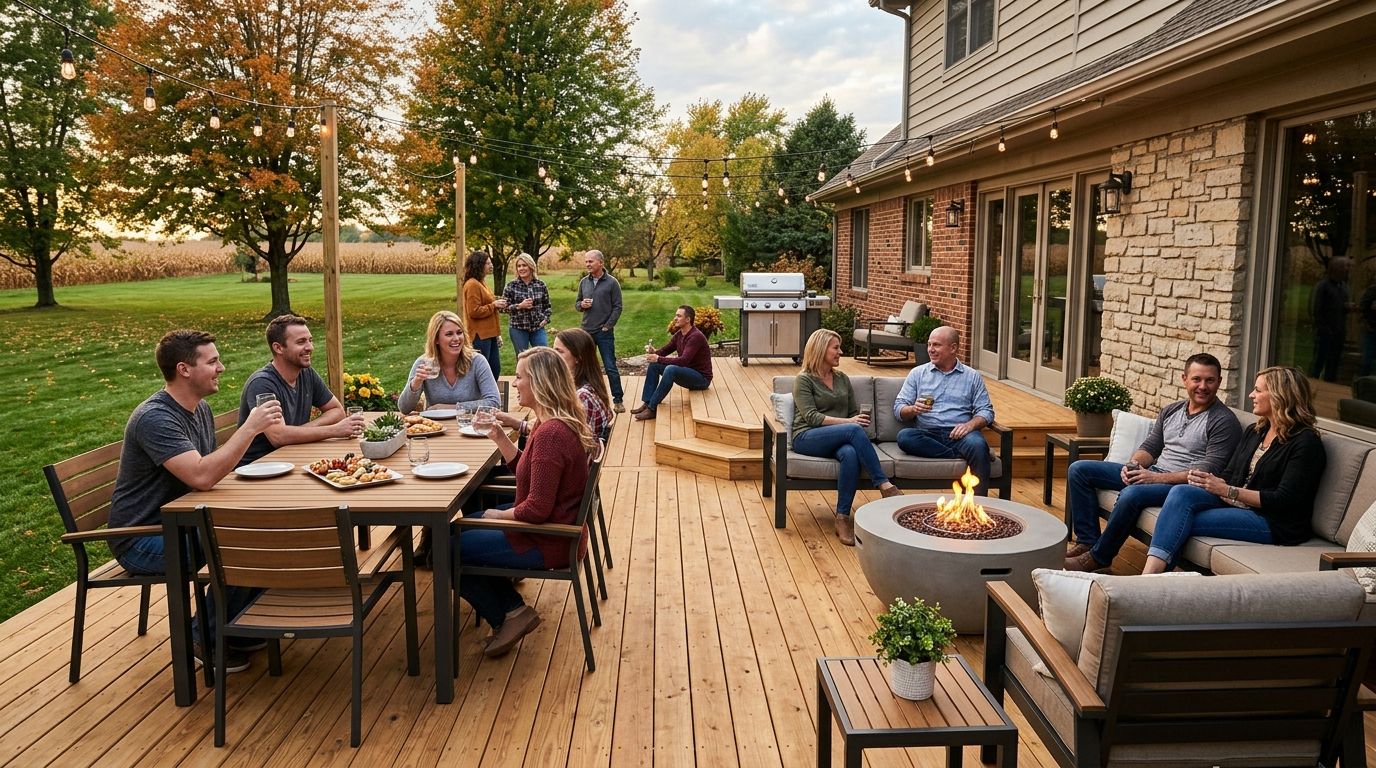
A deck addition for entertaining in Central Iowa needs three things right before the first cookout: enough square footage for the guest list, a material that survives Iowa's freeze-thaw cycle, and a layout that keeps people moving between the kitchen and the yard instead of bottlenecked at one door.
- A deck addition for entertaining in Central Iowa runs 300 to 400 square feet for groups of 15-25 guests.
- Footings must clear Iowa's 42-inch frost line or the deck heaves within a season or two.
- Composite decking costs more upfront than pressure-treated pine but skips the annual staining cycle.
- Phoenix Construction Solutions builds deck additions across Des Moines, Ankeny, Waukee, and West Des Moines with permit handling included.
Why this matters for Central Iowa homeowners who entertain
A deck built for occasional grilling and a deck built for entertaining are not the same project. Entertaining decks carry more traffic, more furniture, and more weight from a crowd standing near the grill at once. Central Iowa's winters add a second variable most homeowners don't think about until the deck starts to sag: footings that don't reach 42 inches below grade sit above the frost line and heave when the ground freezes.
Homeowners searching for a deck addition for entertaining in Central Iowa are usually planning around a specific event calendar — graduation parties in May, Fourth of July cookouts, football tailgates in the fall. That timeline matters more here than in milder climates, because the build season in Iowa runs roughly April through October. Missing that window pushes the project into next spring.
Plan a deck addition Central Iowa guests will actually use
Size the deck to your guest list, not your lot line
Most homeowners undersize their first deck and regret it by the second party. A deck meant for entertaining 15 to 25 people needs real clearance for a grill zone, a dining zone, and open standing room — that's usually 300 to 400 square feet, not the 120-square-foot platform that came with the house.
- Measure your typical guest count at your last three gatherings, not your hoped-for count
- Allow 15 square feet per standing guest and 20 square feet per seated guest
- Keep a 36-inch clear path from the door to the stairs at minimum
- Separate the grill zone from the seating zone by at least 4 feet
- Check your lot setback requirements before finalizing dimensions
Choose a decking material built for Iowa weather
Wood decks stain and seal every year in this climate or they gray and splinter within three seasons. Composite boards skip that maintenance cycle but cost more per square foot upfront. Phoenix Construction Solutions walks Central Iowa homeowners through both options during the decking materials that hold up in Iowa consultation, matching the material to how often the deck actually gets used.
- Pressure-treated pine: lowest material cost, needs annual staining
- Composite decking: higher material cost, minimal annual upkeep
- Cedar: natural rot resistance, still needs periodic sealing
- Aluminum decking: rare in Iowa, handles moisture without warping
- Check fastener spacing on any material — Iowa's freeze-thaw cycle loosens improperly spaced screws faster than in stable climates
Design the traffic flow between kitchen and deck
A deck addition for entertaining lives or dies on how easily people move food and drinks outside. A single sliding door from the kitchen creates a bottleneck the moment ten guests show up at once.
- Widen the doorway to the deck if the current opening is under 5 feet
- Position the grill within 15 feet of the kitchen door to shorten trips
- Add a second access point from a side yard or garage for large gatherings
- Keep steps and railings clear of furniture sightlines
- Consider pairing the deck with an outdoor kitchen addition if grilling happens more than a few times a month
Add shade and weather protection for Iowa summers
Central Iowa summers swing from 90-degree afternoons to sudden thunderstorms, sometimes in the same evening. An uncovered deck limits how often it actually gets used for entertaining.
- Install a retractable awning for flexible shade without a permanent structure
- Add a fixed pergola for partial shade that still lets light through
- Build a full roof extension for complete rain protection
- Combine a patio cover or pergola with ceiling fans to cut down on the July humidity
- Skip shade structures entirely if the deck faces north and stays shaded most of the day
Wire the deck for lighting, sound, and heat
Entertaining after sunset needs planned electrical, not extension cords run through a window. This is the step homeowners skip most often and regret first.
- Run dedicated exterior outlets rated for outdoor use
- Install low-voltage path and stair lighting for safety after dark
- Wire for a ceiling fan or heater if the deck will see spring and fall use
- Plan speaker wiring before decking goes down, not after
- Add a switched circuit near the grill zone for task lighting
Get the permit and footing depth right before you dig
Iowa municipalities require permits for most deck additions over a certain size, and footing depth gets checked during inspection. A deck built on footings above the 42-inch frost line will heave, crack, or pull away from the house within a season or two once winter freezing starts.
- Confirm your city's permit threshold before assuming a small deck is exempt
- Pour footings to the full 42-inch frost depth required across Central Iowa
- Schedule inspections at the footing stage, not after decking is installed
- Verify setback distances from property lines match your city's code
- Keep permit documentation on file for resale disclosures later
Material choice affects that footing and framing plan too. Homeowners weighing pressure-treated boards against composite decking should also look at choosing pressure-treated decking boards, since fastener spacing and board expansion behave differently across wood species and climates, and getting that wrong shows up as cupping boards within the first two Iowa winters.
Comparison: deck and outdoor entertaining options for Central Iowa
| Option | Best for | Key limitation | Verdict |
|---|---|---|---|
| Pressure-treated deck | Budget-first builds with a fast timeline | Needs annual staining and sealing | Buy for tight budgets |
| Composite deck | Frequent hosts who want low upkeep | Higher material cost upfront | Buy for heavy use |
| Screened porch | Iowa summers with mosquitoes and rain | Loses open-air sightlines to the yard | Hold if budget is limited |
| Patio with pergola | Partial shade over a hard surface | Doesn't block driving rain | Buy for shade-only needs |
Common mistakes Central Iowa homeowners make on deck additions
- Undersizing for the guest list. A 120-square-foot deck feels fine for a family dinner and cramped the moment 15 people show up.
- Skipping the frost-line footing depth. Shortcutting the 42-inch requirement to save time causes heaving within one or two Central Iowa winters.
- Choosing decking material before planning the layout. Material picks should follow traffic flow and shade decisions, not the other way around.
- Forgetting electrical planning until after the deck is built. Retrofitting outlets and lighting into finished decking costs more than wiring it during the build.
- Assuming small decks don't need a permit. Most Central Iowa municipalities set permit thresholds lower than homeowners expect, and skipping the permit creates problems at resale.
Plan your 2026 deck addition
Licensed, insured deck builds across Central Iowa.
FAQ
How big should a deck addition be for entertaining in Central Iowa?
Most entertaining decks in Central Iowa run 300 to 400 square feet, enough for 15 to 25 guests with a separate grill zone. Smaller platforms under 150 square feet feel cramped once a gathering grows past a handful of people.
How deep do deck footings need to be in Iowa?
Footings need to reach below Iowa's 42-inch frost line to avoid heaving during winter freeze-thaw cycles. Footings poured above that depth are a common cause of deck failure within one or two seasons.
Is composite decking worth it for a Central Iowa backyard?
Composite decking costs more upfront than pressure-treated pine but skips the annual staining cycle that wood requires in this climate. Homeowners who entertain often see the upkeep savings pay off faster than occasional users.
Do I need a permit for a deck addition in Central Iowa?
Most Central Iowa municipalities require a permit for deck additions above a set size threshold, and footing depth gets checked during inspection. Requirements vary by city, so confirming with the local building department before digging avoids rework.
What's the best decking material for Iowa's climate?
Pressure-treated pine costs less upfront but needs annual sealing, while composite decking costs more initially and needs minimal maintenance. Cedar sits in between, with natural rot resistance but still some periodic sealing.
Can a deck addition include an outdoor kitchen in Central Iowa?
Yes, pairing a deck addition with an outdoor kitchen is common for homeowners who grill several times a month. The layout needs to account for gas or electrical lines before decking goes down, not after.
How long does a deck addition take to build in Central Iowa?
A standard deck addition typically takes a few weeks from permit approval to final inspection, depending on size and weather. Iowa's build season runs roughly April through October, so timing the start matters for a summer 2026 completion.
Should I add a roof or pergola over my new deck?
A pergola gives partial shade without blocking light, while a full roof extension protects against Central Iowa's sudden summer thunderstorms. The right choice depends on how often the deck gets used during rainy stretches.
One last thing
The frost-line requirement is the detail that trips up more Central Iowa deck projects than any material choice or size decision — a deck can look finished and still fail its first winter if the footings sit even a few inches above 42 inches deep. Confirm footing depth before decking goes down, not after the inspector flags it.