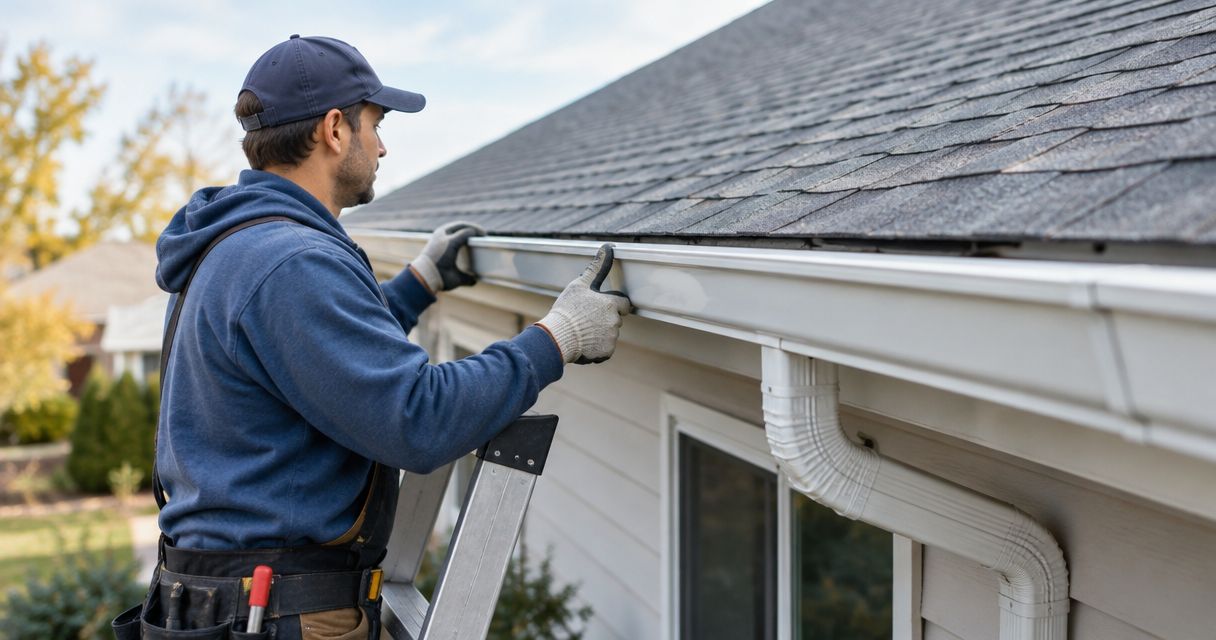

Yes, you can remodel a kitchen without moving plumbing if the sink, dishwasher connections, and other water-connected fixtures remain compatible with the existing supply, drain, and vent locations. You can replace cabinets, countertops, flooring, lighting, and finishes around those locations, but keeping pipes in place does not eliminate fixture reconnections, necessary repairs, or permit requirements.
- Can you remodel a kitchen without moving plumbing? Yes—keep the sink location and verify new fixture connections.
- New cabinets and countertops can change your kitchen without relocating concealed water or drain lines.
- A deeper sink can create drain-clearance problems even when the sink stays in place.
- Phoenix Construction Solutions handles kitchen remodeling for Central Iowa homeowners; existing plumbing still needs assessment.
Can you remodel a kitchen without moving the plumbing?
Yes. Keeping the existing plumbing locations is a workable starting point when your kitchen's basic layout already functions well. The important distinction is between leaving concealed piping in place and doing no plumbing work whatsoever.
A new sink still needs connections. A replacement dishwasher needs its supply and discharge connections checked, and cabinet replacement requires coordination around pipe openings. For a lighter project, cabinet refacing for Central Iowa kitchens is another approach to evaluate when the existing cabinet boxes remain suitable.
| Remodeling approach | Best for | What stays | Main advantage | Main limitation |
|---|---|---|---|---|
| Cabinet refacing and finish updates | A functional layout with suitable cabinet boxes | Cabinet arrangement and sink location | Changes the appearance without replacing every cabinet box | Does not correct poor cabinet dimensions or layout |
| New cabinets in the existing layout | Better storage around a workable sink position | Existing concealed pipe locations, subject to inspection | Allows a broader redesign around fixed connections | New cabinets and fixtures must fit those connections |
| Layout redesign with plumbing relocation | A sink position that prevents a workable layout | Only connections suitable for the revised design | Allows the wet area to move | Adds piping, access, and repair work to the scope |
For your 2026 kitchen plan, choose the approach that fixes the room's actual problems. Keeping the sink in place is useful only if the finished kitchen works for you.
Why this matters
Plumbing location affects more than the sink. It influences the sink cabinet, dishwasher position, countertop cutout, and usable storage beneath the bowl.
Keeping that location gives your design a fixed point. That can simplify the scope, but it also places limits on where cabinets and appliances fit. Preserve a good layout—not a bad layout simply because the pipes are already there.
Start by naming the problems you want to solve: inadequate preparation space, worn cabinets, poor lighting, or awkward storage. None automatically requires moving the sink.
What does keeping the plumbing in place actually mean?
A kitchen has water-supply piping, drainage, and venting. A remodel that keeps plumbing in place generally retains the existing concealed routes and fixture location while allowing accessible connections to be replaced or adjusted as needed.
Be precise in the written scope. “Keep existing plumbing” leaves room for disagreement about whether the work includes new shutoff valves, a replacement trap, dishwasher reconnection, or repairs discovered during demolition.
Ask the contractor to distinguish between:
- Retained piping: Existing supply, drain, and vent piping intended to remain.
- Fixture connections: Work connecting the selected sink, faucet, dishwasher, or disposal.
- Required repairs: Defects that must be addressed before the kitchen is closed up.
- Excluded work: Changes not included in the agreed project.
For a 2026 bid comparison, use the same fixture selections and scope descriptions for each contractor. Otherwise, a bid that excludes reconnections is not equivalent to one that includes them.
Which kitchen changes can leave plumbing where it is?
Replace cabinets around the existing sink location
New cabinets do not automatically require new pipe routes. The sink base must accommodate the existing pipe penetrations, the selected sink, and access for connections and maintenance.
Check the cabinet interior before ordering. Drawers, pullouts, and waste-bin hardware compete with the space occupied by the bowl, trap, disposal, and supply connections.
Best for: A kitchen with a workable sink location but inadequate storage. The limitation is that cabinet organization must respect the plumbing inside the sink base.
Replace countertops, the sink, and the faucet
A countertop replacement can retain the sink location while changing the surface and bowl configuration. Compatibility still matters: the sink's depth, drain position, mounting method, and faucet requirements affect the installation.
Do not assume that every sink fitting the countertop opening will connect to the existing drain arrangement. Finalize the sink and faucet specifications before countertop fabrication.
Best for: A kitchen whose work surfaces and fixtures need replacement. The limitation is that a different sink can require connection changes beneath the counter.
Update finishes, lighting, and storage
Paint, backsplash, cabinet hardware, and storage accessories can change how the kitchen looks and functions without relocating water lines. Lighting improvements also leave plumbing alone, although electrical work has its own requirements.
Flooring needs coordination with cabinets and appliances. Confirm finished floor height and dishwasher removal clearance rather than treating the floor as an isolated finish selection.
Best for: A functional kitchen with worn finishes or poor task lighting. The limitation is that cosmetic work does not repair failing pipes or solve a fundamentally awkward layout.
How do you plan a kitchen remodel around existing plumbing?
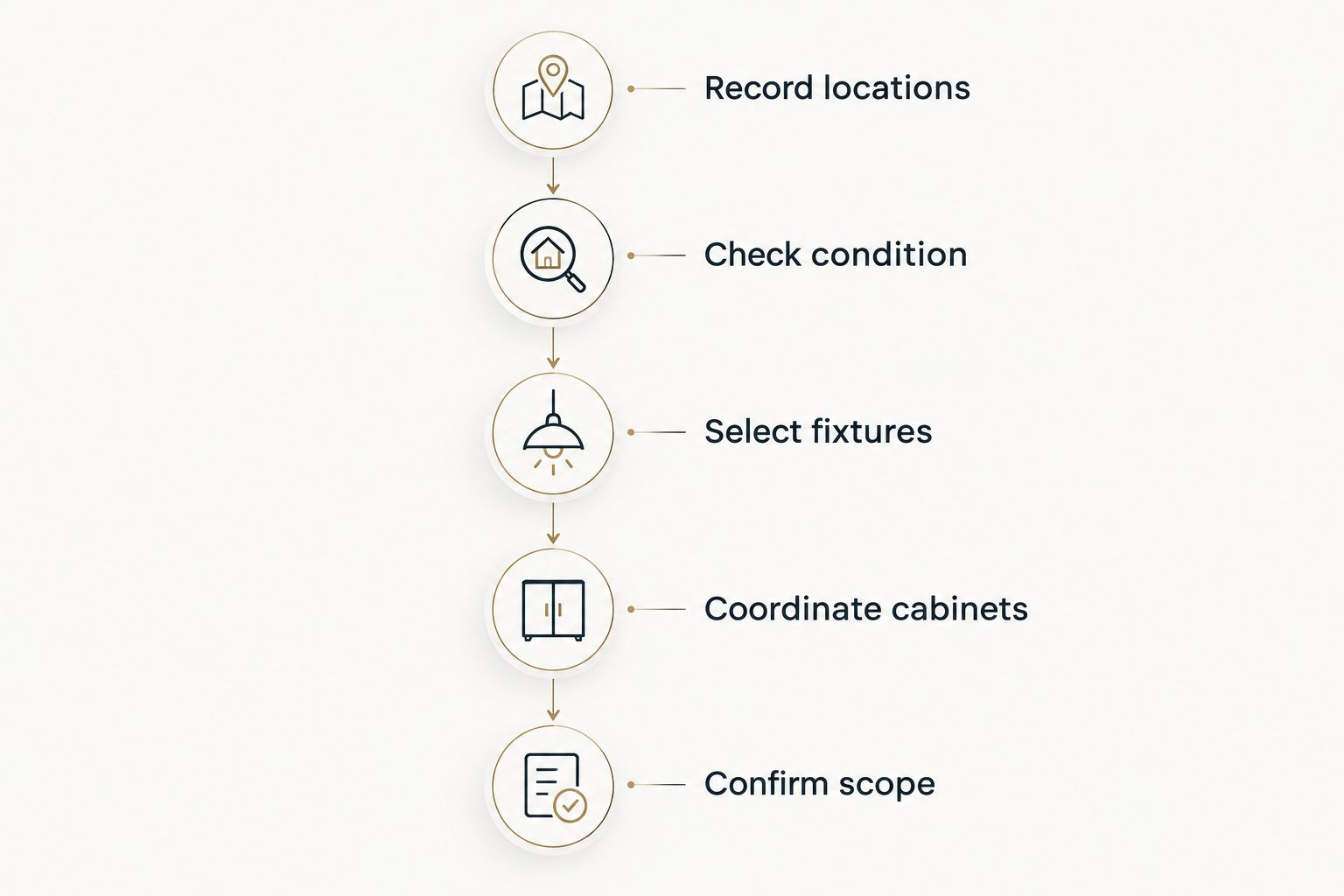
Use this sequence before ordering cabinets or countertops. Each decision depends on the one before it.
- Record locations. Photograph the sink cabinet interior and document where supply and drain pipes enter. Note the dishwasher position and any refrigerator water connection.
- Check condition. Have the plumbing assessed for leaks, deterioration, drainage concerns, and access problems. A pipe's location alone does not establish that it is suitable to retain.
- Select fixtures. Provide the actual sink, faucet, disposal, and dishwasher specifications. Do not rely on a general description such as a deep sink or standard dishwasher.
- Coordinate cabinets. Confirm that cabinet openings, storage hardware, countertop cutouts, and appliance clearances fit the selected fixtures and existing connections.
- Confirm scope. Identify retained piping, reconnections, repairs, permit responsibility, and the process for approving changes before construction starts.
This sequence tests whether your preferred fixtures actually work with the plumbing you intend to keep. It also identifies decisions that should be settled before materials are ordered.
Why keeping existing plumbing varies from kitchen to kitchen
The room's condition and your selected fixtures determine whether the existing connections remain practical. Assess these factors before treating plumbing retention as a settled decision:
- Sink depth and outlet position: A deeper bowl leaves less room beneath it and changes the relationship between the sink outlet and wall drain.
- Cabinet configuration: A replacement sink base must provide room for piping, connections, and service access.
- Pipe condition: Leaks, corrosion, or damaged connections require attention even when the layout stays unchanged.
- Access to existing piping: Finished walls, floors, and ceilings affect how pipes can be inspected or repaired.
- Appliance connections: Dishwasher and refrigerator locations must match the intended water and drainage arrangements.
- Local requirements: The authority responsible for your project determines applicable permits and inspections.
These factors explain why neighboring homes can need different scopes. A same-location sink replacement is not proof that every existing connection can remain untouched.
Can I install a deeper sink without moving the drain?
Sometimes, but the existing drain elevation and the new sink's outlet position must work together. A deeper bowl lowers the sink outlet; a disposal also occupies space beneath the sink.
Have the installer check the complete assembly before approving the sink. Include the bowl, drain fitting, disposal if selected, trap, and connection to the existing drain.
The key question is not whether the new sink fits the cabinet opening. It is whether the installed assembly can drain correctly with the available space and connection height.
Can I add an island without adding plumbing?
Yes. An island used for preparation, storage, or seating does not need a sink or water connection.
Best for: Homeowners who want additional work surface while retaining the existing sink position. The trade-off is that an island uses floor space and must leave adequate circulation, appliance access, and seating clearance.
A sink-equipped island is a different project. It introduces supply, drainage, and venting decisions, so do not include an island sink in a plan described as leaving all plumbing unchanged.
Do I need a permit if the sink stays in the same place?
Keeping the sink in place does not establish a permit exemption. Requirements depend on your jurisdiction and the actual work, including plumbing alterations, electrical changes, and structural modifications.
For a 2026 project in Des Moines, Carlisle, Norwalk, Ankeny, or another Central Iowa community, confirm requirements with the responsible local building department. Use this guide to building permits for a home renovation in Iowa to prepare your questions, then verify the rules for your address.
The written agreement should identify who obtains required permits and coordinates inspections. Do not substitute a contractor's general statement about same-layout projects for an answer about your specific scope.
When should you reconsider keeping the sink in place?
Reconsider the fixed sink location when it prevents the remodel from solving your main problem. Examples include a sink cabinet that blocks a useful passage or a wet area that consumes the only practical preparation surface.
First test changes that do not require relocation. Different cabinet widths, better drawer storage, or a preparation-only island might address the problem without changing concealed pipe routes.
Then compare the remaining compromises against a relocation plan. In your 2026 design review, ask for a clear explanation of what moving the sink achieves—not just a drawing showing it somewhere else.
Choosing a contractor for a same-layout kitchen remodel
Phoenix Construction Solutions is best suited to Central Iowa homeowners seeking kitchen remodeling, additions, or reconstruction. The licensed and insured contractor is based in Carlisle and serves Des Moines and surrounding communities, including Pleasant Hill, Urbandale, Waukee, and West Des Moines.
For a kitchen remodeling consultation with Phoenix Construction Solutions, bring photographs, a rough layout, and the fixtures you are considering. Ask for a written scope that separates retained piping from reconnections and necessary repairs.
The benefit of retaining plumbing is a more constrained construction scope. The limitation remains physical: neither a new cabinet plan nor a contractor selection makes an incompatible sink connect correctly to an existing drain.
Book a Consultation
Discuss your Central Iowa kitchen remodel and the plumbing you want to retain.
FAQ
Can you remodel a kitchen without moving plumbing?
Yes, you can remodel a kitchen without moving plumbing when the existing fixture locations and connections suit the new design. Cabinets, countertops, lighting, and finishes can change while concealed pipe routes remain, but reconnections and repairs still need assessment.
Does keeping my kitchen sink in place mean I won't need plumbing work?
No, keeping your kitchen sink in place does not eliminate plumbing work. A replacement sink or faucet still needs connections, and damaged valves or piping require attention.
Can I replace my kitchen cabinets without moving the sink pipes?
Yes, replacement cabinets can fit around existing sink pipes when their dimensions and openings are compatible. Confirm room for the sink, trap, supply connections, and any storage hardware before ordering.
Will a deeper kitchen sink work with my existing drain?
A deeper kitchen sink works with the existing drain only when the outlet height and connection arrangement allow correct drainage. Check the selected sink and any disposal together before countertop fabrication.
Can I keep my dishwasher next to the sink during a remodel?
Yes, a dishwasher can remain next to the sink when the new cabinetry, appliance dimensions, and connections are compatible. Confirm installation requirements and future removal access before finalizing the cabinets and floor.
Do same-layout kitchen remodels need permits in Central Iowa?
A same-layout kitchen remodel still needs a permit review based on its actual scope and local requirements. For a 2026 project, confirm plumbing, electrical, and structural requirements with the building department responsible for your address.
Who can I call about remodeling my kitchen in Central Iowa?
Call Phoenix Construction Solutions at (515) 505-8781 to discuss your Central Iowa kitchen remodel. The licensed and insured contractor handles kitchen remodeling, additions, and reconstruction.
One last thing
Choose the sink before approving the sink cabinet and countertop. A sink can remain in exactly the same position yet create a connection problem because its bowl is deeper or its outlet is different.
Before approving your 2026 kitchen plan, ask for the selected sink specifications to be checked against the existing drain location. That small design check addresses the difference between keeping the sink in place and successfully keeping the plumbing in place.