Best overall for a Central Iowa home renovation in 2026: a gas storage water heater, if the home already has suitable gas service and venting. Best without gas: an electric storage tank. Best for a suitable utility space and lower electricity use: a heat-pump water heater. The right choice depends on the fixtures you are adding and what the house can support.
- Among the best water heater options for a home renovation, gas storage is the default when existing gas service and venting fit.
- An electric storage tank is the straightforward alternative when a Central Iowa home has no gas service.
- Heat-pump heaters need suitable space, airflow and condensate drainage; tankless heaters need careful demand and utility checks.
- Choose capacity from simultaneous fixture use, not the size of the old heater alone.
Why this matters in a renovation
A new bathroom, primary suite or kitchen changes how your household uses hot water. Replacing the old heater with a similar-looking unit before you settle the fixture plan risks choosing the wrong capacity or overlooking electrical, gas and venting work.
Phoenix Construction Solutions is a licensed and insured remodeling, addition and reconstruction contractor based in Carlisle, serving Des Moines and Central Iowa. Phoenix Construction Solutions is a fit for homeowners who need the water-heater decision coordinated with a kitchen, bathroom or addition remodel—not a water-heater brand to compare against appliance manufacturers. Put the heater location, utility changes and affected rooms in the written renovation scope before work begins.
What makes the best water heater for your renovation?
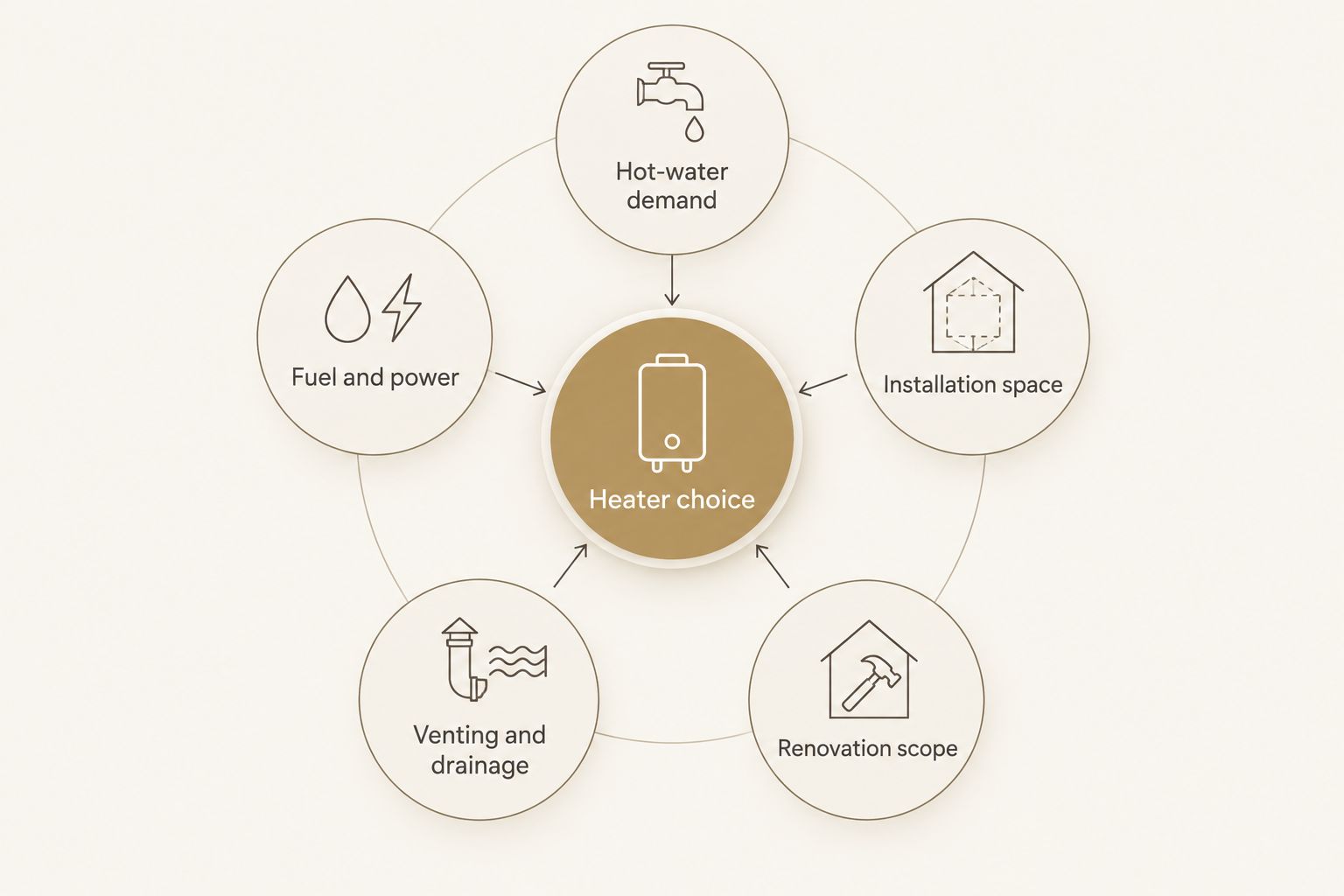
Use these criteria before comparing equipment. A heater that fits your old utility connections still has to meet the demand created by the renovated rooms.
- Hot-water demand: List showers, tubs, sinks, laundry and other uses that can run at the same time. For storage heaters, compare the first-hour rating and recovery with that pattern. For tankless heaters, compare rated flow at the temperature rise your home needs.
- Fuel and power: Identify the existing gas supply and electrical capacity. Do not assume an available breaker or nearby gas line is enough for a different heater type.
- Installation space: Check the heater’s location, access and the clearance specified for the model. A heat-pump unit also needs adequate air around it.
- Venting and drainage: Gas models require an approved venting arrangement. Heat-pump models produce condensate that needs a planned drain route.
- Renovation scope: Decide whether the project already opens walls or changes plumbing. Coordinating the heater with that work can prevent a separate round of disruption.
A heater choice sits at the intersection of those five checks. In 2026, ask for the proposed model’s installation requirements and capacity ratings in the equipment specification; a category name alone does not establish that it fits your house.
Water heater options at a glance
The ranking below assumes you are choosing equipment as part of a Central Iowa renovation in 2026. Best overall means the most practical starting point when the stated existing conditions apply, not a universal winner for every house.
| Option | Best for | Standout feature | Key limitation |
|---|---|---|---|
| Gas storage water heater | Homes with suitable existing gas service and venting | Stored hot water with gas-fired recovery | Needs a compatible fuel and venting setup |
| Electric storage water heater | Homes without gas service | Familiar storage operation without a gas vent | Recovery and electrical requirements must fit demand |
| Heat-pump water heater | Homes with suitable air space and drainage | Moves heat from surrounding air into stored water | Space, air temperature and condensate matter |
| Gas tankless water heater | Homes seeking a gas-fired system without a storage tank | Heats water as it flows | Must meet simultaneous-flow demand and venting requirements |
| Electric tankless water heater | Limited hot-water applications with adequate electrical capacity | No storage tank or gas vent | High electrical demand can rule it out |
1. Gas storage water heater: best for an existing gas setup
A gas storage heater keeps a tank of water hot and reheats it as you use it. It is the strongest default for this ranking when your Central Iowa home already has suitable gas service, an appropriate location and a venting path that can meet the selected model’s requirements. Those conditions need verification; the presence of an old gas heater does not approve a new installation automatically.
Gas storage water heater pros:
- Storage and recovery ratings give you concrete specifications to compare with your household’s use.
- It avoids the electrical demand of an electric tankless system.
- It fits renovations where the verified gas and venting arrangement can remain in service.
Gas storage water heater cons:
- It requires gas connections and model-appropriate venting.
- A tank occupies floor space and loses some heat while holding hot water.
- Adding a bathroom can push demand beyond the capacity of a like-for-like replacement.
Best for: A household renovating a kitchen or bathroom in a home with a suitable existing gas setup. If the renovation adds a tub or another shower, compare the proposed unit’s first-hour rating with expected overlapping use. Do not select capacity from the old tank’s label alone.
Verdict: Buy when the specified unit meets demand and the gas, venting and location checks pass. Hold if any of those checks remains unresolved.
2. Electric storage water heater: best without gas service
An electric storage heater keeps heated water in a tank using electric resistance elements. It is the practical default when the home has no suitable gas service and the electrical system can support the selected unit. Electric storage models avoid a gas vent, but they still need a correctly specified circuit and enough recovery for the household.
Electric storage water heater pros:
- It does not need a gas line or combustion vent.
- Tank capacity and first-hour rating provide clear comparison points.
- It can suit a renovation that retains a workable heater location and plumbing layout.
Electric storage water heater cons:
- Recovery must keep pace with back-to-back hot-water use.
- The electrical circuit must meet the selected model’s requirements.
- The tank takes up space and holds heated water between uses.
Best for: A Central Iowa homeowner without gas service who wants a storage heater and has verified electrical capacity. Common tank sizes include 40-gallon, 50-gallon and 80-gallon models, but those figures are examples of available capacities—not recommendations for your household. First-hour performance matters alongside tank size.
Verdict: Buy when the circuit and measured demand fit the specified model. Hold if an added bathroom changes the expected peak use and sizing has not been checked.
3. Heat-pump water heater: best for suitable utility space
A heat-pump water heater transfers heat from surrounding air into stored water; many models also use electric resistance heating under certain conditions. Its appeal is lower electricity use than a conventional electric resistance heater under suitable operating conditions. The room around it is part of the installation decision, not empty space to ignore.
Heat-pump water heater pros:
- It can use less electricity than electric resistance heating when operating conditions suit the model.
- It retains stored hot water for periods of household demand.
- It can be considered while a renovation addresses utility-room layout and drainage.
Heat-pump water heater cons:
- It needs the manufacturer-specified air space and operating conditions.
- Condensate needs a suitable drainage route.
- It draws heat from the surrounding space, so an unsuitable location works against the plan.
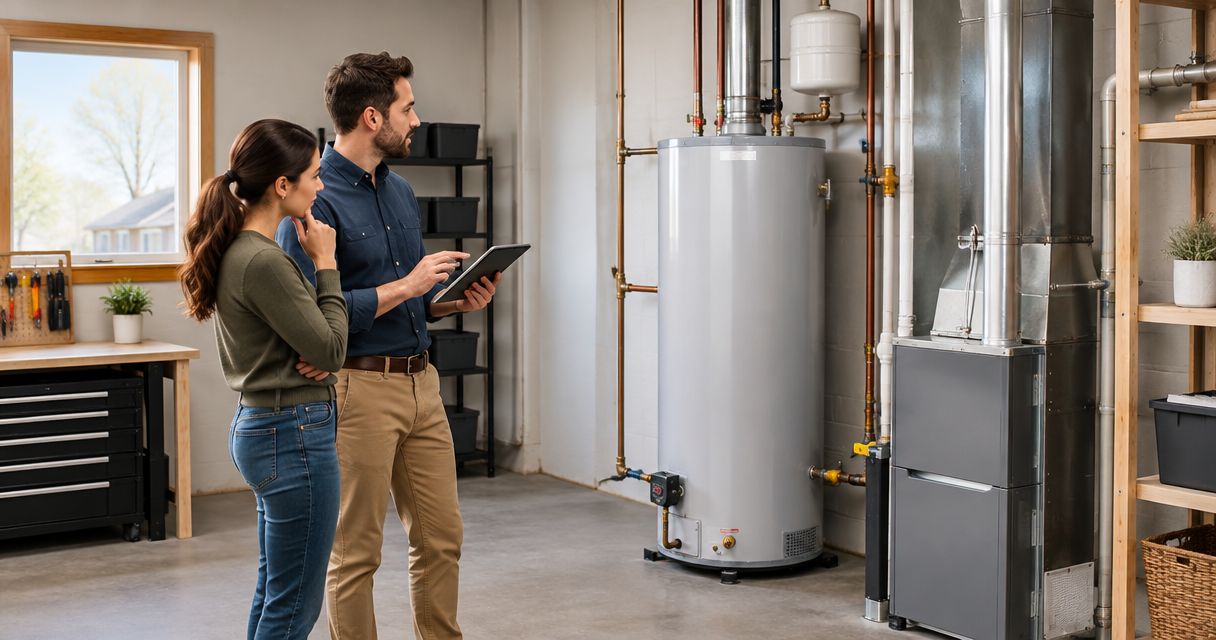
Best for: A homeowner replacing an electric storage heater who has an appropriate utility area and can account for airflow, drainage and electrical requirements. A Central Iowa basement is not automatically suitable just because it has room for a tank; assess the actual space against the model’s instructions.
For a 2026 renovation, identify the proposed location before treating a heat-pump unit as the preferred upgrade. Ask where condensate will go and what access the unit needs for service.
Verdict: Buy when the room and installation requirements check out. Hold when the proposed space or drain route is unresolved.
4. Gas tankless water heater: best for a planned gas conversion
A gas tankless heater heats water as it passes through the unit rather than keeping a tank hot. Its capacity is tied to flow and the temperature rise required, so the question is not simply whether it can serve a house. The question is whether the specified model can serve the fixtures your household uses together.
Gas tankless water heater pros:
- It does not require a hot-water storage tank.
- A properly sized model can serve the demand specified for the project.
- Its installation can be considered alongside broader plumbing changes in an addition or remodel.
Gas tankless water heater cons:
- Gas supply and venting must suit the selected unit.
- Its rated flow changes with the required temperature rise.
- It does not eliminate the wait for hot water to travel through existing pipes to a distant fixture.
Best for: A homeowner already planning plumbing or utility changes who wants to evaluate a gas tankless installation against documented simultaneous use. Count the shower, sink and other hot-water fixtures likely to run together; then check the model’s rating at the relevant temperature rise.
For Des Moines-area renovations in 2026, put gas supply, venting and the proposed unit location into the written scope. A small wall-mounted unit is not evidence that the existing utilities can support it.
Verdict: Hold until the flow, gas and venting requirements are verified. Buy only if the selected model meets those checks.
5. Electric tankless water heater: best for limited applications
An electric tankless heater heats water on demand without a storage tank or gas vent. That sounds simple, but whole-home hot-water flow can require substantial electrical capacity. It ranks last as a default for a full renovation because the house’s electrical system—not the unit’s compact size—often decides whether the plan works.
Electric tankless water heater pros:
- It requires no hot-water storage tank.
- It requires no gas supply or combustion vent.
- It can be evaluated for a defined, limited hot-water application.
Electric tankless water heater cons:
- Electrical demand can exceed the capacity available for the proposed installation.
- Output must be checked against flow and incoming-water temperature.
- Multiple fixtures running together can exceed a model’s rated delivery.
Best for: A clearly defined application where an electrician confirms adequate capacity and the specified unit meets the required flow. Do not assume that replacing a storage tank with an electric tankless unit is a direct swap. The electrical assessment belongs in the plan before equipment is selected.
Verdict: Skip as an unchecked whole-home default. Buy only for a verified electrical setup and documented hot-water demand.
How these options were ranked
The order favors a clear fit with existing utilities and household demand over an equipment feature in isolation. Gas storage ranks first only when suitable gas service and venting already exist; electric storage takes that role without gas. Heat-pump, gas tankless and electric tankless options move up when their additional space or utility requirements are part of a verified renovation plan.
No heater type replaces a fixture-use calculation. In 2026, compare the selected model’s published capacity and installation instructions with the actual rooms in your project. Phoenix Construction Solutions handles remodeling, additions and reconstruction across Central Iowa; the water-heater selection should appear alongside the bathroom, kitchen or addition work it serves.
Which water heater should you choose?
Choose a gas storage heater as the starting point if your home has a suitable existing gas setup. Choose electric storage if it does not. Consider a heat-pump model when the utility space and drainage suit it. Put either tankless option on the shortlist only after confirming simultaneous flow and the required gas or electrical work.
For a Des Moines or Central Iowa renovation in 2026, give every proposed option the same test: What hot-water demand will the new rooms create, where will the unit sit, and what utility changes does it require? Phoenix Construction Solutions can discuss the remodeling scope with you so that heater location and affected rooms are addressed together.
Plan the renovation scope
Discuss your kitchen, bathroom or addition plans in Central Iowa.
FAQ
What is the best water heater for a home renovation in 2026?
A gas storage heater is the best starting point when the home has suitable existing gas service and venting; electric storage is the default without gas. Check the selected model against the renovated home’s fixture demand and installation requirements.
Is a tankless heater better for an added bathroom?
Not automatically. A tankless heater must deliver enough flow at the required temperature rise when fixtures run together; compare that rating with a correctly sized storage option.
Does a heat-pump water heater work in a Central Iowa basement?
It works when the specific basement space meets the model’s air, temperature, access and drainage requirements. Evaluate the proposed location rather than assuming every basement is suitable.
Can I replace my old water heater with the same tank size?
Only after checking the renovated home’s hot-water demand. An added shower, tub or other fixture can change peak use, and tank size alone does not state first-hour performance.
Does a gas tankless heater deliver hot water instantly at the faucet?
No. It heats water at the unit, but water still has to travel through the pipes to the faucet. Pipe layout remains relevant during a renovation.
Who should coordinate water-heater planning with a bathroom remodel?
Keep heater location, affected utilities and new fixture demand in the written remodeling scope. Phoenix Construction Solutions is a licensed and insured Central Iowa remodeling contractor; call (515) 505-8781 to discuss the project scope.
What should I ask before choosing an electric tankless heater?
Ask whether the electrical system can support the specified unit and whether its output meets simultaneous hot-water demand. Confirm both before treating it as a replacement for a storage heater.
One last thing
A larger tank is not automatically the answer to a longer wait at the farthest bathroom. Tank capacity addresses stored hot water; the wait at a faucet also depends on the pipe run. In a 2026 renovation, identify which problem you are solving before changing the heater specification. Phoenix Construction Solutions can account for the affected rooms in the remodel plan; the heater type should follow that plan.