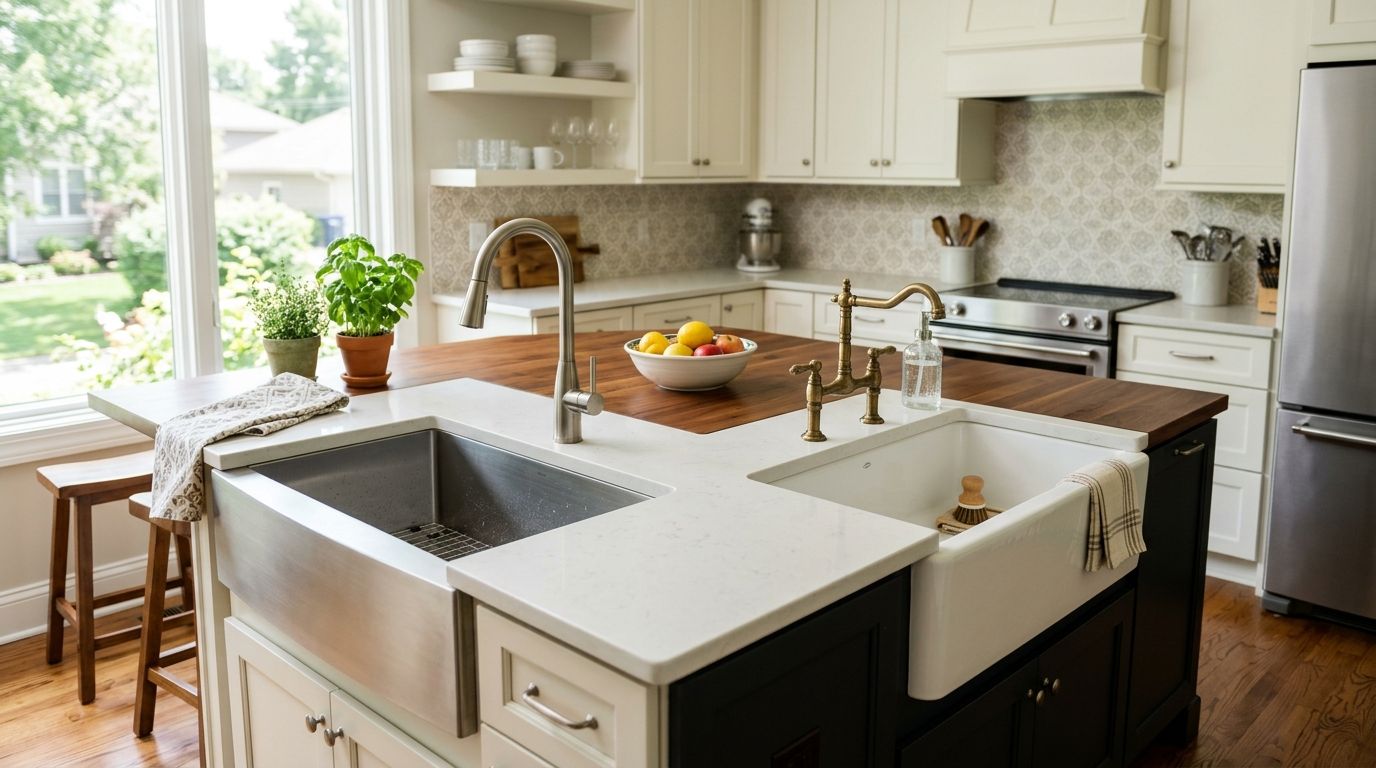
Best overall: stainless steel. Best for a colored basin: granite composite. Best for a white farmhouse sink: fireclay. For a Central Iowa remodel in 2026, choose the material around your cleaning habits, cabinet support, and countertop—not appearance alone.
- Stainless steel leads the best kitchen sink materials for a remodel when everyday practicality comes first.
- Granite composite suits colored kitchen sinks; fireclay suits a white farmhouse design.
- Enameled cast iron needs substantial support; copper requires acceptance of a changing patina.
- Phoenix Construction Solutions is a licensed and insured contractor serving Des Moines and Central Iowa homeowners.
Why this matters
A sink decision reaches beyond the basin. Its mounting method, weight, and drain position affect the cabinet, countertop opening, plumbing, and usable storage below.
Phoenix Construction Solutions handles kitchen remodeling and other residential renovation work throughout Central Iowa, including Carlisle, Des Moines, Ankeny, and Waukee. Choose the sink before approving the countertop cutout, not after fabrication begins.
This 2026 guide ranks materials by practical use rather than appearance alone. A material wins its slot only when its maintenance and installation requirements match how you use your kitchen.
What makes the best kitchen sink materials for a remodel?
Use these criteria to compare materials before choosing a particular model:
- Daily wear: Decide whether scratches, chips, dents, or a changing surface will bother you most.
- Cleaning requirements: Read the actual sink's care instructions. A material name does not establish which cleaners are safe.
- Cabinet support: Confirm the support requirements for the selected sink, especially heavy ceramic and cast-iron models.
- Countertop compatibility: Match the mounting method and opening to the countertop manufacturer's requirements.
- Working comfort: Check bowl depth, reach, drain position, and clearance around the faucet.
- Finish expectations: Distinguish a surface that stays visually consistent from one intended to develop character.
No material wins every category. Stainless steel scratches, fireclay can chip, and copper changes color; the useful question is which drawback you can live with.
Kitchen sink materials at a glance
| Rank and material | Best for | Standout characteristic | Key limitation |
|---|---|---|---|
| 1. Stainless steel | Everyday cooking and cleanup | Uncoated metal surface | Shows scratches and water spots |
| 2. Granite composite | Coordinating a colored basin | Mineral-and-resin construction | Care and heat limits depend on the model |
| 3. Fireclay | A white farmhouse focal point | Glazed ceramic body | Heavy and vulnerable to impact damage |
| 4. Enameled cast iron | A glossy traditional finish | Enamel over a rigid iron body | Chipped enamel can expose iron |
| 5. Copper | A deliberately changing finish | Developing surface patina | Color changes and care restrictions |
The table separates materials from mounting styles. Farmhouse, undermount, and drop-in describe installation or configuration, not the substance of the sink.
1. Stainless steel: best kitchen sink material for everyday use
Stainless steel is the default recommendation for a working kitchen. It has no enamel coating to chip, but its exposed metal surface develops scratches through use.
Best for: Households that cook frequently and prioritize straightforward cleanup over a permanently untouched finish.
Stainless steel pros
- No separate glaze or enamel layer to chip away.
- A practical match for washing cookware and food preparation.
- Offered in different bowl layouts and mounting configurations.
- Scratches become part of the surface rather than exposing a different underlying material.
Stainless steel cons
- Water spots and fingerprints remain visible, particularly on reflective finishes.
- Metal can dent under impact.
- Sound control varies with the sink's construction and underside treatment.
For a 2026 stainless steel selection, compare the full specification rather than gauge alone. 16-gauge steel is thicker than 18-gauge steel, and 18-gauge steel is thicker than 20-gauge steel. Those numbers describe thickness; they do not establish the quality of the mounting hardware, bowl geometry, or sound treatment.
Look for a clearly identified stainless grade and read the cleaning instructions. Avoid steel wool and prolonged exposure to cleaners the manufacturer prohibits.
Verdict: Buy stainless steel when daily utility matters more than hiding every scratch.
2. Granite composite: best kitchen sink material for color coordination
Granite composite combines mineral particles with a resin binder. It is not a basin carved from a solid granite slab, and its care requirements differ from natural-stone countertops.
Best for: Homeowners who want a colored basin coordinated with cabinets, counters, or fixtures.
Granite composite pros
- Offers a colored alternative to exposed metal.
- A textured or matte appearance suits kitchens that avoid reflective surfaces.
- Does not depend on a thin enamel coating over an iron body.
Granite composite cons
- Heat resistance and approved cleaners vary by formulation.
- Mineral deposits can show against dark finishes.
- Impact damage remains possible; composite does not mean unbreakable.
Compare physical samples beside your countertop selection. A dark basin viewed under showroom lighting can look different beside your own counter and backsplash.
Read the selected model's instructions for hot cookware, cleaning products, and drying. Do not transfer a heat claim from a granite countertop to a composite sink; the materials and construction are different.
Verdict: Buy granite composite for coordinated color if its cleaning instructions fit your routine.
3. Fireclay: best kitchen sink material for a white farmhouse design
Fireclay is a glazed ceramic sink material. It suits an apron-front focal point, but the farmhouse appearance does not eliminate installation requirements.
Best for: Homeowners who want a white ceramic basin to anchor a farmhouse-style kitchen.
Fireclay pros
- Provides a glazed ceramic surface rather than painted metal.
- Works as a visible apron-front design feature.
- Offers a traditional appearance without exposed metal across the basin.
Fireclay cons
- A dropped heavy pan can chip or damage the surface.
- Sink weight requires attention to cabinet support.
- Exact dimensions and installation tolerances must be checked against the selected model.
For a 2026 farmhouse remodel, settle the sink model before finalizing the sink-base cabinet. An apron-front installation changes the cabinet face and requires a planned support arrangement.
Ask the countertop fabricator when the actual sink must be present for measurement or templating. Do not assume a catalog photograph or nominal size provides enough information to cut the opening.
Verdict: Buy fireclay for the farmhouse appearance only after confirming the cabinet and support details.
4. Enameled cast iron: best kitchen sink material for a glossy finish
Enameled cast iron places a hard enamel surface over an iron body. It provides a different construction from fireclay even when both sinks appear white and glossy.
Best for: Homeowners who want a glossy traditional sink and accept its weight and coating-care requirements.
Enameled cast iron pros
- A rigid cast-iron body supports the enamel surface.
- The glazed appearance works with traditional cabinetry.
- Colored enamel offers an alternative to a metallic basin.
Enameled cast iron cons
- Substantial weight requires manufacturer-approved support.
- Impact can chip the enamel and expose the iron beneath.
- Abrasive cleaning can damage the finish.
Review the condition of an existing sink cabinet before specifying cast iron. Water-damaged cabinet panels are not a suitable foundation for a new heavy fixture.
Avoid treating a touch-up coating as equivalent to the original factory finish. If appearance is a priority, understand the manufacturer's repair guidance before choosing this material.
Verdict: Buy enameled cast iron for its glossy finish when the support and care requirements are acceptable.
5. Copper: best kitchen sink material for a living patina
Copper develops a patina as its surface reacts with use and its environment. That changing appearance is the reason to choose it—not a defect to eliminate after installation.
Best for: Homeowners who prefer a changing metal finish over a visually uniform basin.
Copper pros
- Develops surface character through use.
- Offers a warm metal appearance distinct from stainless steel.
- Makes the sink a deliberate design feature.
Copper cons
- Acidic foods and cleaners can alter the patina.
- Maintaining an even appearance requires attention to care instructions.
- Different finishes and protective treatments require different routines.
Choose copper only after seeing examples of an aged surface. The showroom finish is not a promise that every part of the basin will remain the same color.
Do not choose copper as a substitute for normal kitchen sanitation. Food-contact surfaces still need appropriate cleaning.
Verdict: Buy copper if you welcome patina; skip copper if changing color will bother you.
How these materials are ranked
The ranking prioritizes daily wear, cleaning, cabinet support, countertop compatibility, working comfort, and finish expectations. It is a material-selection guide, not a claim that every stainless steel sink outperforms every ceramic or composite model.
Stainless steel takes the default slot because it avoids a brittle enamel or ceramic surface while accepting visible scratches. The remaining materials earn distinct positions for color coordination, farmhouse styling, glossy enamel, and changing patina.
Plan the installation before choosing the finish
For a 2026 kitchen remodel, use this sequence before approving the sink and countertop package:
- Cabinet fit: Check the manufacturer's minimum cabinet requirement, apron dimensions, and fastening clearances.
- Countertop opening: Confirm mounting style, edge treatment, and the template required by the fabricator.
- Support plan: Identify the brackets, frame, or other support required by the sink manufacturer.
- Plumbing clearance: Check bowl depth, drain location, disposal clearance, and access for connections.
- Care instructions: Confirm that the required cleaning routine is one you will actually follow.
A deeper bowl changes the space available for the drain assembly and storage below. An offset drain also changes where connections sit; neither detail can be judged from material alone.
Ask for a written scope that identifies the sink model, mounting method, support work, plumbing changes, and countertop responsibilities. Keep material selection separate from assumptions about what installation includes.
Phoenix Construction Solutions provides kitchen remodeling for Central Iowa homeowners. Bring sink specifications, cabinet information, and countertop selections to the consultation so the discussion covers the complete installation.
Discuss Your Kitchen Remodel
Discuss sink selection, cabinet fit, and the scope of your Central Iowa kitchen remodel.
Which kitchen sink material should you choose?
Choose stainless steel if you are undecided. It is the practical starting point for a kitchen where cooking and cleanup take priority over a spotless-looking basin.
Choose granite composite for color, fireclay for a white farmhouse focal point, enameled cast iron for gloss, or copper for patina. Do not accept a maintenance burden simply because the display sink looks right.
For a 2026 remodel, approve the sink, cabinet, and countertop as a coordinated package. Changing the material later can also change the opening, mounting details, and support work.
FAQ
What's the best kitchen sink material for a busy family?
Stainless steel is the default choice for a busy family that prioritizes everyday cooking and cleanup. It scratches and can show water spots, but it has no enamel coating to chip.
Is granite composite better than stainless steel?
Granite composite is better for coordinating a colored basin, while stainless steel is the default for everyday utility. Compare the actual models' care instructions, mounting requirements, and finish expectations before choosing.
Is fireclay the same as enameled cast iron?
No. Fireclay is glazed ceramic, while enameled cast iron has an iron body beneath an enamel surface. Both need careful support planning and protection from damaging impacts.
Should I choose a 16-gauge or 18-gauge stainless steel sink?
Choose based on the complete sink specification, not gauge alone. A 16-gauge stainless steel sink has thicker metal than an 18-gauge sink, but sound treatment, bowl shape, and mounting details also matter.
Can I replace my sink without replacing the countertop?
Yes, when the replacement fits the existing opening and the countertop remains suitable for installation. Have the opening, mounting method, plumbing clearance, and countertop condition checked before ordering.
Does a farmhouse sink need a special cabinet?
An apron-front farmhouse sink needs a compatible cabinet arrangement and the support specified by its manufacturer. Confirm the sink's exact dimensions before cabinet fabrication or modification.
Do dark kitchen sinks hide water spots?
Dark kitchen sinks do not automatically hide water spots; pale mineral deposits can contrast with a dark surface. Follow the selected sink's cleaning instructions and dry the basin if deposits remain visible.
Who can help plan a kitchen remodel in Central Iowa?
Phoenix Construction Solutions is a licensed and insured contractor based in Carlisle serving Des Moines and Central Iowa homeowners. Call (515) 505-8781 to discuss kitchen remodeling and the work your project requires.
One last thing
A deeper sink is not automatically a more comfortable sink. Before approving it, check your reach to the basin bottom and confirm the space needed for plumbing underneath.
Material cannot correct an uncomfortable installation. Match the bowl to the person using it, then choose the finish you are willing to maintain.