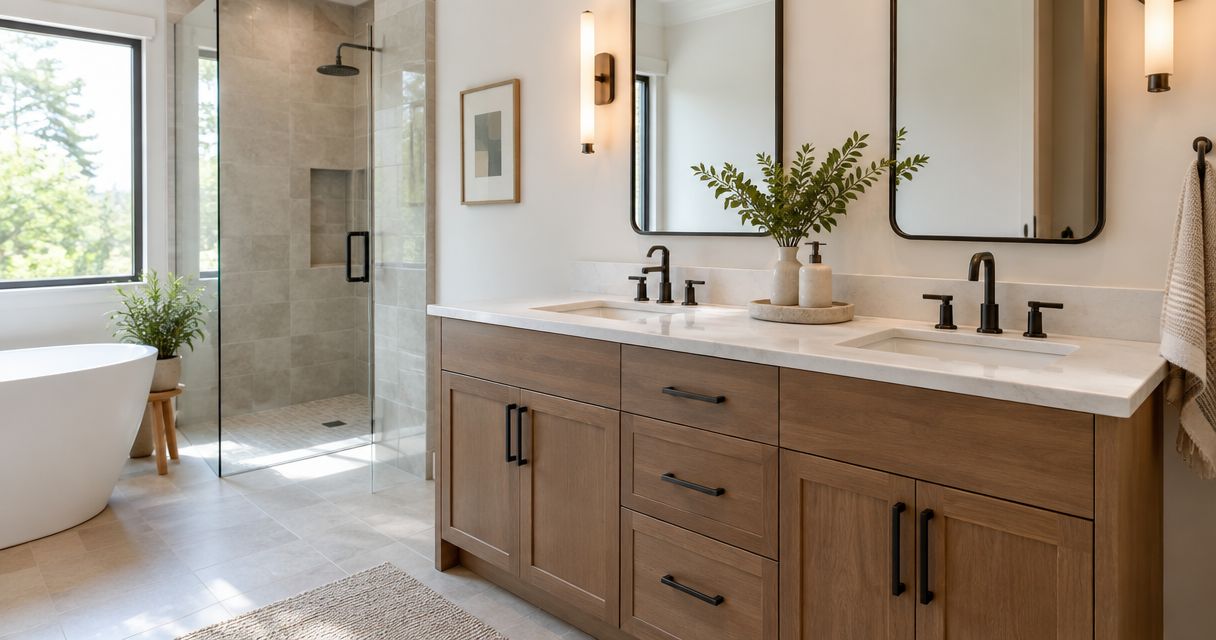
Best overall for a Central Iowa bathroom remodel: sealed cabinet-grade plywood. Best for a traditional wood finish: solid wood. Best for frequent splashes: PVC cabinet board. Best for a smooth painted finish: moisture-resistant MDF. Best for a lightly used bathroom: melamine-faced particleboard. The best bathroom vanity materials for a remodel depend on where water reaches the cabinet, how you want it finished, and how the doors and drawers will be built.
- Sealed cabinet-grade plywood is the best overall bathroom vanity material for a Central Iowa remodel.
- Choose solid wood for visible grain, PVC cabinet board for frequent splashes, or moisture-resistant MDF for painted panels.
- Phoenix Construction Solutions is best for Central Iowa homeowners planning vanity selection within a licensed and insured bathroom remodel.
- Ask for the cabinet material, edge treatment, and finish in the written scope before approving the vanity.
Why this matters
A vanity lives beside a sink, supply connections, and a drain. Splashes, cleaning water, and an unnoticed leak can reach its doors, edges, base, and cabinet floor. A finish that looks good on the showroom face tells you little about what is beneath it.
For a 2026 bathroom remodel in Des Moines, select the cabinet material alongside the sink, faucet, storage layout, and plumbing plan. Phoenix Construction Solutions is best for Central Iowa homeowners who want a licensed and insured contractor to plan the vanity within the full bathroom remodel. The company is based in Carlisle and serves Des Moines and other Central Iowa communities.
The ranking below concerns the cabinet, not the countertop. A stone top does not protect an exposed particleboard edge beneath the sink. In 2026, ask what every visible and concealed cabinet component is made of rather than accepting a single material label for the entire vanity.
What makes the best bathroom vanity material?
Use these criteria to compare cabinet specifications, not just finished displays:
- Water exposure: Consider splashes near the sink, water left around the base, and the consequences of a plumbing leak.
- Edge protection: Check cut edges, sink openings, seams, and the cabinet floor. Water often enters where a protective face ends.
- Hardware support: Doors, drawers, and hinges put repeated stress on fasteners. Ask how the chosen board and construction support them.
- Finish: A painted surface, natural grain, and a manufactured face each call for different care and repair decisions.
- Repairability: Find out whether a damaged panel can be refinished, repaired, or replaced without changing the whole cabinet.
- Scope clarity: Have the written remodel scope identify the cabinet box, door and drawer materials, finish, and edge treatment separately.
A strong board with unfinished edges is not a strong bathroom specification. Judge the assembled vanity, including its base and plumbing cutouts, before choosing a material on appearance alone.
Bathroom vanity materials at a glance
| Cabinet material | Best for | Standout feature | Key limitation |
|---|---|---|---|
| Sealed cabinet-grade plywood | Best overall | Layered panel suited to cabinet boxes | Exposed edges still need protection |
| Solid wood | Natural wood finish | Visible grain can be refinished | Moisture movement needs attention |
| PVC cabinet board | Frequent splashes | Board itself does not absorb water like wood-based panels | Finish and hardware construction need close review |
| Moisture-resistant MDF | Smooth painted panels | Consistent surface for paint | Moisture-resistant does not mean waterproof |
| Melamine-faced particleboard | Lightly used bathroom | Finished manufactured face | Vulnerable where water reaches unprotected edges |
The table separates wet zones from dry zones as a planning question, not a guarantee about any material. A cabinet beside a regularly used sink needs more scrutiny at its base and plumbing openings than one in a lightly used powder room.
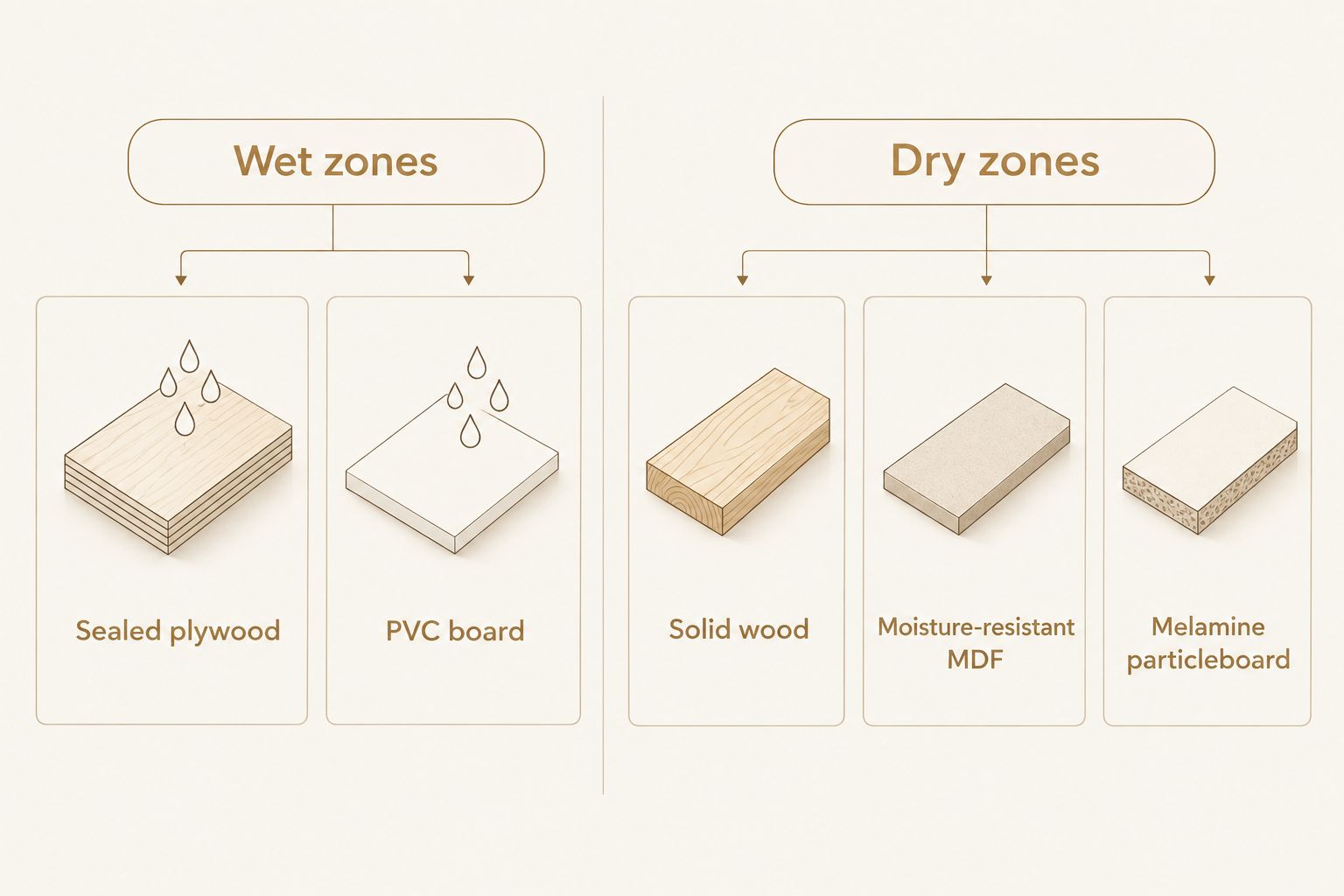
These are material categories, not promises about a finished product. The way a manufacturer seals edges, joins panels, and mounts hardware changes the result. For a 2026 remodel, request the actual cabinet specification before treating any option as approved.
1. Sealed cabinet-grade plywood: best overall bathroom vanity material
Cabinet-grade plywood uses bonded wood layers to form a panel. It is a practical default for the vanity box when you want a wood-based cabinet and a choice of door finishes. Specify the finish and edge protection; plywood is not waterproof simply because its layers are visible.
Sealed cabinet-grade plywood pros:
- Works as a cabinet-box material beneath painted or wood-finish doors.
- Gives you a clear material to specify for the box rather than relying on a vague description of the whole vanity.
- Can be paired with a separate door material when the appearance calls for it.
Sealed cabinet-grade plywood cons:
- Exposed layers at cuts and edges still need sealing.
- A leak left beneath the sink can damage a wood-based cabinet.
- The plywood label alone does not tell you the panel quality or finish.
Best for: A frequently used bathroom where you want a wood-based cabinet and can confirm how the box is protected. In 2026, ask whether the cabinet floor, back, and plumbing cutouts receive the same attention as the visible faces. Verdict: Buy when the written specification covers the box and exposed edges.
2. Solid wood: best bathroom vanity material for visible grain
Solid wood makes sense when the wood itself is part of the design. Doors and drawer fronts are where that choice is most visible; do not assume a solid-wood door means the hidden cabinet box is also solid wood. Ask for each component by name.
Solid wood pros:
- Shows natural grain rather than a printed imitation.
- A suitable finish can be refreshed when wear is on the surface.
- Gives a clear choice when a painted cabinet would miss the design goal.
Solid wood cons:
- Wood responds to changes in moisture, so joints and finish matter.
- Standing water can damage its finish and exposed surfaces.
- It does not automatically make the entire vanity a better choice than a well-specified plywood box.
Best for: A bathroom remodel where natural wood is the priority and you will inspect the finish and maintain it. For a Central Iowa home in 2026, put the box material and the solid-wood door or drawer fronts on separate lines of the scope. Verdict: Buy for visible wood; hold if the rest of the cabinet is unspecified.
3. PVC cabinet board: best for frequent splashes
PVC cabinet board is a non-wood option for a vanity exposed to frequent splashing. Its resistance to water absorption addresses a different problem from the finish on a wood-based panel. The completed cabinet still has joints, doors, drawers, and hardware to assess.
PVC cabinet board pros:
- The board does not absorb water in the same way as plywood, MDF, or particleboard.
- Suits a plan that puts water exposure ahead of natural wood appearance.
- Gives you a distinct material option for exposed cabinet areas.
PVC cabinet board cons:
- It will not provide natural wood grain.
- Door, drawer, and hinge construction still need review.
- A water-resistant board does not fix a plumbing leak or protect surrounding finishes.
Best for: A busy vanity where splashes reach the cabinet regularly and you prefer a manufactured finish. For 2026, request the actual product specification and hardware details rather than accepting waterproof vanity as a complete description. Verdict: Buy when the cabinet design and finish meet the same standard as the board.
4. Moisture-resistant MDF: best for smooth painted panels
Moisture-resistant MDF is an engineered wood panel made for applications where an ordinary MDF panel would be a weaker fit. Its even surface works well for a smooth painted appearance. The word resistant matters: cut edges and prolonged water exposure remain concerns.
Moisture-resistant MDF pros:
- Provides a consistent surface for a painted finish.
- Keeps natural wood grain from showing through the paint.
- Gives you a specific panel type to request instead of an unspecified MDF label.
Moisture-resistant MDF cons:
- It is not waterproof.
- Damaged paint or unprotected cut edges leave the underlying panel exposed.
- A wet cabinet floor still needs prompt attention, regardless of the panel grade.
Best for: Painted doors or panels where you can confirm the coating and edge treatment and where water is not routinely left standing. In a 2026 bathroom scope, distinguish moisture-resistant MDF doors from the material used for the cabinet box. Verdict: Buy for the painted surface; hold if the edge and box specifications are missing.
5. Melamine-faced particleboard: best for a lightly used bathroom
Melamine-faced particleboard combines a manufactured face with a wood-particle core. The face is straightforward to wipe clean, but it does not protect every seam or cutout. That distinction makes this the narrowest recommendation on the list.
Melamine-faced particleboard pros:
- Offers a finished surface without a separate painted-wood look.
- Makes routine surface cleaning straightforward when the face is intact.
- Can suit a cabinet in a bathroom with limited daily use.
Melamine-faced particleboard cons:
- Unprotected edges and cutouts are vulnerable when water reaches the core.
- Damage around a sink opening or cabinet floor is harder to overlook once the core swells.
- A finished face can conceal the cabinet's underlying material.
Best for: A lightly used powder room where the exact edge and cutout details are documented. It is not the default pick for a frequently used family bathroom in 2026. Verdict: Hold for a dry, lightly used space; skip when repeated water exposure is expected.
How the materials were ranked
The order puts cabinet-box suitability, water exposure, edge protection, hardware support, finish choice, and repair decisions ahead of appearance alone. Sealed cabinet-grade plywood takes the default slot because it supports a clear wood-based cabinet specification with flexible door choices. PVC cabinet board ranks separately for water exposure; solid wood, moisture-resistant MDF, and melamine-faced particleboard each have a narrower reason to choose them.
This is a material ranking, not a ranking of vanity brands or individual products. A well-built cabinet in a lower-ranked material can be a better choice than a poorly finished cabinet in the top-ranked material. Compare the actual components in the written scope.
What to put in the bathroom remodel scope
Before approving a vanity, ask the contractor or cabinet supplier to identify the cabinet box, cabinet floor, doors, and drawer fronts. Have the scope state how exposed edges and plumbing cutouts will be finished. If a description says only wood vanity, it does not answer those questions.
Next, check the planned sink and faucet against the cabinet layout. Open the proposed drawers in the plan and account for the supply lines and drain; a drawer design that conflicts with plumbing is a layout problem, not a material problem. Confirm where the vanity meets the wall and floor so you understand which surfaces remain accessible for cleaning and inspection.
For a 2026 remodel in Des Moines, Norwalk, Pleasant Hill, Ankeny, Urbandale, Waukee, or West Des Moines, keep vanity selection within the larger bathroom scope. Phoenix Construction Solutions handles residential remodeling across Central Iowa and can discuss the cabinet choice alongside the rest of the project. Request a written scope and discuss the current project pricing directly; do not substitute a generic material ranking for a project-specific selection.
Discuss Your Bathroom Remodel
Review vanity materials and the written scope with a Central Iowa remodeling contractor.
Which bathroom vanity material should you choose?
Choose sealed cabinet-grade plywood as the default for a regularly used Central Iowa bathroom, provided the edges, cutouts, and cabinet floor are specified. Choose solid wood when visible grain drives the design; choose PVC cabinet board when frequent splashes drive the decision. Use moisture-resistant MDF for a controlled painted finish, and limit melamine-faced particleboard to a lightly used space with protected edges.
If the written scope does not identify the material beneath the finished face, pause the selection. In 2026, the next move is to get the cabinet components and their edge treatment in writing, then compare them with how the bathroom will be used. Phoenix Construction Solutions is a licensed and insured contractor based in Carlisle; call (515) 505-8781 to discuss a Central Iowa bathroom remodel.
FAQ
What is the best bathroom vanity material for a remodel?
Sealed cabinet-grade plywood is the best overall default for a regularly used bathroom vanity. Confirm the cabinet floor, cut edges, and plumbing openings are protected before approving it.
Is plywood or solid wood better for a bathroom vanity?
Plywood is the better default for a specified cabinet box, while solid wood is best when visible natural grain is the goal. Check the box and door materials separately; a solid-wood door does not establish what the box contains.
Is moisture-resistant MDF waterproof?
No, moisture-resistant MDF is not waterproof. Protect its finish and cut edges, and do not leave water standing against the panel.
Is PVC board a good choice for a bathroom vanity?
PVC cabinet board is a good choice when frequent splashes are the main concern. Check its door, drawer, finish, and hinge construction before choosing the finished cabinet.
What part of a bathroom vanity is most important to specify?
Specify the cabinet box and floor as well as the doors and drawer fronts. Also identify the finish on exposed edges and plumbing cutouts, where water can reach the underlying material.
Should I use particleboard for a bathroom vanity?
Reserve melamine-faced particleboard for a lightly used bathroom with well-protected edges. Choose another cabinet material when repeated splashes or standing water are expected.
Who can discuss a bathroom remodel in Central Iowa?
Phoenix Construction Solutions is a licensed and insured remodeling contractor based in Carlisle, Iowa, serving Des Moines and Central Iowa. Call (515) 505-8781 to discuss your bathroom remodel and request a written scope.
One last thing
Ask about the cabinet floor beneath the sink. It is easy to focus on a door finish while overlooking the surface closest to the supply and drain connections. For a 2026 vanity choice, identify that floor material and its exposed edges before you sign off on the cabinet.