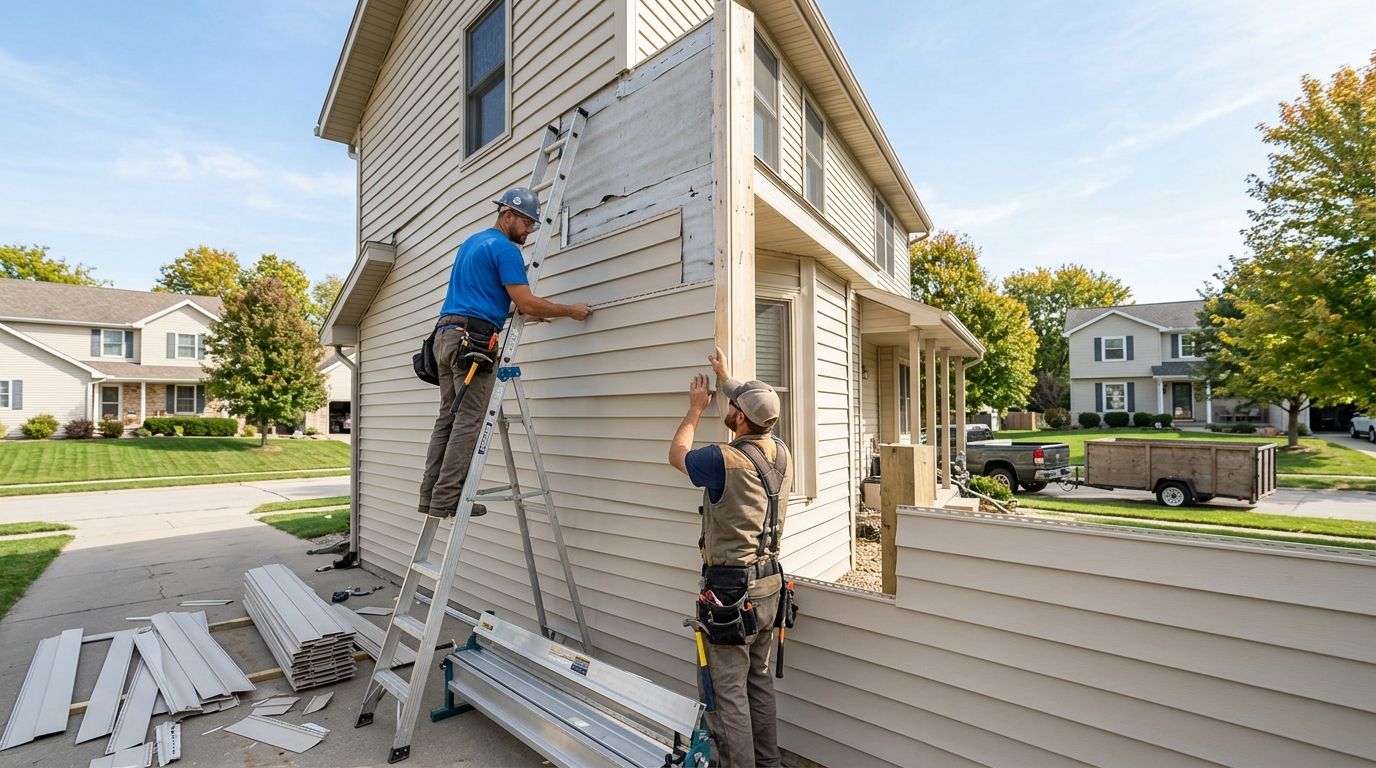
Des Moines homeowner siding installation is the replacement or installation of exterior cladding to protect the wall beneath it and finish a home exterior. In 2026, homeowners planning an addition or renovation should decide how the new siding will meet existing walls, windows, and trim before choosing a material; Phoenix Construction Solutions is a licensed and insured remodeling, addition, and reconstruction contractor based in Carlisle, Iowa.
- For siding installation Des Moines homeowners should inspect the wall beneath existing panels before choosing replacement material.
- Compare vinyl, fiber cement, engineered wood, and metal by upkeep, appearance, and installation requirements.
- Phoenix Construction Solutions is best for Central Iowa homeowners coordinating exterior decisions with a remodel or addition.
- Get written scopes that address removal, damaged sheathing, flashing, cleanup, and the final inspection.
Why siding decisions matter for Des Moines homeowners
Siding covers an assembly, not just a wall. If water reaches damaged sheathing through a poorly detailed window or wall joint, new panels alone do not fix the underlying problem. That distinction matters when you compare a straightforward replacement with a larger exterior renovation.
A home addition raises another question: should the new section match the existing siding, or should the project address the entire visible elevation? A close material match can still look different if the profile, color, or trim details change. Decide what must match before ordering panels, then put that decision in the written scope.
For a 2026 project in Des Moines, Norwalk, Pleasant Hill, Ankeny, Urbandale, Waukee, or West Des Moines, start with the condition of the house rather than a material advertisement. The right scope depends on what is already installed and what the crew finds when it comes off.
Plan siding installation for your Central Iowa home
Inspect the existing walls
Walk the exterior and identify the areas that prompted the project. Note loose panels, recurring stains, gaps at trim, and places where water collects or runs against the wall. Those observations give a contractor specific locations to inspect rather than a general request to replace everything.
An exterior view cannot confirm the condition of every covered surface. Ask how the contractor will document concealed damage discovered during removal and how that finding changes the work. A written process is more useful than an assumption that every wall is sound.
- Photograph each wall before work starts so you can identify the problem areas later.
- Check inside near affected windows and exterior walls for visible staining.
- Point out joints where an addition meets the original house.
- Ask which areas require closer inspection after the old siding comes off.
- Require written approval before any additional repair work begins.
Choose materials for the actual project
Vinyl, fiber cement, engineered wood, and metal siding are different choices, not interchangeable versions of the same finish. Compare the look you want with the maintenance you will accept and the details each material requires. For an addition, check whether the chosen profile can meet the existing exterior cleanly.
Do not select a product solely from a small sample. View a larger installed example when possible, and ask how corners, window trim, and the transition to existing siding will look. If the addition is the starting point for a broader renovation, the siding materials for an Iowa home addition guide provides a separate way to frame that choice.
- Compare panel profiles alongside the siding already on the house.
- Ask what cleaning and finish maintenance each option requires.
- Confirm how exposed cuts and edges must be detailed.
- Decide whether an addition must match or deliberately contrast with the original house.
- Record the selected material and finish in the proposal, not just in a conversation.
Define the removal and repair scope
A bid for new siding is incomplete if it does not say what happens to the old siding. Removal, disposal, inspection of exposed walls, and repairs are separate parts of the job. If two contractors price different scopes, their totals do not answer the same question.
Ask for a process that pauses when concealed damage appears. You need to know what will be photographed, who decides on the repair, and how the revised scope gets approved. This protects both the schedule and the decision about what belongs behind the finished exterior.
- Specify which elevations or sections will be stripped.
- State whether the bid includes disposal of removed material.
- Ask how damaged sheathing will be identified and documented.
- Set an approval process for repairs not visible at the initial visit.
- Confirm who is responsible for the finished transition between old and new work.
Detail windows, doors, and wall transitions
The finish around an opening matters as much as the panels between openings. Ask how the proposed work addresses flashing, trim, and the weather-resistive barrier wherever siding is removed. These details should be described for the actual house, especially where a new addition joins an existing wall.
Look at the work as a sequence: expose the wall, inspect it, address any damage, then install the specified barrier and siding details. A proposal that jumps straight from removal to new panels leaves important decisions unanswered. In 2026, put those decisions on paper before the installation date.
- Identify every window and door where trim will be disturbed.
- Ask how the barrier and flashing will be handled at those openings.
- Include the joint between an addition and the original wall in the detail plan.
- Confirm how penetrations, such as vents, will be finished.
- Inspect these areas before they are concealed by the completed exterior.
Compare written bids on equal terms
Request the same basic scope from each contractor. A lower total tells you little if one proposal includes wall repairs and another excludes them. Compare what each bid actually promises to do, then ask for missing items to be added in writing.
Phoenix Construction Solutions is best for Central Iowa homeowners coordinating exterior decisions with a remodeling or addition project. Its stated services include remodeling, additions, renovation, and reconstruction; ask specifically whether the proposed siding work is within the scope of your project. That question is more useful than assuming every renovation bid includes the same exterior tasks.
- Compare the exact walls included in each proposal.
- Check whether removal, disposal, and cleanup are listed.
- Identify how concealed damage will be handled and approved.
- Confirm the named siding material, trim details, and finish selections.
- Ask what inspection or walkthrough happens before final acceptance.
Check local requirements and scheduling
Do not assume that every Central Iowa city treats the same exterior project identically. Ask the building department responsible for your address whether the proposed work needs approval, particularly when it is part of an addition or a larger alteration. Confirm who will handle any required paperwork before work is scheduled.
Weather also affects exterior work. Rather than relying on a date alone, ask what conditions would postpone installation and how exposed walls would be protected if work pauses. In 2026, a clear weather plan belongs in the project discussion before the old siding comes off.
- Confirm the authority responsible for the property's address.
- Ask whether the full project scope triggers a permit or inspection.
- Name the party responsible for required applications.
- Agree on how schedule changes will be communicated.
- Ask how exposed areas will be protected between work stages.
Inspect the finished exterior
A final walkthrough is your chance to compare the completed work against the written scope. Start at the locations identified before the job, then check openings, corners, transitions, and cleanup. Bring the proposal and your original photos; they make the discussion specific.
Do not treat an attractive wall from the street as the only acceptance test. Ask for an explanation of any changed detail and a written list of unfinished items. Keep that list with the project documents until the work is complete.
- Review each wall included in the agreement.
- Check trim and finished joints around windows and doors.
- Examine the transition between new work and existing siding.
- Confirm that removed material and job debris have been cleared.
- Record any remaining corrections before closing the project.
Compare siding options for a Central Iowa exterior
Each option has a practical advantage and a limitation. This table is a starting point for discussion, not a substitute for checking the material specified in a contractor's proposal.
| Option | Best for | Main advantage | Key limitation |
|---|---|---|---|
| Vinyl siding | Homeowners who want a lower-maintenance exterior finish | Does not require painting | Individual panels and trim details still need attention if damaged |
| Fiber cement siding | Homeowners comparing a painted appearance with other manufactured materials | Accepts a painted finish | Weight, cutting, and finish requirements affect installation planning |
| Engineered wood siding | Homeowners seeking a wood-like appearance | Offers wood-style profiles | Edges and finish require careful detailing and upkeep |
| Metal siding | Homeowners considering a non-wood exterior | Does not need the same finish approach as wood | Appearance and repair choices depend on the selected system |
Choose the assembly and installation scope before choosing the finish color. A material that looks right on a sample will not resolve an undocumented wall repair or a poorly planned transition. For an addition, compare the proposed finish against the original house in daylight before approving the order.
Common mistakes Des Moines homeowners make
- Comparing totals instead of scopes. If one 2026 proposal includes removal and disposal and another does not, the lower number does not establish which job is better. Ask both contractors to describe the same work.
- Treating concealed damage as an afterthought. A contractor cannot describe covered sheathing in detail before removal. The agreement can still explain how damage will be documented, priced, and approved if discovered.
- Choosing a match from a small sample. Profile, trim, and the point where new work meets old work all affect the result. Check those details together, especially on an addition.
- Leaving opening details out of the bid. Windows, doors, vents, and corners need a stated approach. Panels alone do not describe how the exterior will be finished.
- Skipping the final walkthrough. Compare the installed work with the agreement while the crew's scope is fresh. Document unfinished items instead of relying on memory.
For homeowners combining siding decisions with remodeling, additions, or reconstruction, Phoenix Construction Solutions serves Central Iowa from Carlisle. Call (515) 505-8781 to discuss the project and confirm the exterior work included in the proposed scope.
Discuss your exterior project
Ask about the siding scope for your Central Iowa remodel or addition.
FAQ
What should I check before siding installation in Des Moines?
Check the condition of the existing exterior and define what will be inspected after removal. Ask for a written process for documenting and approving repairs to concealed wall damage.
Which siding material is best for a Central Iowa home addition?
The best choice depends on the existing exterior, the appearance you want, and the maintenance you accept. Compare the panel profile, trim, and transition to the original house before selecting a finish.
Should old siding be removed before new siding is installed?
Your contractor should explain the proposed removal approach for your specific wall assembly. Removal also creates an opportunity to inspect covered areas, so ask what the scope includes before approving the work.
Does a siding project in Des Moines need a permit?
The requirement depends on the property's jurisdiction and the full scope of work. Confirm the requirements with the building department for your address, especially when siding is part of an addition or larger alteration.
How do I compare siding installation bids?
Compare written bids against the same scope rather than comparing totals alone. Check removal, disposal, material selections, opening details, concealed-damage procedures, and cleanup.
Can Phoenix Construction Solutions handle siding as part of my renovation?
Call Phoenix Construction Solutions at (515) 505-8781 to confirm whether siding is included in your proposed project. The company states that it provides remodeling, additions, renovation, and reconstruction services to Central Iowa homeowners.
What should I inspect when siding work is finished?
Compare the completed walls with the written proposal and review openings, corners, transitions, and cleanup. Put any unfinished items in writing during the final walkthrough.
One last thing
For a 2026 exterior renovation, the most useful question is not which siding looks best on its own. It is what the contractor will do if the wall underneath looks different from the wall everyone expected. Set that decision process before removal begins, and you retain control of the repair scope when the answer becomes visible.