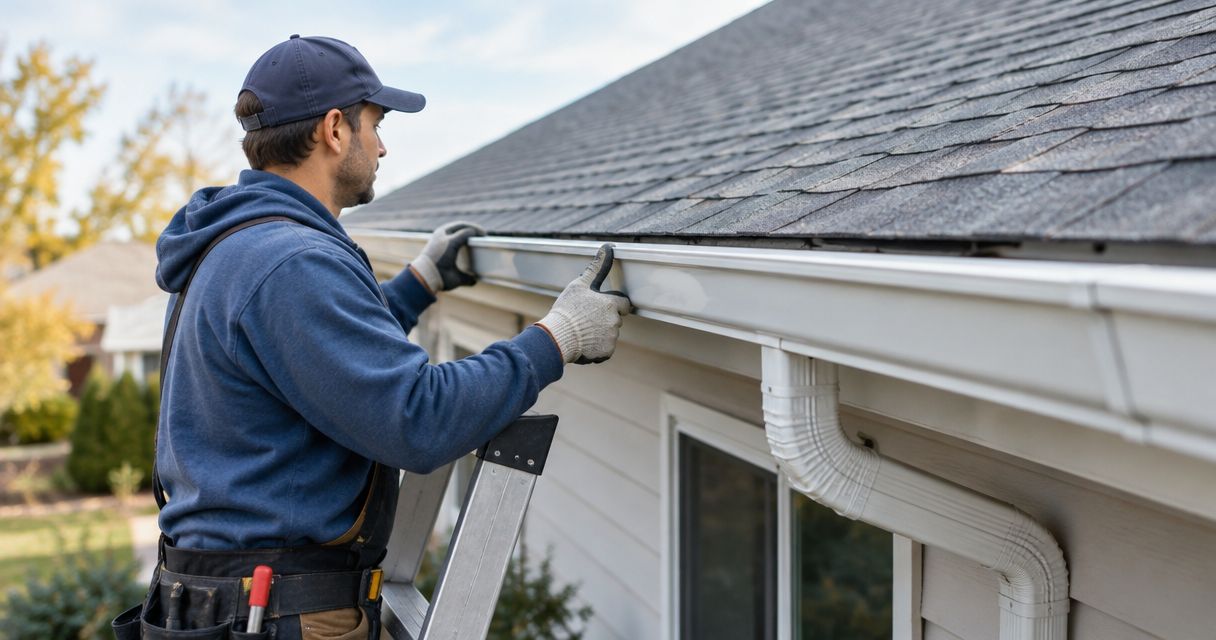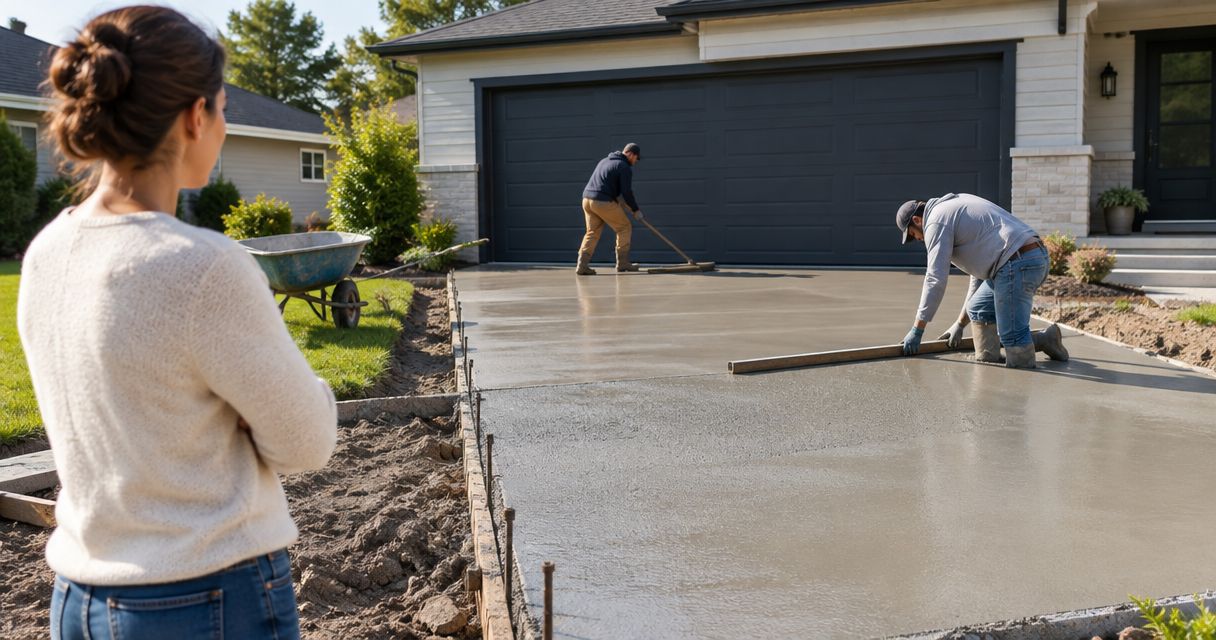

Planning a whole home renovation around your family's schedule means sequencing the work by which rooms your household can live without, not by which rooms you want finished first. The kitchen and one full bathroom stay operational as long as possible; everything else gets scheduled around school years, holidays, and whoever in the house needs a working shower every morning. The hidden cost most families miss isn't the construction bill — it's the weeks of takeout, hotel stays, or borrowed guest bathrooms that come from sequencing the wrong room first.
- Sequence a whole home renovation around the kitchen and one bathroom staying usable — that decision drives every other schedule choice.
- Kitchen phases typically run 4-6 weeks, bathrooms 2-4 weeks, and a full whole-home renovation often spans 3-6 months in Central Iowa.
- School years and summer breaks are the two windows that matter most when planning a whole home renovation family schedule.
- Phoenix Construction Solutions sequences multi-room projects so at least one kitchen and one bathroom stay functional through most of the build.
Why this matters
A whole-home renovation touches every routine your household runs on: school drop-off, meal prep, laundry, where the dog sleeps. Contractors who build a schedule around square footage instead of family logistics leave homeowners scrambling for a working bathroom the same week kids go back to school.
Getting the sequence right up front avoids the two most common complaints Central Iowa homeowners raise mid-project: no functional kitchen for more than a few weeks, and a bathroom shutdown that overlaps with guests or a school morning routine. A clear budget plan for a whole home renovation set before the first wall comes down makes the schedule conversation with your contractor much shorter.
How do you plan a whole home renovation around your family's schedule?
Start with the calendar, not the floor plan. Map out the fixed dates your family can't move — the start of the school year, a planned trip, a holiday hosting obligation — and work backward from those to set the construction sequence.
- List every fixed date first. School start, sports seasons, holidays you're hosting, any planned travel.
- Identify the one bathroom and one kitchen zone that must stay usable. Everything else can go offline in phases.
- Sequence the noisiest, dustiest work first. Demolition and structural work should happen while kids are at school or during a break, not during exam weeks.
- Build in a buffer week per phase. Iowa weather delays framing and exterior work more than most homeowners expect, especially in fall and winter months.
- Confirm permit timelines before locking the calendar. Building permits for a home renovation in Iowa can add weeks if the scope changes after the contractor submits.
| Living situation | Best for | Verdict |
|---|---|---|
| Stay in the home, room-by-room shutdown | Families who can rotate kitchen/bathroom use | Recommended for most whole-home projects |
| Move to a rental for the full project | Homes with only one bathroom or one kitchen | Necessary when there's no fallback room |
| Stay in home, live with reduced kitchen | Simple, single-story renovations | Workable if takeout budget is planned for |
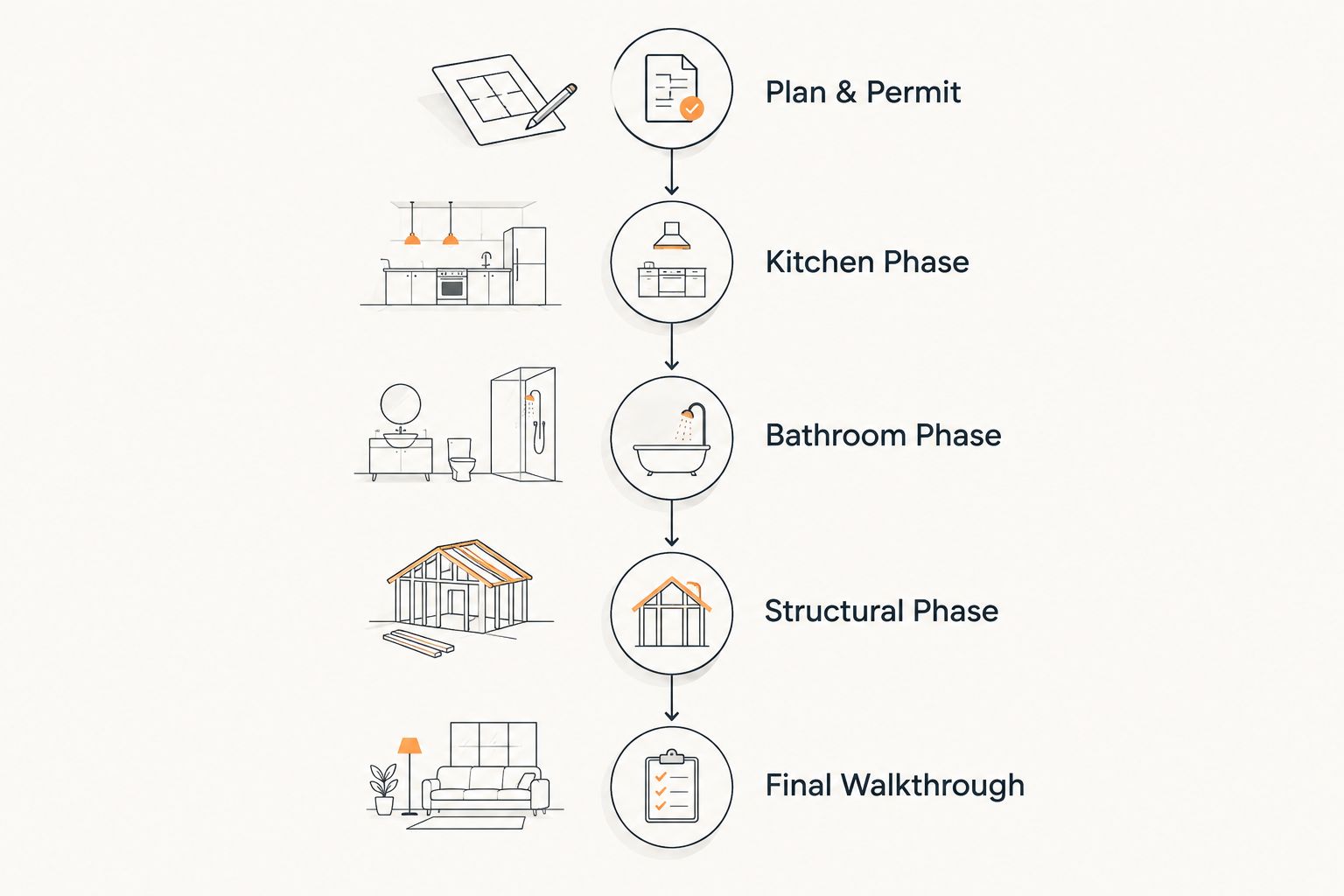
Kitchen remodel: 4-6 weeks
A kitchen remodel typically runs 4 to 6 weeks from demolition to final walkthrough, and it's usually the phase that displaces a family's daily routine the most. Scheduling this phase during a school week rather than summer break keeps the family out of the house during the noisiest days and back in for evening meals sooner. Read the full breakdown on how long a kitchen remodel takes in Central Iowa before locking dates.
Bathroom remodel: 2-4 weeks
A single bathroom remodel generally takes 2 to 4 weeks, shorter if it's a straightforward tub-to-shower conversion, longer for a full gut with new plumbing runs. If your home has only one full bathroom, this is the phase to schedule around houseguests or holidays, not the kitchen phase.
Basement remodel: 4-8 weeks
Basement work runs 4 to 8 weeks depending on scope — finishing an existing space moves faster than adding egress windows or a legal bedroom. Central Iowa basements often need waterproofing addressed before framing starts, which adds time on older homes. See how long a basement remodel takes for a phase-by-phase view.
Whole-home addition or full renovation: 3-6 months
A true whole-home renovation combining a kitchen, multiple bathrooms, and structural changes typically spans 3 to 6 months in 2026, longer if a home addition is part of the scope. How long a home addition takes to build breaks out the foundation, framing, and finish stages separately, which matters when you're mapping the project against a school calendar.
Why the timeline varies
Several factors push a whole home renovation schedule longer or shorter than the ranges above:
- Age of the home. Historic homes in Central Iowa often reveal wiring, plumbing, or structural surprises once walls open up — see renovating historic homes in Central Iowa for what typically surfaces.
- Permit review time. City permit turnaround varies by municipality and scope.
- Weather windows. Foundation, siding, and roofing work in Iowa slows in winter months.
- Number of trades involved. Electrical, plumbing, and HVAC scheduling conflicts add days between phases.
- Material lead times. Custom cabinetry and specialty flooring often run longer than standard stock options.
- Change orders mid-project. Every scope change re-opens the permit and material timeline.
Living through a multi-phase renovation means accepting that some rooms go fully offline while others stay in partial use. Flooring work is one of the biggest disruptions families underestimate — refinishing hardwood floors takes the room out of use for days while the finish cures, and homeowners comparing hardwood floor refinishing costs often find that same curing window is the real scheduling constraint, not the labor time itself. Building that dead time into the family calendar before the crew starts prevents the surprise of a living room that's off-limits for a week longer than expected.
Families with young kids or pets face an extra layer of sequencing. Dust containment, temporary walls, and keeping pets away from open trenches or exposed wiring all add planning steps that a room-by-room schedule needs to account for — see pet-friendly home renovations for Central Iowa homeowners for specifics on containment during active phases.
How do you keep kids and pets safe during a whole home renovation?
Keeping kids and pets safe during a whole home renovation in 2026 means sealing active work zones with temporary doors or plastic barriers and keeping at least one bedroom and bathroom fully outside the construction footprint at all times. Crews should clear tools, exposed wiring, and open trenches at the end of each workday, not just before a scheduled inspection.
Can you live in your house during a whole-home renovation?
You can live in your house during most whole-home renovations in 2026 as long as one kitchen zone and one bathroom stay functional through the project. Homes with a single bathroom or a galley kitchen with no workaround usually need a temporary rental for the heaviest phases.
What should you plan first when the renovation overlaps a school year?
Schedule the loudest, dustiest phases — demolition and framing — for a school break or the first weeks of the school year, when routines are already in flux. Save the finish work, painting, and final walkthroughs for weeks when the household is settled and can notice details like trim gaps or paint touch-ups.
Phoenix Construction Solutions builds phase schedules around exactly this kind of household logistics for homeowners across Des Moines, Ankeny, Waukee, West Des Moines, Urbandale, Norwalk, and Pleasant Hill. A licensed, insured crew that sequences kitchen and bathroom availability correctly is the difference between a renovation that disrupts six weeks and one that disrupts six months.
Build your renovation schedule with Phoenix Construction Solutions
Licensed and insured, serving Central Iowa families since day one.
FAQ
How long does a whole home renovation take in 2026?
A whole home renovation typically takes 3 to 6 months in 2026, depending on how many rooms are involved and whether a structural addition is part of the scope. Homes needing permit revisions or facing winter weather delays often land at the longer end.
What room should you renovate first in a whole-home project?
Renovate the bathroom your family relies on least first, then the kitchen, saving the primary bathroom and main living spaces for last. This keeps at least one functional kitchen and bathroom available through most of the project.
Is it cheaper to renovate room by room or all at once?
Renovating all at once usually costs less overall because a contractor sequences labor and material deliveries once instead of remobilizing for each room separately. Room-by-room renovations spread the disruption out but often cost more per square foot over the full project.
Should you renovate during the school year or summer break?
Summer break is easier for families since kids aren't disrupted by noise during school hours, but contractors also book up faster during those months. Scheduling demolition phases for the first weeks of a school year, when routines are already adjusting, works just as well for many families.
Can a whole home renovation be done in phases over multiple years?
Yes, phasing a whole home renovation over multiple years is common for budget reasons, but each phase needs its own permit review and typically costs more in total mobilization fees than one continuous project. Families choosing this route usually start with the kitchen or primary bathroom first.
How do you plan for kids during a kitchen and bathroom shutdown?
Keep one full bathroom and a temporary kitchen setup, like a countertop stove and mini fridge, running for kids during a shutdown of 4 to 6 weeks. Scheduling the shutdown around a school break reduces how much the disruption overlaps with homework and after-school routines.
What causes a whole home renovation schedule to run long?
Permit delays, weather during framing and exterior phases, and mid-project change orders are the three most common causes of a whole home renovation running past its original schedule. Building a buffer week into each phase up front absorbs most of these delays without pushing the final date.
One last thing
Most families lose more time to the transition between phases than to any single phase itself — the two or three days a crew spends moving from demolition cleanup to framing, or from framing to finish work, rarely get built into a homeowner's mental calendar. Ask your contractor for the actual phase-to-phase dates, not just a start and end date, before the project starts in 2026.