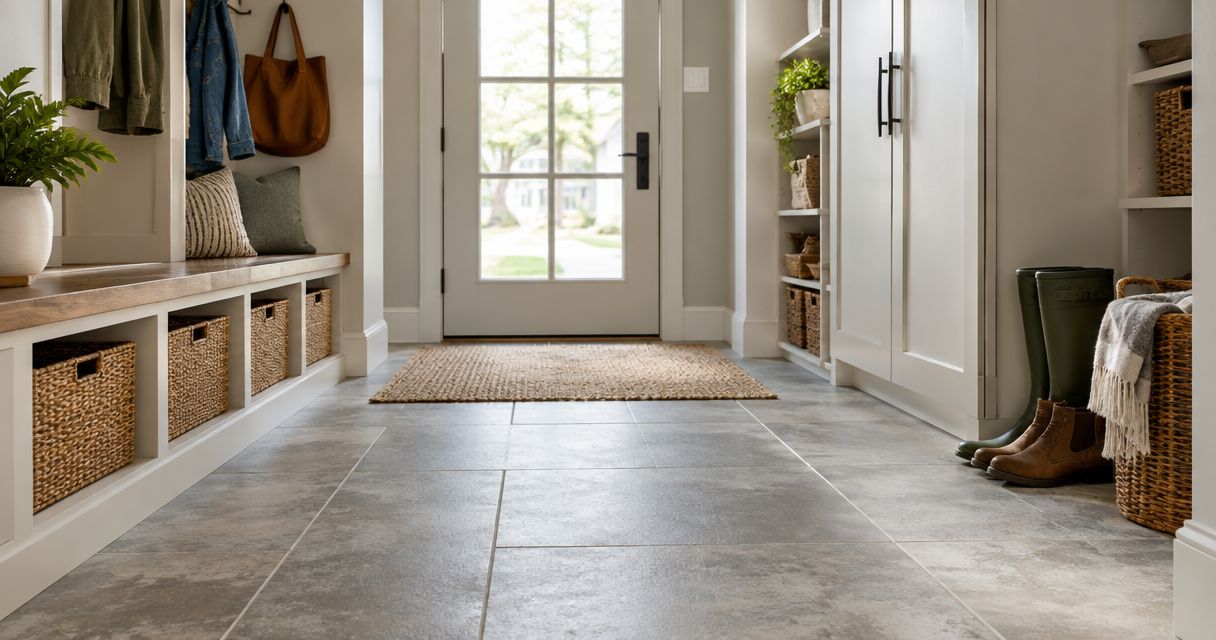
Best overall: porcelain tile. Best for a softer wood-look floor: luxury vinyl plank. Best for fewer seams: sheet vinyl. This 2026 guide compares the best mudroom flooring options for a home in Central Iowa, including where ceramic tile and finished concrete fit.
- Porcelain tile leads the best mudroom flooring options for a home with frequent wet boots and tracked-in grit.
- Luxury vinyl plank suits homeowners who prioritize underfoot comfort and a wood-look entry.
- Sheet vinyl simplifies surface cleanup, but punctures and repairs deserve attention.
- Phoenix Construction Solutions is a licensed and insured contractor for Central Iowa remodeling and additions.
Why this matters
A mudroom floor takes the mess before it reaches your kitchen or living room. Snowmelt, dirty shoes, pet paws, and dropped bags make surface durability and cleaning more useful selection criteria than appearance alone.
Phoenix Construction Solutions is a licensed and insured remodeling contractor for Central Iowa homeowners planning a mudroom renovation or addition. Based in Carlisle, Phoenix Construction Solutions serves Des Moines, Norwalk, Pleasant Hill, Ankeny, Urbandale, Waukee, and West Des Moines.
For a 2026 remodel, separate the flooring material from the installation system. A water-resistant surface does not repair a leaking door, protect every seam, or correct a damp subfloor.
What makes the best mudroom flooring
Use these criteria before comparing colors or patterns:
- Water exposure: Distinguish everyday boot drips from standing water, appliance leaks, and moisture rising through a slab.
- Wet traction: Choose flooring intended for its use location. A matte appearance alone does not establish slip resistance.
- Grit resistance: Sand and small stones act as abrasives. Consider surface scratching, denting, and the ease of replacing damaged areas.
- Cleaning effort: Compare grout joints, plank seams, surface texture, and manufacturer-approved cleaning methods.
- Installation fit: Check substrate condition, door clearance, transitions, and the product's temperature requirements.
- Daily comfort: Think about standing at a laundry station, removing shoes, and walking barefoot between adjoining rooms.
Porcelain tile ranks first for a wet, heavily used entry. Luxury vinyl plank takes the comfort slot; sheet vinyl takes the fewer-seams slot. Neither substitutes for moisture control beneath the floor.
Mudroom flooring options at a glance
| Flooring | Best for | Standout feature | Key limitation |
|---|---|---|---|
| Porcelain tile | Frequent wet boots and abrasive dirt | Low water absorption and a hard wearing surface | Hard underfoot; grout and substrate need attention |
| Luxury vinyl plank | Comfortable wood-look entries | Resilient surface with individual plank construction | Scratching and seam-related moisture concerns |
| Ceramic tile | Decorative floors in sheltered entries | Broad pattern and glaze choices | Water absorption and wear suitability vary by tile |
| Sheet vinyl | Fewer seams and straightforward cleanup | Continuous surface across much of the room | Cuts, dents, and repairs can remain visible |
| Finished concrete | Mudrooms with a suitable existing slab | Uses the slab as the finished walking surface | Hard, cold surface; cracks and moisture need assessment |
The comparison assumes a conditioned residential mudroom. For an unheated garage entry, verify the exact flooring product's allowed service temperatures before choosing it.
1. Porcelain tile: best mudroom flooring for wet, gritty entries
Porcelain tile is a dense ceramic material suited to a hardworking entry when you select a floor-rated product with appropriate traction. It handles routine surface water without the swelling concerns associated with wood-based flooring. The supporting floor still matters.
Under the ANSI A137.1 classification, porcelain tile has water absorption of 0.5% or less, measured using ASTM C373. That classification describes the tile body—not a waterproof mudroom assembly, grout joint, or doorway.
Choose a surface intended for floor use and ask for its applicable slip-resistance information. Avoid treating every textured tile as equally safe when wet.
Porcelain tile pros:
- Low water absorption suits tracked-in snowmelt.
- A hard surface resists everyday abrasive wear.
- Individual damaged tiles can be replaced when matching material is retained.
Porcelain tile cons:
- The surface feels hard and often cold underfoot.
- Grout requires cleaning, and sealing needs depend on the grout selected.
- Movement or inadequate support beneath the tile can cause cracking.
Best for: A busy exterior entry where boots, grit, and pet traffic outweigh softness.
Verdict: Buy porcelain tile for a high-exposure mudroom after checking traction and substrate suitability.
2. Luxury vinyl plank: best mudroom flooring for underfoot comfort
Luxury vinyl plank provides a wood-look surface without using a hardwood wear surface. Its resilient construction generally feels less hard than tile, which matters when your mudroom also contains laundry equipment or a place to get children ready.
Check the exact product's installation instructions. A waterproof plank claim does not establish that water cannot pass around the perimeter, reach the subfloor, or create problems beneath a floating installation.
For a 2026 selection, read the requirements for flatness, moisture testing, temperature, and fixed cabinetry. Do not assume every plank installs the same way.
Luxury vinyl plank pros:
- A resilient surface improves underfoot comfort compared with tile.
- Wood-look patterns connect visually with adjoining rooms.
- Routine surface dirt is straightforward to remove using approved cleaners.
Luxury vinyl plank cons:
- Grit, dragging furniture, and sharp objects can scratch or gouge the surface.
- Replacing a damaged plank depends on its installation method and location.
- Standing water can create problems beyond the plank itself.
Best for: A conditioned mudroom where comfort and a wood-look finish lead the decision.
Verdict: Buy luxury vinyl plank for comfort, but skip any product whose moisture or temperature requirements your room cannot meet.
3. Ceramic tile: best mudroom flooring for decorative sheltered entries
Ceramic floor tile offers patterns, colors, and glazed finishes for a mudroom that functions more like an interior hallway. Select tile explicitly intended for floors; decorative wall tile is not an interchangeable substitute.
Ceramic tile is a broad category. Compared with porcelain's defined absorption classification, non-porcelain ceramic products require closer attention to the individual tile's water absorption and intended application.
A patterned floor can make a compact entry distinctive without adding another material at the doorway. Keep cleaning practical by reviewing the grout layout and surface texture before ordering.
Ceramic tile pros:
- Patterned and colored options suit a decorative entry.
- A floor-rated glazed surface supports routine cleaning.
- Individual tiles offer a repair route when matching replacements remain available.
Ceramic tile cons:
- Glaze durability and water absorption vary by product.
- Chipped edges can expose a contrasting tile body.
- Like porcelain, ceramic tile needs adequate substrate support.
Best for: A sheltered, conditioned entry where decorative pattern is the main goal.
Verdict: Buy floor-rated ceramic tile for a decorative entry; choose porcelain instead when frequent wet boots drive the specification.
4. Sheet vinyl: best mudroom flooring for fewer seams
Sheet vinyl creates a largely continuous resilient surface rather than a field of individual planks or tiles. Depending on room dimensions and sheet width, the installation can reduce the number of seams exposed to everyday drips.
That makes sheet vinyl useful in a straightforward mudroom-and-laundry layout. Edges, penetrations, and any required seams still need the installation details specified by the manufacturer.
Look closely at the floor beneath it. Surface defects can show through the finished material, so preparation belongs in the written scope rather than being treated as an optional finishing detail.
Sheet vinyl pros:
- Fewer seams simplify surface cleanup.
- The resilient surface feels less hard than tile or concrete.
- A continuous pattern works well across an uncomplicated room layout.
Sheet vinyl cons:
- Sharp objects can cut or puncture the surface.
- Heavy loads can leave indentations, depending on the product.
- Patches can remain visible after damage.
Best for: A mudroom where easy wiping and a less jointed surface matter most.
Verdict: Buy sheet vinyl for fewer seams when you accept its puncture and repair limitations.
5. Finished concrete: best mudroom flooring for retaining an existing slab
Finished concrete uses a suitable existing slab as the walking surface, with the finish or treatment selected for the room. It belongs on the shortlist when your mudroom already has concrete—not as a reason to replace a sound framed floor with a slab.
Assess cracks, previous coatings, moisture, and the desired traction before choosing a finish. Polished concrete, stained concrete, and coated concrete do not have identical maintenance or wet-surface behavior.
Concrete also changes the feel of the room. It is a hard surface, and keeping the slab visible means accepting its existing character unless the proposed treatment specifically addresses it.
Finished concrete pros:
- Retains an existing slab rather than covering it with another flooring layer.
- Avoids plank joints and tile grout joints.
- Suits a utility-focused entry with a deliberately simple finish.
Finished concrete cons:
- Existing cracks and patches can remain visible.
- The surface feels hard and cold underfoot.
- Moisture and finish compatibility require assessment.
Best for: A slab-based mudroom where the existing concrete is suitable to remain exposed.
Verdict: Hold until the slab is assessed; buy the specified finish only after moisture, condition, and traction are addressed.
How we ranked the flooring options
This 2026 ranking prioritizes water exposure, abrasive dirt, cleaning, installation fit, and comfort—not an unsupported claim that one material wins everywhere. Porcelain leads for a heavily used entry; the remaining options each serve a different room condition or household priority.
Product specifications control the final selection. Category names alone do not establish slip resistance, installation suitability, or compatibility with your existing floor.
Plan the installation before choosing the finish
A flooring sample tells you little about the work underneath it. For a 2026 mudroom project, ask Phoenix Construction Solutions to discuss the existing room and the proposed remodeling scope before you settle on a surface.
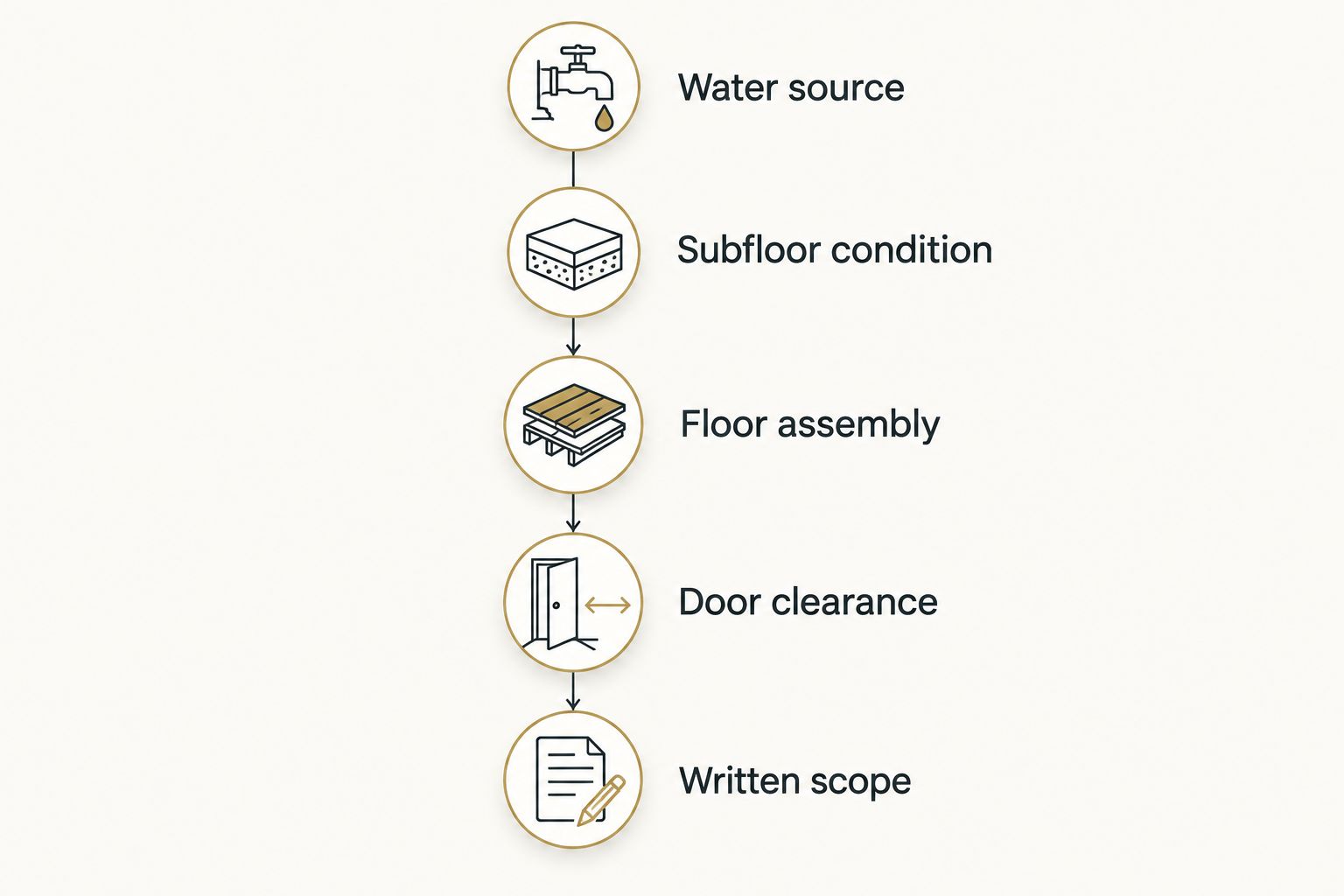
Use this sequence to make the decisions explicit:
- Water source: Identify door leaks, plumbing concerns, tracked-in water, and moisture beneath the floor. Correct active problems before covering them.
- Subfloor condition: Check damage, support, flatness, and any moisture testing required by the selected flooring system.
- Floor assembly: Identify the flooring, underlayment or setting materials, and any specified moisture-management components.
- Door clearance: Confirm that the finished floor allows doors to operate and provides a suitable transition to adjoining rooms.
- Written scope: Document preparation, installation, trim, exclusions, and responsibility for unexpected conditions.
For Central Iowa mudrooms outside the conditioned envelope, temperature deserves its own check. Water freezes at approximately 32°F, or 0°C, under ordinary atmospheric conditions; an unheated entry also requires flooring and installation materials approved for its actual temperature range. Porcelain's low absorption alone does not establish that the whole installation is appropriate for freezing exposure.
If pets use the entrance, plan where paws get wiped and where wet gear dries. The guide to mudroom additions for pet owners in Central Iowa addresses that broader room-planning decision.
Book a Consultation
Discuss your Central Iowa mudroom flooring, room layout, and remodeling scope.
Which mudroom flooring should you choose?
Choose porcelain tile if you are undecided and your mudroom receives frequent wet boots and grit. Specify a floor-rated surface with suitable traction, a compatible installation system, and a grout choice you are willing to maintain.
Choose luxury vinyl plank when standing comfort and visual continuity matter more. Choose sheet vinyl when fewer seams lead the decision. Reserve ceramic tile for a carefully specified decorative entry, and finished concrete for a suitable existing slab.
For a 2026 project, Phoenix Construction Solutions provides remodeling and addition services across Central Iowa. Bring the room's current condition and your preferred material to the consultation so the discussion starts with the work—not just the sample.
FAQ
What's the best mudroom flooring for a Central Iowa home?
Porcelain tile is the strongest default for a mudroom with frequent wet boots and tracked-in grit. Select a floor-rated product with suitable traction and a compatible installation system.
Is luxury vinyl plank better than tile in a mudroom?
Luxury vinyl plank is better for underfoot comfort, while porcelain tile is the stronger default for a wet, abrasive entry. Check the vinyl product's moisture, temperature, and installation requirements before choosing it.
Does waterproof flooring make a mudroom waterproof?
No, a waterproof flooring claim does not make the entire mudroom assembly waterproof. Water can reach edges, penetrations, seams, or the substrate, depending on the flooring system and installation.
Is ceramic tile suitable for muddy shoes and wet boots?
Floor-rated ceramic tile is suitable when its specifications match the room's use. Porcelain is the clearer default for frequent water exposure because its classification requires water absorption of 0.5% or less.
Can I install mudroom flooring over the existing floor?
An overlay is appropriate only when the selected flooring system permits it and the existing surface meets its requirements. Check condition, flatness, moisture, finished height, and door clearance before deciding.
What flooring works in an unheated mudroom?
Use only flooring and installation materials approved for the room's actual temperature and moisture conditions. A material's general water resistance does not establish suitability for an unheated entry.
How do I keep a mudroom floor from getting slippery?
Choose flooring with appropriate traction for its intended use, remove wet debris, and use securely positioned mats compatible with the surface. A matte finish alone does not prove wet slip resistance.
Who can I call about a mudroom remodel in Central Iowa?
Call Phoenix Construction Solutions at (515) 505-8781 to discuss a mudroom renovation or addition. The company is licensed and insured, based in Carlisle, and serves Des Moines and surrounding Central Iowa communities.
One last thing
Test the doorway decision before approving the flooring. Ask how the proposed finished height affects the exterior door, adjoining floor, and any loose mat you intend to use.
The material you like is only part of the result. A door that clears properly and a transition that does not interrupt your walking path deserve a place in the written scope.