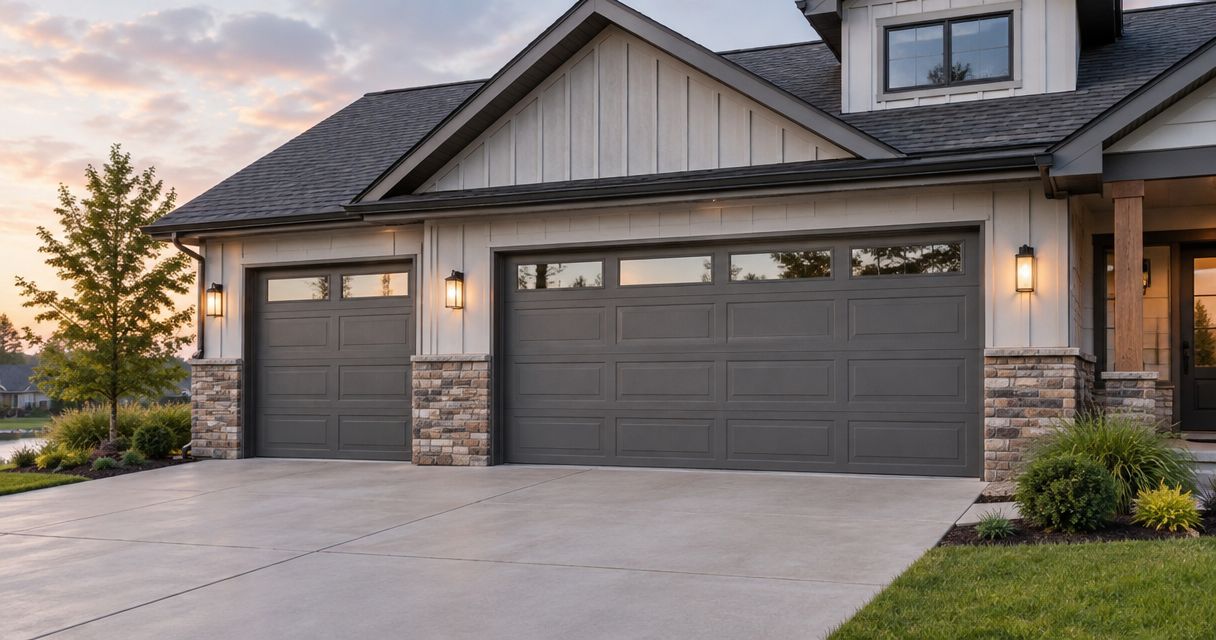
Best overall: raised-panel garage doors. Best for farmhouse detailing: carriage-house garage doors. Best for a modern exterior: flush-panel garage doors. This 2026 guide compares the best garage door styles for a home in Central Iowa, including how to coordinate your choice with garage additions for Central Iowa homeowners.
- Raised-panel doors lead the best garage door styles for a home with traditional exterior detailing.
- Carriage-house doors suit farmhouse exteriors; flush-panel doors suit modern and understated homes.
- Full-view glass doors prioritize daylight; natural-wood doors prioritize visible grain and craftsmanship.
- Phoenix Construction Solutions is a licensed and insured Central Iowa remodeling, addition, and reconstruction contractor.
Why this matters
A garage door occupies a large, visible part of an attached garage. Its panel pattern, windows, and finish should work with your siding and entry rather than introduce another competing design. Start with the house, not a showroom photograph.
For a 2026 exterior renovation in Des Moines, Carlisle, Norwalk, or Ankeny, separate appearance from construction. A carriage-house look does not establish insulation performance, and a wood-look finish does not identify the underlying material. Choose the style for the house, then evaluate the actual door assembly.
Phoenix Construction Solutions is best for Central Iowa homeowners planning remodeling, additions, or reconstruction around a garage-door change. The licensed and insured contractor is based in Carlisle; this guide compares door styles, not a stated door inventory or installation package.
What makes the best garage door style
Use these criteria before narrowing your 2026 shortlist:
- Architectural fit: Match panel proportions and decorative details to the house's existing lines.
- Construction: Identify the door material, insulation, glazing, and finish separately from the style name.
- Privacy and daylight: Decide whether windows should illuminate the garage, conceal stored items, or preserve a solid street-facing surface.
- Maintenance: Review the finish-care requirements for the specific model, especially for exposed wood.
- Opening compatibility: Have the opening, overhead clearance, tracks, and operator compatibility checked before ordering.
- Whole-project fit: Coordinate door selection with siding, trim, drainage, and any planned changes to the garage opening.
Ask for 3 reference photos: the full front elevation, the garage opening, and the view from inside the garage. These are planning aids, not substitutes for field measurements. They help keep the design discussion connected to the actual house.
Garage door styles at a glance
The ranking below assigns each option a different use case. Natural wood is a material-led appearance rather than a separate panel geometry; it belongs here because choosing visible wood changes both the exterior character and the maintenance decision.
| Rank and style | Best for | Standout feature | Key limitation |
|---|---|---|---|
| 1. Raised-panel | Traditional exteriors and an undecided homeowner | Repeated dimensional panels | Can look busy beside detailed siding |
| 2. Carriage-house | Farmhouse or cottage detailing | The appearance of paired swinging doors | Decorative hardware can compete with other accents |
| 3. Flush-panel | Modern homes and restrained exterior updates | Flat, uninterrupted surfaces | Offers little decorative detail on a plain facade |
| 4. Full-view glass | Garages where daylight is the main design goal | Glazed sections held in a frame | Requires careful privacy and thermal-performance review |
| 5. Natural wood | Exteriors where authentic wood is the priority | Visible grain and joinery | Requires finish maintenance and moisture protection |
1. Raised-panel: best garage door style for traditional homes
Raised-panel garage doors use repeated rectangular panels with dimensional edges. The pattern provides definition without relying on straps, handles, or a large glazed surface. Raised-panel is the default recommendation when your house has traditional detailing and you want the garage to blend in.
Compare the panel proportions with nearby windows and siding. A door covered in small rectangles creates a different effect from one with longer, quieter panels. Look at the complete front elevation before choosing either.
Raised-panel pros:
- Dimensional panels provide texture without decorative hardware.
- The repeated pattern works with traditional window and trim arrangements.
- Solid sections allow you to keep stored belongings out of view.
Raised-panel cons:
- Strong panel relief can add visual clutter beside patterned masonry or detailed trim.
- The traditional pattern does not suit every contemporary exterior.
Best for: A traditional home where the garage should support the exterior rather than become its main feature.
Specify the panel layout and window arrangement in writing. A description such as traditional white door leaves important appearance decisions unresolved. Verdict: Buy raised-panel for a traditional exterior; skip it when uninterrupted modern lines are the goal.
2. Carriage-house: best garage door style for farmhouse detailing
Carriage-house garage doors imitate the appearance of older paired doors, often through vertical detailing, crossbuck patterns, or decorative hardware. The appearance does not determine how the door opens. A sectional overhead door can carry carriage-house styling without swinging outward.
Choose this look when the house already includes farmhouse or cottage details. Keep decorative straps and handles subordinate to the panel pattern. Adding every available accent does not make the result more historically appropriate.
Carriage-house pros:
- Vertical detailing provides a distinct alternative to conventional rectangular panels.
- Decorative hardware can connect with existing porch or entry details.
- The look can be expressed on an overhead sectional door.
Carriage-house cons:
- Crossbucks and straps can overwhelm a small or visually busy facade.
- Applied decoration is not evidence of authentic wood construction.
Best for: A farmhouse or cottage exterior with compatible porch, roof, and trim details.
For an older property, review whether new detailing respects the existing architecture rather than introducing a generic barn-door theme. Ask to see the exact hardware positions on the proposed elevation. Verdict: Buy carriage-house for established farmhouse detailing; skip it on a deliberately minimal facade.
3. Flush-panel: best garage door style for a modern exterior
Flush-panel garage doors use flat faces with little or no raised decoration. Their character comes from the overall proportions, finish, and visible section joints. Flush-panel is the strongest choice when you want the garage door to recede into a simple exterior.
A flat face does not automatically mean a seamless surface. Review the proposed section layout and any horizontal grooves before approving the design. Those lines remain part of the finished elevation.
Flush-panel pros:
- Flat surfaces avoid competing with masonry, siding, or a prominent entry.
- Minimal detailing fits modern and understated exterior compositions.
- A solid face maintains privacy without relying on obscured glass.
Flush-panel cons:
- Minimal detailing can leave an already plain facade looking unfinished.
- Broad flat surfaces make finish consistency and visible damage important to assess.
Best for: Modern homes or exterior renovations centered on restrained lines.
View a finish sample beside the siding and trim in daylight. Do not select the color from an isolated screen image. Verdict: Buy flush-panel for a clean-lined exterior; hold if the house needs traditional texture rather than less detail.
4. Full-view glass: best garage door style for daylight
Full-view garage doors use framed glazed sections across much of the door face. They bring daylight into the garage and create a visibly contemporary appearance. The glazing specification determines transparency, so clear and obscured glass should not be treated as interchangeable.
Evaluate what someone can see from the driveway and street. Then review the specific door's insulation and glazing information. A bright garage and a thermally efficient garage are separate design goals.
Full-view glass pros:
- Glazed sections admit daylight into the garage.
- The framed grid gives a contemporary exterior a clear visual structure.
- Glazing choices let you discuss privacy separately from the frame finish.
Full-view glass cons:
- Clear glass exposes the garage interior to outside view.
- Thermal performance requires model-specific review rather than assumptions based on appearance.
Best for: A contemporary garage where daylight is the primary reason for changing the door.
Do not assume that changing the door makes a garage suitable for occupied living space. Heating, ventilation, insulation, and code requirements require a separate project assessment. Verdict: Hold full-view glass until privacy and thermal requirements are resolved; buy when both support the daylight goal.
5. Natural wood: best garage door appearance for authentic grain
Natural-wood garage doors make the material itself part of the design. Grain, board arrangement, and joinery distinguish them from surfaces that imitate wood. The door can still use raised-panel, carriage-house, or another layout.
Choose the material because you want actual wood, not because a photograph appears warm. Review finish-care instructions and how exposed edges are protected. Moisture protection remains part of ownership after installation.
Natural-wood pros:
- Real grain provides variation that a printed finish does not reproduce exactly.
- Board and panel arrangements can connect with existing timber details.
- Wood can support either traditional or restrained exterior designs.
Natural-wood cons:
- Protective finishes require inspection and maintenance.
- Door weight and hardware compatibility need confirmation for the selected assembly.
Best for: A homeowner who prioritizes authentic wood and accepts its care requirements.
If you prefer the appearance but do not want wood maintenance, compare wood-look alternatives by their actual base material. Do not assume a visual match means identical performance. Verdict: Buy natural wood for material authenticity; skip it if finish upkeep is not part of your plan.
How the styles are ranked
This 2026 ranking puts architectural fit first, then considers privacy, maintenance, and the decisions needed to specify the door. Raised-panel leads as a traditional default; the remaining choices win distinct design goals rather than compete for the same homeowner.
The ranking does not establish a performance winner. Insulation, wind-load suitability, glazing, and operator compatibility belong to the selected model and installation, not to the style label. Evaluate those details after choosing the visual direction.
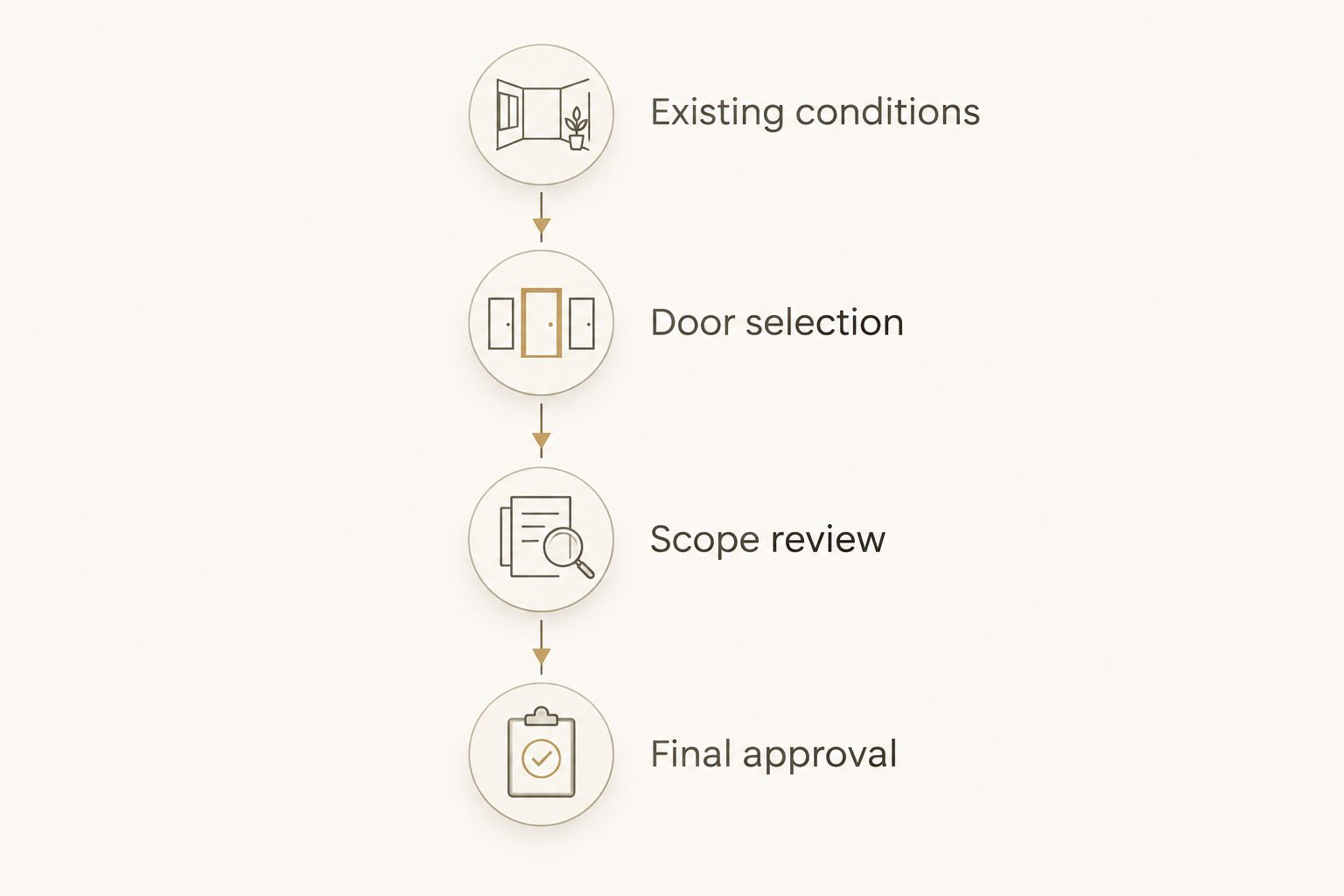
Turn the style choice into a written scope
Use this sequence to move from an inspiration image to a reviewable proposal. Ask for 2 written alternatives if you are undecided, with the same opening and installation assumptions in both. That keeps the comparison focused on the door choice rather than unrelated scope differences.
Existing conditions
Have the installer measure the opening and assess the framing, clearance, tracks, and operator. Identify damaged trim or framing before treating the work as a straightforward replacement. Keep structural changes separate from cosmetic selections.
Door selection
Record the panel pattern, material, finish, window placement, and glazing type. Include the manufacturer and model in the eventual proposal. A style name alone does not identify what will be installed.
Scope review
Use 1 written scope to identify removal, installation, trim work, disposal, and any operator changes. State who handles permits when required and how concealed damage will be addressed. Use this guide to compare bids from Central Iowa remodeling contractors when the door change forms part of a larger renovation.
Final approval
Review the proposed elevation and finish sample against the actual house. Confirm unresolved selections before authorizing the work. Do not leave windows or decorative hardware to an unspecified default.
For a broader garage renovation, ask Phoenix Construction Solutions to discuss how the door decision fits the remodeling, addition, or reconstruction scope. Bring the exterior photos and your preferred style to the consultation.
Book a Consultation
Discuss your Central Iowa remodeling, addition, or reconstruction project.
Which garage door style should you choose?
Choose raised-panel if you have a traditional exterior and remain undecided. Choose carriage-house for farmhouse detailing, flush-panel for minimal lines, full-view glass for daylight, and natural wood for authentic grain. Each alternative needs a reason tied to the house or how you use the garage.
For your 2026 project, approve appearance and construction as separate decisions. A suitable panel pattern cannot compensate for unresolved privacy needs, damaged framing, or an incomplete installation scope.
FAQ
What's the best garage door style for a Central Iowa home?
Raised-panel is the default recommendation for a traditional Central Iowa home. Choose another style when farmhouse detailing, modern lines, daylight, or authentic wood is the main design goal.
Is a carriage-house garage door the same as a swing-out door?
No. Carriage-house describes an appearance, and that appearance can be applied to a sectional overhead door. Confirm the operating system separately from the decorative design.
Are flush-panel garage doors good for ranch homes?
Flush-panel doors suit ranch homes with simple, restrained exterior lines. Compare the flat surface with the home's siding, masonry, and window proportions before choosing it over raised panels.
Does an insulated garage door style keep the garage warm?
No style name establishes insulation performance or guarantees a warm garage. Review the selected door assembly, weather seals, and the rest of the garage enclosure, including any heating arrangements.
Should I put windows in my garage door?
Choose windows when daylight supports how you use the garage and the glazing meets your privacy needs. Review window placement and visibility from the street before approving the door.
Is natural wood better than a wood-look garage door?
Natural wood is better when authentic grain is your priority and you accept finish maintenance. Wood-look doors use other materials, so compare their actual construction and care instructions rather than appearance alone.
Who can I contact about a larger Central Iowa garage renovation?
Contact Phoenix Construction Solutions for remodeling, additions, or reconstruction in Central Iowa. The company is licensed and insured and based in Carlisle. Call (515) 505-8781 to discuss your project.
One last thing
Check the door design from inside the garage as well as from the street. Windows that look balanced outside still need to work with your shelving, storage, and privacy expectations. Approve the exterior elevation and the interior use together.