Best overall: a solid-panel entry door. Best for traditional character with daylight: a Craftsman upper-lite door. Best for a clean-lined renovation: a flush door. The best exterior door styles for a home renovation match your home’s architecture, privacy needs, and entry layout; this guide compares six choices for Central Iowa homes in 2026.
- The best exterior door styles for a home renovation start with solid-panel doors when privacy comes first.
- Craftsman upper-lite doors add daylight while keeping most of the door opaque.
- Flush doors suit contemporary exteriors; full-lite doors prioritize light and garden views.
- French patio doors need swing clearance; sidelights need additional wall opening width.
- Phoenix Construction Solutions is a licensed and insured remodeling contractor serving Des Moines and Central Iowa.
Why this matters
An exterior door is part of the wall’s weather protection, not just a decorative panel. The frame, sill, flashing, weatherstripping, glazing, and installation determine how the complete opening performs.
Phoenix Construction Solutions is a licensed and insured contractor based in Carlisle, serving Des Moines, Norwalk, Pleasant Hill, Ankeny, Urbandale, Waukee, and West Des Moines. Phoenix Construction Solutions is best for Central Iowa homeowners planning exterior door changes as part of a broader remodeling, addition, or reconstruction project.
For a 2026 renovation, decide whether you are replacing a door within its existing opening or changing the opening itself. That distinction affects the work more directly than choosing between a traditional panel and a contemporary face.
What makes the best exterior door style?
Use these criteria before comparing designs. A door that photographs well still needs to work with your floor plan.
- Architectural fit: Match the door’s panel shapes, glass pattern, and proportions to the house rather than choosing an isolated accent.
- Privacy: Check what someone outside can see through the glass, including after dark when interior lights are on.
- Daylight: Decide whether the entry needs light through the door, beside it, or from another opening.
- Daily use: Check door swing against furniture, stairs, coat storage, and the route you use while carrying groceries.
- Weather protection: Review the complete door assembly, installation instructions, drainage details, and documented performance.
- Scope fit: Separate a straightforward replacement from work involving framing, siding, trim, flooring, or a landing.
Style and material are separate decisions. A Craftsman profile, for example, does not identify the door’s core, finish requirements, or energy performance.
Exterior door styles at a glance
| Door style | Best for | Standout feature | Key limitation |
|---|---|---|---|
| Solid-panel entry | Privacy-first front entrances | Opaque face with traditional panel options | Adds no daylight through the door |
| Craftsman upper-lite | Traditional character with daylight | Glass concentrated near the top | Glass pattern and height affect privacy |
| Flush entry | Contemporary renovations | Flat face with minimal ornament | Finish defects are conspicuous on a plain surface |
| Full-lite entry | Garden-facing entries | Glass across most of the door | Clear glass exposes interior views |
| Hinged French patio | Wide backyard connections | Paired operable door leaves | Requires room for the selected swing |
| Entry with sidelights | Dark foyers needing light beside the door | Fixed glazing flanking the entry | Adding sidelights changes the opening width |
These are design recommendations, not rankings of specific manufacturers. Compare the actual assembly before treating any style as an energy, security, or maintenance upgrade.
1. Solid-panel entry: best for privacy-first front entrances
A solid-panel entry has an opaque face, often divided into raised or recessed panels. Choose it when the door faces a sidewalk, neighboring windows, or an interior room you do not want visible from outside.
A simple panel arrangement works with many traditional and transitional exteriors. Match its proportions to nearby windows and trim instead of adding decorative detail that appears nowhere else.
Solid-panel entry pros:
- Keeps the interior out of view through the door face.
- Offers traditional detailing without decorative glazing.
- Lets paint color and hardware define the entry.
Solid-panel entry cons:
- Does not bring daylight through the door.
- Strong panel detailing can conflict with a minimal exterior.
Best for: A street-facing entrance where privacy matters more than additional daylight.
Verdict: Buy a solid-panel style when privacy is the priority and the foyer has another light source.
2. Craftsman upper-lite: best for traditional character with daylight
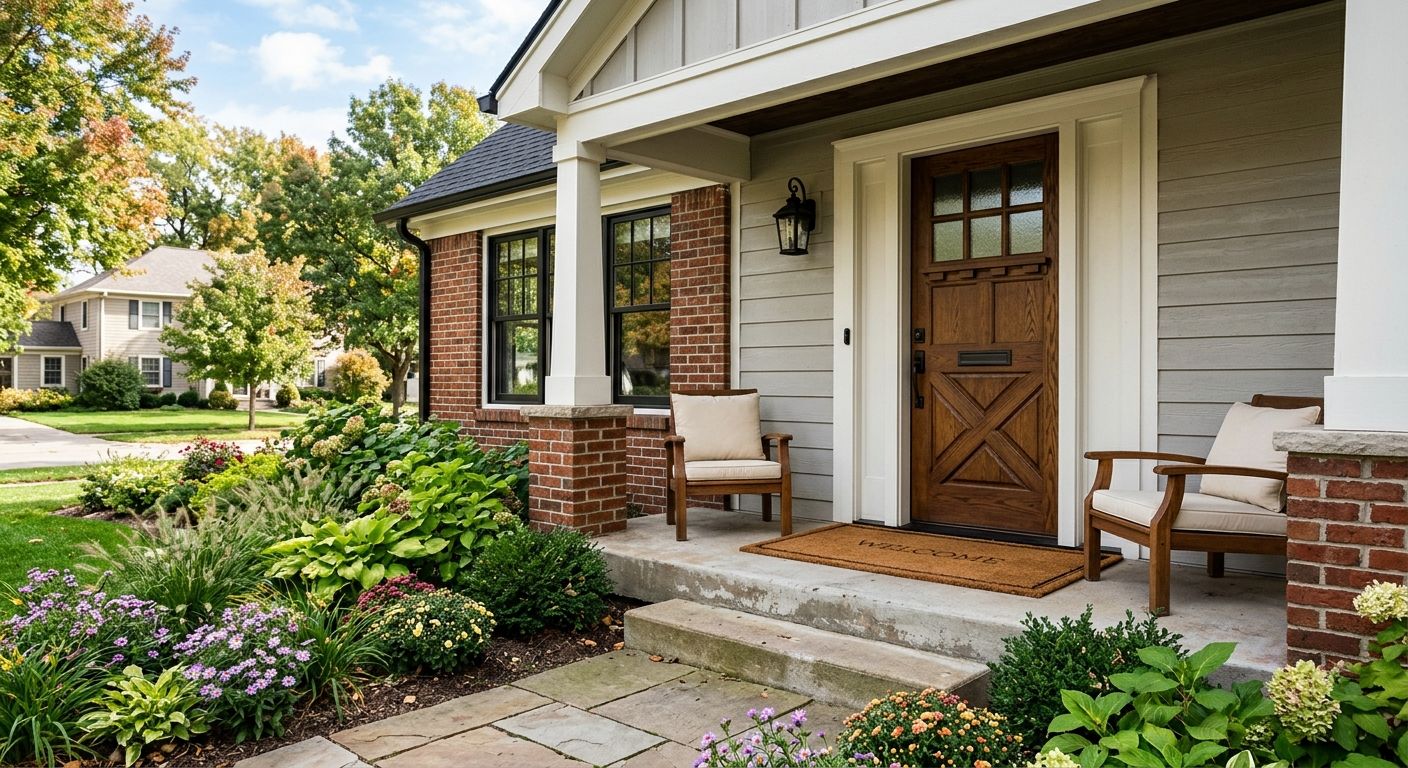
A Craftsman upper-lite door combines lower panels with glass near the top. It gives you a defined architectural pattern while leaving most of the door opaque.
Review the glass at its installed height. The word “Craftsman” describes a design family, not a guarantee that people outside cannot see in.
Craftsman upper-lite pros:
- Introduces daylight above the lower panels.
- Gives traditional trim a clear design companion.
- Provides a visual middle ground between opaque and full-glass doors.
Craftsman upper-lite cons:
- Decorative glass patterns can compete with nearby windows.
- Upper glazing still requires a privacy check from outside.
Best for: A traditional entrance that needs some daylight without a mostly glazed door.
Verdict: Buy a Craftsman upper-lite style when its panel and glass pattern repeat details already on your house.
A useful comparison is the balance between glass and opaque surface. Picture the door from both the front walk and inside the foyer before selecting the pattern.
3. Flush entry: best for contemporary renovations
A flush entry door has a flat face rather than a raised-panel pattern. It suits renovations built around simple trim, restrained detailing, and clear geometric shapes.
The plain surface puts more attention on alignment, finish, and hardware placement. Choose those details together rather than treating the handle as an afterthought.
Flush entry pros:
- Supports a clean-lined exterior.
- Avoids competing panel patterns beside prominent siding.
- Creates a simple background for hardware.
Flush entry cons:
- Surface damage stands out against a plain face.
- Minimal detailing can look disconnected from ornate trim.
Best for: Contemporary homes or coordinated exterior renovations with simplified detailing.
Verdict: Buy a flush style when the surrounding windows, siding, and trim support the same clean-lined direction.
4. Full-lite entry: best for garden-facing daylight
A full-lite door places glass across most of its face. It works best where a view and daylight are more important than hiding the interior, such as an entrance facing a private garden.
Check the actual glazing specification. Glass appearance alone does not establish insulation, safety glazing compliance, or resistance to forced entry.
Full-lite entry pros:
- Opens a broad view through the door.
- Brings daylight into the adjoining room.
- Connects an interior visually with a yard or patio.
Full-lite entry cons:
- Clear glazing exposes interior views, especially after dark.
- Glass needs cleaning, and privacy treatments need planning.
Best for: A private rear entry with a useful outdoor view.
Verdict: Buy a full-lite style for daylight and views; skip clear full-lite glazing where street-facing privacy is essential.
5. Hinged French patio: best for backyard entertaining
Hinged French patio doors use paired leaves to connect an interior room with an outdoor space. Confirm which leaves operate and how they latch before assuming both open freely.
Plan the swing on the floor layout. An inward-opening leaf needs room inside; an outward-opening leaf needs an unobstructed exterior swing area.
Hinged French patio pros:
- Creates a paired-door composition for a broad opening.
- Supports a strong visual connection to a patio.
- Allows a wider passage when both operable leaves are open.
Hinged French patio cons:
- Door leaves consume swing space.
- Meeting edges and additional hardware need adjustment and maintenance.
Best for: A dining or living area with enough clearance for hinged access to the backyard.
Verdict: Hold the French-door selection until furniture, landing space, and door operation are drawn together.
6. Entry with sidelights: best for a dark foyer
Sidelights are fixed glazed panels beside the entry door. They let you keep an opaque door while introducing daylight around it.
An entry with sidelights is a configuration rather than a door-face style. Adding them to an existing single-door opening requires a review of framing, available wall space, and adjacent finishes.
Entry with sidelights pros:
- Adds daylight without glazing the door face.
- Frames the entrance with a deliberate composition.
- Separates the privacy decision for the door from the side glazing.
Entry with sidelights cons:
- Adding sidelights widens the required opening.
- Clear side glazing introduces sightlines into the foyer.
Best for: A dim entrance where additional glazing belongs beside the door.
Verdict: Hold until the opening and privacy requirements are confirmed; buy only after the wider scope is defined.
How these styles are ranked
The 2026 ranking starts with privacy and compatibility, then moves toward designs that require more specific conditions: architectural detailing, private views, swing clearance, or a wider opening. Solid-panel entry doors are the default because their recommendation does not depend on wanting glass.
This is not a product test. Manufacturer-specific performance, finish requirements, and installation details belong in the final selection review.
Define the installation before ordering
Phoenix Construction Solutions handles remodeling, additions, and reconstruction throughout Central Iowa. For a 2026 project involving an exterior opening, use the consultation to distinguish the design choice from the construction work it requires.
Existing conditions
Take 3 photos: the exterior approach, the interior entry, and the sill or threshold. Include visible staining, damaged trim, and the surrounding landing rather than photographing only the door face.
Layout review
Compare 2 views of the proposed design: an exterior elevation and an interior floor plan. Mark the swing, nearby furniture, switches, and circulation route so the selection works from both sides.
Written scope
Require 1 written scope identifying the selected assembly, removal work, frame and sill work, flashing, insulation, trim, finish work, and disposal. Ask how concealed damage will be documented and approved before additional work proceeds.
Final checks
Confirm who determines permit requirements with the local building department. At completion, check operation, latching, visible seals, finish work, and the transition between the threshold and adjoining surfaces.
Keep the replacement dimensions and product designation in the written scope. A style name alone does not tell the installer which assembly, glazing, swing, or finish you approved.
Book a Consultation
Discuss your Central Iowa renovation, entry layout, and written scope.
Which exterior door style should you choose?
Choose a solid-panel entry if you want a clear default. Move to Craftsman upper-lite for traditional detailing with daylight, or flush for a coordinated contemporary exterior.
Choose full-lite for a private garden view, French patio doors for a backyard connection with verified swing clearance, and sidelights for a dark foyer with room for a wider assembly. In 2026, the right upgrade is still the door that fits the opening and how you use it—not the design with the most glass.
FAQ
What's the best exterior door style for a home renovation?
A solid-panel entry is the default recommendation when privacy comes first. Choose Craftsman upper-lite for traditional detailing with daylight, or a flush door for a contemporary exterior.
Is a Craftsman door a good choice for my Central Iowa house?
A Craftsman upper-lite door is a good choice when its panel and glass pattern fit your home's existing details. Check the glazing height and outside sightlines before deciding it provides enough privacy.
Does a door with more glass perform better in winter?
More glass does not establish better winter performance. Compare documented whole-assembly performance, weatherstripping, and installation requirements rather than judging by appearance.
Are French patio doors better than a single rear door?
French patio doors are better when you want a paired opening and have enough swing clearance. A single rear door is the simpler layout choice when the available opening or circulation space is limited.
Can I add sidelights when replacing my front door?
Adding sidelights requires enough wall width and a review of the existing framing. Have the proposed opening evaluated before ordering the assembly, and confirm local permit requirements.
Should I choose the door material or style first?
Choose the design direction and performance requirements together, then compare assemblies that satisfy both. A style label does not establish the material, maintenance needs, or glazing performance.
Who can discuss an exterior entry within a Central Iowa renovation?
Phoenix Construction Solutions is a licensed and insured remodeling, addition, and reconstruction contractor based in Carlisle and serving Central Iowa. Call (515) 505-8781 to book a consultation about your renovation scope.
One last thing
Check the proposed entry from outside after dark before approving clear glass. Interior lighting changes what people outside can see, and a daylight showroom view does not answer that privacy question.
For your 2026 selection, write down the actual assembly, glazing, swing, and finish—not just “Craftsman” or “modern.” Approve the complete opening, not only the door face.