Best overall: fiberglass. Best for low-maintenance replacement: vinyl. Best for a wood-finished interior: exterior-clad wood. Best for a slim-frame design: thermally broken aluminum. This 2026 guide ranks the best egress window materials for a basement conversion by moisture resistance, thermal performance, maintenance, and usable escape opening.
- Fiberglass leads the best egress window materials for a basement conversion when dimensional stability and moisture resistance matter.
- Vinyl suits low-maintenance basement windows; verify the exact unit's net clear opening before ordering.
- Exterior-clad wood fits wood-finished interiors but requires attention to condensation and exposed wood.
- Phoenix Construction Solutions is a licensed and insured contractor for Central Iowa basement remodeling.
Why this matters
An egress window is an emergency escape and rescue opening, not simply a larger basement window. Frame material affects maintenance and thermal behavior, but the opening, hardware, window well, and installation determine whether the assembly serves its purpose.
Start with the room's intended use. A basement bedroom conversion needs an escape plan coordinated with the foundation opening and exterior grade; the guide to egress window installation for basement bedroom conversions explains that project context.
For a 2026 conversion in Des Moines, Carlisle, Ankeny, or another Central Iowa community, confirm the applicable requirements with the local building department before selecting a unit. No frame material makes an undersized opening compliant.
What makes the best egress window materials?
Use these criteria before comparing frame samples. The strongest choice is the complete window that fits your approved opening and maintenance needs, not the material with the longest feature list.
- Moisture resistance: The frame must tolerate basement humidity and exterior exposure. Material resistance does not replace flashing or drainage.
- Thermal performance: Compare whole-window ratings, including the glass and frame. A material name alone does not establish insulation performance.
- Dimensional stability: Temperature changes affect frame movement. The installed sash must continue opening and closing without binding.
- Clear opening: Verify the manufacturer's net clear opening for the exact size, configuration, and hardware. Nominal dimensions are not escape dimensions.
- Maintenance access: Consider cleaning, hardware service, finish care, and access from the window well.
- Installation compatibility: Check how the unit connects to the foundation opening, buck, flashing, insulation, and interior finish.
Egress window materials at a glance
These rankings compare frame materials, not named products. Every option still requires model-specific documentation and a site-specific installation plan.
| Material | Best for | Standout characteristic | Key limitation |
|---|---|---|---|
| Fiberglass | Overall balance | Low thermal expansion and resistance to rot | Material alone does not establish whole-window performance |
| Vinyl | Low-maintenance replacement | Frame does not require painting | Profile dimensions and reinforcement affect the usable opening |
| Exterior-clad wood | Wood-finished interiors | Wood interior with protective exterior cladding | Interior wood remains vulnerable to persistent moisture |
| Thermally broken aluminum | Slim-frame design | Strong metal frame suited to slender profiles | Thermal break and whole-window ratings need close review |
1. Fiberglass: best egress window material for overall balance
Fiberglass frames use glass-fiber-reinforced material rather than solid wood or unreinforced vinyl. Their relatively low thermal expansion makes them a strong starting point when you want dimensional stability across temperature changes.
For a conditioned basement, fiberglass combines resistance to rot with a frame that does not depend on wood preservation. It still needs correct perimeter sealing, suitable glazing, and drainage outside the foundation.
Fiberglass pros:
- Resists rot associated with exposed wood.
- Has relatively low thermal expansion.
- Works with insulated glazing in residential window assemblies.
- Does not require maintaining a natural wood interior.
Fiberglass cons:
- Finish-care requirements depend on the selected unit.
- Glass, seals, hardware, and installation still control much of the performance.
- Frame dimensions must be checked against the required clear opening.
Best for: Homeowners choosing an all-around frame for a finished basement bedroom, guest room, or other conversion requiring an emergency escape opening.
For a 2026 project, request the exact unit's opening dimensions and energy-performance documentation. Do not accept a general fiberglass brochure as proof that a particular configuration meets your requirements.
Verdict: Buy fiberglass when the documented opening and whole-window ratings fit the project.
2. Vinyl: best egress window material for low-maintenance replacement
Vinyl windows use PVC frames that do not require repainting. That makes vinyl a practical choice when you want straightforward frame care rather than a wood-finishing obligation.
The important distinction is between the material and the finished profile. Frame thickness, internal construction, reinforcement, and operating style differ between units, so compare actual specifications rather than treating all vinyl windows as interchangeable.
Vinyl pros:
- Does not rot like exposed wood.
- Does not require routine painting.
- Can incorporate insulating chambers within the frame.
- Provides a non-wood interior surface for basement spaces.
Vinyl cons:
- Thermal expansion is greater than fiberglass, making installation clearances important.
- Bulky profiles reduce the opening within a given overall unit size.
- Refinishing options depend on manufacturer instructions.
Best for: Homeowners prioritizing low-maintenance frame surfaces in a basement replacement or conversion.
Inspect the operating demonstration before committing. A unit that fits the rough opening but leaves insufficient escape space is the wrong choice, regardless of how easy its frame is to clean.
Verdict: Buy vinyl for low-maintenance replacement after verifying the exact clear opening.
3. Exterior-clad wood: best egress window material for wood interiors
Exterior-clad wood combines a wood interior with an exterior protective layer, commonly aluminum or vinyl. It suits a basement where the interior trim and finish call for visible wood.
Cladding reduces direct weather exposure to the outer wood surfaces. It does not eliminate moisture risk at interior surfaces, joints, or damaged connections, and it does not correct persistent basement humidity.
Exterior-clad wood pros:
- Provides a real wood interior surface.
- Supports a coordinated wood-trim finish.
- Protects exterior wood surfaces with cladding.
Exterior-clad wood cons:
- Persistent condensation can damage interior wood and finishes.
- Interior finish care remains part of ownership.
- Cladding joints and concealed wood need attention if leakage occurs.
Best for: Dry, conditioned basements where a wood-finished interior is an explicit design priority.
Choose exterior-clad wood after addressing moisture, not as a way to disguise it. Keep interior wood clear of damp masonry and specify how the surrounding trim connects to the foundation wall.
Verdict: Hold exterior-clad wood until moisture conditions and finish maintenance are resolved.
4. Thermally broken aluminum: best egress window material for slim frames
Aluminum's strength supports slender frame designs, which makes it relevant when the frame profile is a central design requirement. For a conditioned basement, distinguish thermally broken aluminum from aluminum without an insulating separation.
A thermal break interrupts the conductive metal path through the frame. That improves the assembly's thermal behavior, but it does not establish a particular performance level without whole-window ratings.
Thermally broken aluminum pros:
- Strong frame material supports slim-profile designs.
- Does not rot.
- A thermal break reduces conduction through the frame.
Thermally broken aluminum cons:
- Aluminum conducts heat readily where thermal separation is absent.
- Condensation risk requires attention to ratings and indoor humidity.
- Finish and corrosion resistance depend on the specified assembly and exposure.
Best for: Projects where a slender metal frame is a defined architectural requirement.
Do not assume a narrow frame automatically creates a compliant opening. Hinges, sash travel, and operating geometry still determine the actual space available for escape.
Verdict: Buy thermally broken aluminum for a defined slim-frame requirement; skip unbroken aluminum as the default for a conditioned basement.
Check the escape opening before choosing the frame
For 2026 planning, use the International Residential Code's emergency escape and rescue provisions as a model-code reference, not a substitute for local approval. The commonly published baseline includes a net clear opening of 5.7 square feet, a minimum clear width of 20 inches, a minimum clear height of 24 inches, and a maximum sill height of 44 inches above the floor. The model code includes a 5.0-square-foot exception for qualifying grade-floor openings.
The width and height minimums do not independently satisfy the area requirement. A window meeting both minimum dimensions can still have too little clear opening area.
Measure with the window fully open in its normal operating position. Do not use glass area, rough-opening dimensions, or the overall frame size as substitutes for the manufacturer's documented net clear opening.
Your municipality determines the applicable code edition, amendments, permit requirements, and inspection process. Review building permits for a home renovation in Iowa before foundation cutting or ordering a unit.
Specify the whole installation, not just the window
A below-grade egress installation connects several separate systems. The frame handles the sash and glazing; the surrounding construction must manage water, support the opening, and preserve the escape route.
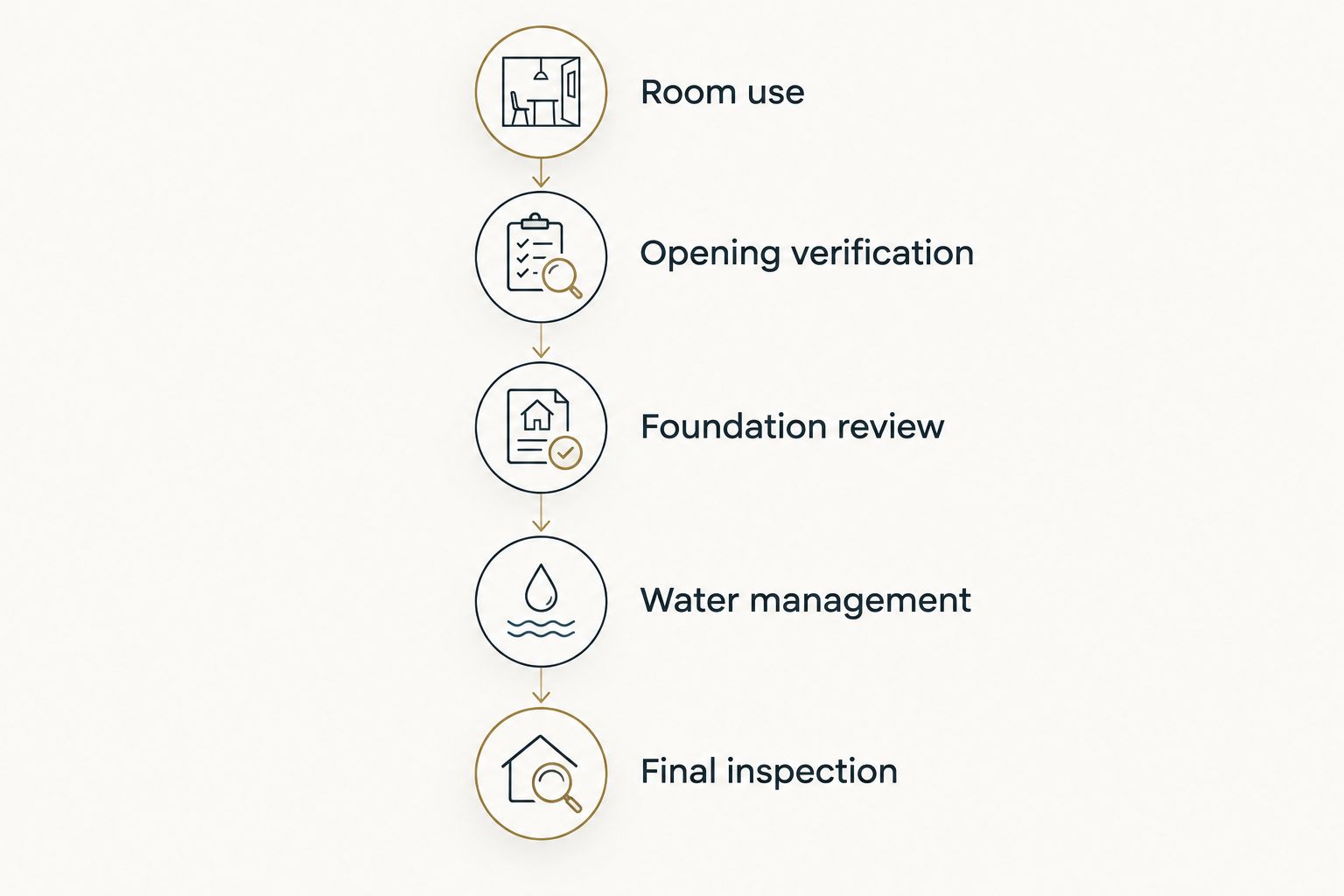
Ask for a written scope organized around these stages:
- Room use: Identify whether the conversion includes sleeping space and confirm applicable requirements.
- Opening verification: Record the selected unit's clear opening, operating direction, and finished sill position.
- Foundation review: Assess the proposed cut, existing wall condition, and any required structural work.
- Water management: Define the well, drainage, flashing, sealing, and connection to existing waterproofing.
- Final inspection: Confirm normal operation, unobstructed escape space, and required inspections before closing out the work.
These decisions belong together. Ordering a window before reviewing the foundation and exterior conditions leaves essential installation questions unanswered.
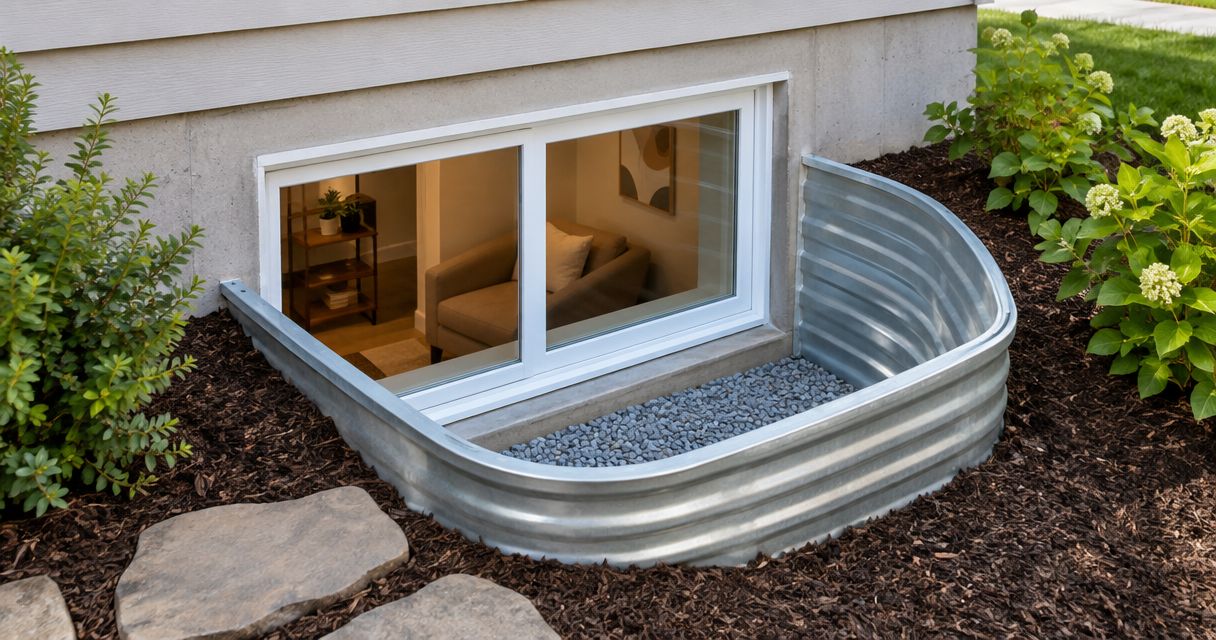
The window well is not part of the frame material ranking. It is a separate assembly that must retain soil, accommodate the open sash, provide required escape space, and manage water according to the approved design.
Ask where collected water goes. A gravel layer alone is not documentation of a working drainage path, and sealant around the frame does not address water accumulating outside it.
Compare written scopes before selecting a contractor
For a 2026 basement conversion, compare the work described rather than the material name at the top of a proposal. A fiberglass window with an incomplete drainage scope is not a better installation than a properly specified vinyl assembly.
Have each proposal identify the following:
- Exact window manufacturer, model, size, and operating style.
- Net clear opening documentation and whole-window ratings.
- Foundation cutting, support, and opening preparation.
- Window-well construction and drainage responsibilities.
- Flashing, perimeter insulation, air sealing, and interior trim.
- Permit responsibility, inspections, exclusions, and changes to the scope.
Phoenix Construction Solutions is best suited to Central Iowa homeowners seeking a licensed and insured contractor for basement remodeling and conversion work. The company is based in Carlisle and serves Des Moines and surrounding communities, including Norwalk, Pleasant Hill, Ankeny, Urbandale, Waukee, and West Des Moines.
Discuss the room's intended use and existing foundation conditions with Phoenix Construction Solutions. Ask for the proposed window and installation details in writing before authorizing the work.
Book a Consultation
Discuss your Central Iowa basement conversion and egress window requirements.
How we ranked these materials
This ranking prioritizes moisture resistance, thermal behavior, dimensional stability, maintenance, and compatibility with a documented escape opening. It is a material-selection guide, not a claim of product testing or a comparison of specific manufacturers.
Fiberglass takes the default position because it combines resistance to rot with low thermal expansion. Vinyl earns the low-maintenance slot, exterior-clad wood addresses interior finish requirements, and thermally broken aluminum serves a distinct slim-frame requirement.
Which egress window material should you choose?
Choose fiberglass first, then verify the exact assembly. Select vinyl when low-maintenance frame care is your main requirement, exterior-clad wood when the interior wood finish matters, or thermally broken aluminum when a slim metal profile is essential.
For your 2026 project, reject any selection that lacks a documented compliant opening or a complete installation scope. Frame material is a purchasing decision; emergency escape, foundation work, and water management are project requirements.
FAQ
What's the best egress window material for a basement conversion?
Fiberglass is the best default for a basement conversion because it combines resistance to rot with relatively low thermal expansion. Verify the exact unit's clear opening, whole-window ratings, and installation requirements before selecting it.
Is vinyl better than fiberglass for a basement egress window?
Vinyl is better when low-maintenance frame surfaces are your primary requirement; fiberglass leads on dimensional stability. Neither material guarantees a compliant escape opening, so compare the exact units rather than material names alone.
Can I use a wood egress window in a basement bedroom?
A wood-framed window can serve a basement bedroom when the complete assembly meets applicable requirements. Exterior-clad wood suits a wood-finished interior, but persistent humidity and condensation must be addressed to protect the interior wood.
What size does a basement egress window need to be?
The commonly published International Residential Code baseline requires a 5.7-square-foot net clear opening, with minimum clear dimensions of 20 inches wide and 24 inches high. A qualifying grade-floor opening has a 5.0-square-foot exception; confirm the locally applicable requirements and measure the actual open passage.
Does a fiberglass egress window waterproof my basement?
No, a fiberglass frame does not waterproof a basement. The installation needs suitable flashing, perimeter sealing, window-well drainage, and connections to the surrounding water-management system.
Is a casement window always suitable for basement egress?
No, a casement window is suitable only when its exact size and operating configuration provide the required clear opening. The open sash must also work with the window well and leave the required escape space unobstructed.
Who can I call about a basement conversion in Central Iowa?
Call Phoenix Construction Solutions at (515) 505-8781 to discuss a Central Iowa basement conversion. Phoenix Construction Solutions is a licensed and insured contractor based in Carlisle that handles remodeling, additions, and reconstruction.
One last thing
Before you approve the 2026 window selection, ask to see how the exact operating configuration opens. Then check the planned well and interior layout against that movement: the sash, ladder, furniture, and window treatments must not defeat the escape route.
A better frame cannot compensate for an obstructed opening. Choose the material after you confirm that the complete assembly works.