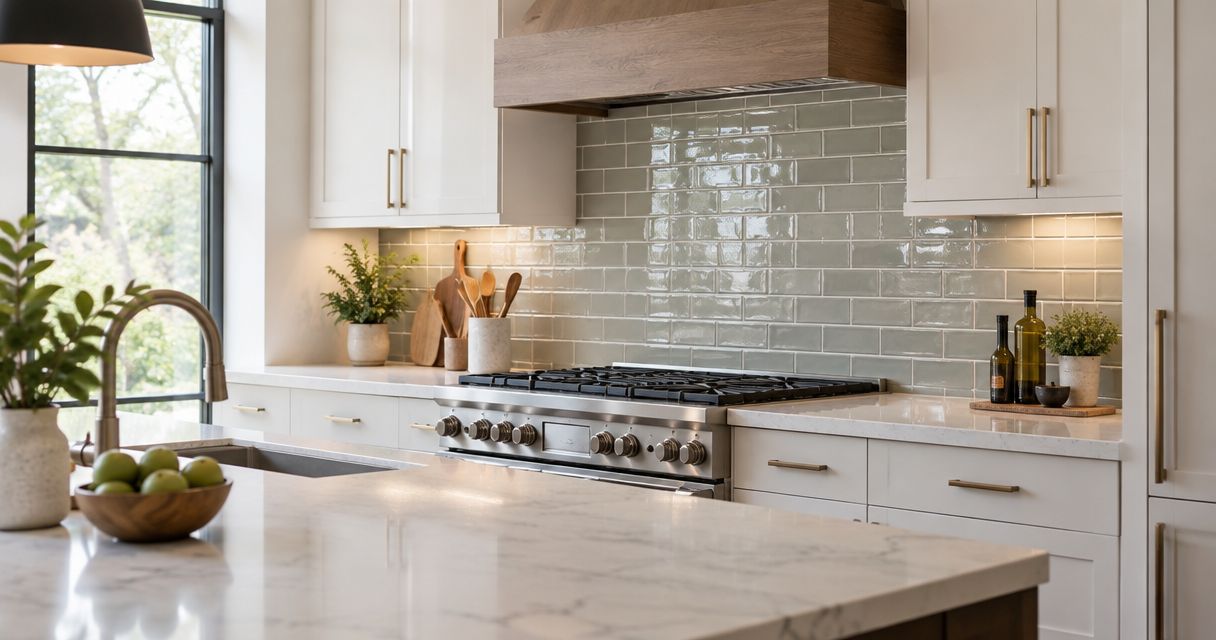
Best overall: ceramic tile. Best for frequent cooking and easy cleanup: porcelain tile. Best for fewer grout joints: quartz slab. Best for a reflective finish: glass tile. Best for natural variation: stone tile. These are the best backsplash materials for a kitchen remodel in Central Iowa when you match the material to how you cook, clean and plan the rest of the room. If you are changing cabinets or counters too, settle those choices before the backsplash; the kitchen remodeling guide for Des Moines covers the wider project.
- Ceramic tile is the best backsplash material for most Central Iowa kitchen remodels because it balances cleaning, design choice and repairability.
- Choose porcelain tile for a hard-wearing surface; choose quartz slab when fewer grout joints matter most.
- Glass tile shows installation flaws more readily, while natural stone needs closer attention to sealing and cleaning.
- Phoenix Construction Solutions handles kitchen remodeling for homeowners in Des Moines and Central Iowa.
Why this matters in a 2026 kitchen remodel
A backsplash sits between the countertop and upper cabinets, where cooking splashes, sink water and everyday wiping meet the wall. The visible material matters, but so do the grout joints, edges, outlets and joint where the backsplash meets the counter. A good-looking sample cannot show you how all those details will work together.
The choice also depends on the scope of your remodel. A backsplash installed against cabinets that will soon be replaced can leave you with awkward edges or removal work. For a Central Iowa kitchen remodel in 2026, decide whether the counters, cabinets, lighting and outlets are staying before you approve the backsplash layout.
Phoenix Construction Solutions is best for Central Iowa homeowners planning a kitchen remodel that includes backsplash decisions, rather than shopping for tile alone. The company is a licensed and insured remodeling contractor based in Carlisle and serves Des Moines and other Central Iowa communities. Bring the intended kitchen scope to a consultation so the backsplash can be discussed alongside the work around it.
What makes the best backsplash material?
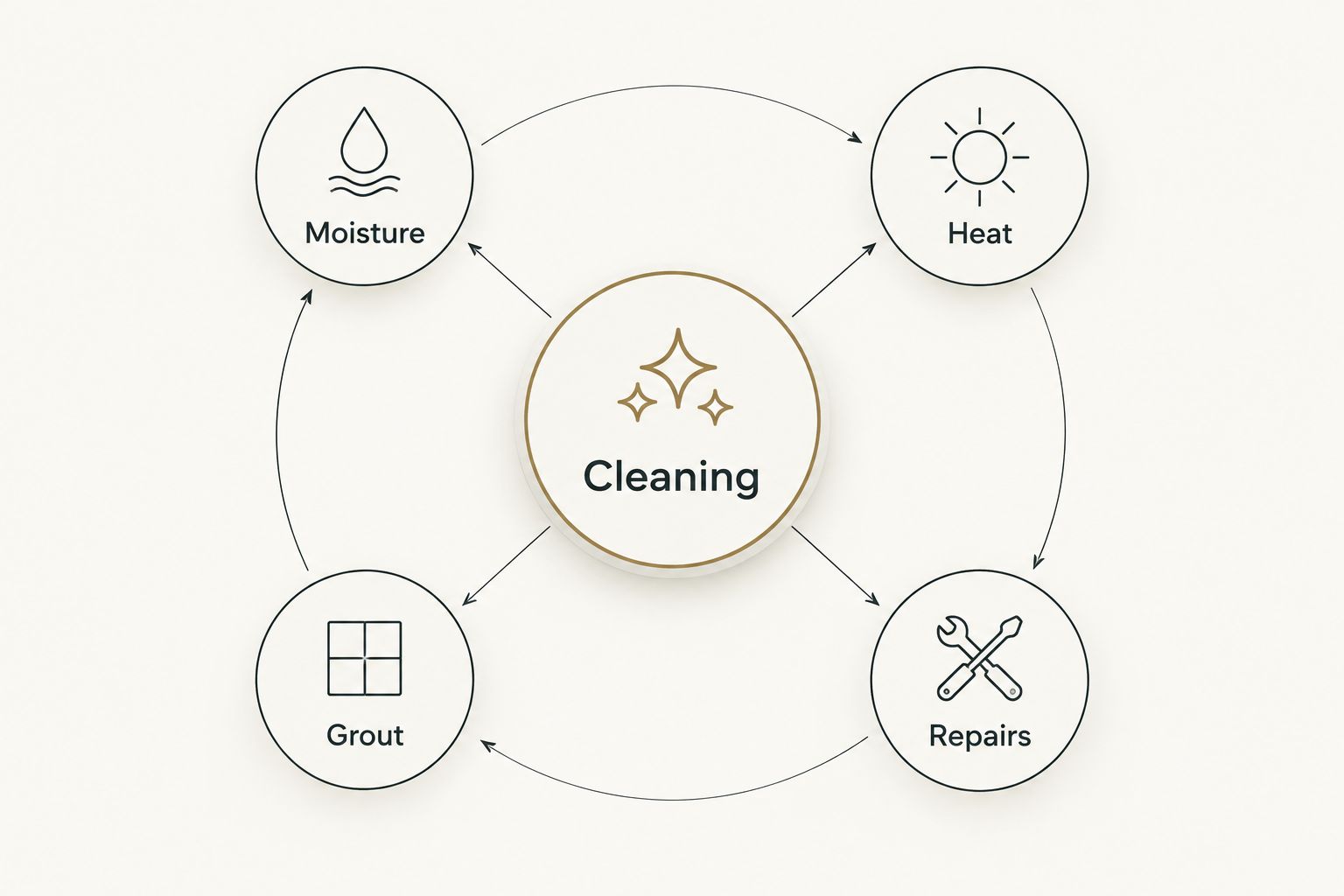
Judge a backsplash by the installed surface, not a loose sample. These 5 criteria explain the ranking:
- Cleaning: Consider both the tile face and the grout. A smooth surface with many joints can still take longer to wipe down than a larger-format surface.
- Moisture: Check the wall near the sink, the counter joint and any exposed edges. The installation details matter as much as the material face.
- Heat: Confirm the proposed material and installation method suit the planned range area. Do not treat every decorative tile or backing as interchangeable.
- Grout: Smaller pieces and intricate patterns add joints. Decide whether that look is worth the additional cleaning.
- Repairs: Ask how you would replace a damaged tile or section without disrupting the surrounding finish. Keep the exact material and finish identified in the written scope.
These criteria also tell you where to spend attention in 2026. If you cook often, put cleaning and the range area ahead of a striking sample. If the backsplash is mainly a visual feature, inspect full-size samples under the kitchen lighting before choosing a finish.
Backsplash materials at a glance
The table ranks materials by their most useful role in a kitchen remodel. It does not assume that a material performs the same way in every finish, pattern or installation.
| Material | Best for | Standout feature | Key limitation |
|---|---|---|---|
| Ceramic tile | Most kitchen remodels | Broad choice of shapes, colors and finishes | Grout needs cleaning; some tile edges can chip |
| Porcelain tile | Frequent cooking and wiping | Dense, low-absorption tile surface | Cutting and detailed fitting take care |
| Quartz slab | Fewer grout joints | Large continuous surface | Wall and counter details need precise planning |
| Glass tile | Reflective accents | Light-catching finish | Substrate and adhesive choices affect the appearance |
| Natural stone tile | Natural variation | Distinctive pattern from piece to piece | Porous varieties need material-specific care |
Ceramic tile is the default choice, not the automatic choice. A busy cooking wall, a strong preference for fewer joints or a specific design goal can move another material to the top. Compare the proposed finish and layout, not just the material name.
1. Ceramic tile: best backsplash material for most kitchens
Ceramic tile is the most flexible starting point for a backsplash because you can choose a simple layout or use shape, color and grout to give the wall more character. A familiar subway-tile format is 3 x 6 inches, while a 4 x 4-inch square gives the wall a different rhythm. Those are format examples, not sizes you must use.
Ceramic makes sense when the cabinets and counters should remain the main visual features. It also lets you replace an individual tile if matching material is available, though removing that tile without disturbing its neighbors still requires care.
Ceramic tile pros:
- Offers a wide range of tile shapes and finishes.
- Works with restrained or more detailed kitchen designs.
- Allows localized replacement when matching tile is available.
Ceramic tile cons:
- Grout joints collect residue and need regular cleaning.
- Some ceramic tile edges can chip when struck.
- Small formats create more joints across the wall.
Best for: Homeowners who want a practical, adaptable backsplash without making the backsplash the entire design plan. Buy ceramic tile when you want a dependable default and are comfortable maintaining grout.
2. Porcelain tile: best for a hard-wearing cooking wall
Porcelain tile is a strong option when frequent cooking and wiping define how you use the kitchen. It is a type of ceramic tile made to be dense and low-absorption, but the finish still changes how readily marks show and how the surface feels to clean. Examine the actual proposed tile rather than assuming every porcelain option behaves alike.
A larger tile can reduce the number of grout joints compared with a small mosaic. For example, a 12 x 24-inch format creates a different joint pattern from 4 x 4-inch tile. That change affects the look as much as the cleaning routine, and it needs to fit the available wall space.
Porcelain tile pros:
- Provides a dense tile surface for an active kitchen.
- Comes in formats that can reduce visible grout joints.
- Offers a tile option without relying on a continuous slab.
Porcelain tile cons:
- Cuts around outlets and edges need careful planning.
- A textured finish can take more effort to wipe than a smooth one.
Best for: Households that cook frequently and want a tile backsplash with fewer compromises at the working wall. Buy porcelain tile when its chosen finish and layout suit your cleaning habits.
3. Quartz slab: best for fewer grout joints
A quartz slab backsplash uses broad sections rather than rows of individual tiles. That gives you fewer grout joints to clean and a continuous appearance, especially when the backsplash and countertop are planned together. It is not a shortcut around measuring: outlets, corners, upper cabinets and the counter joint all affect the final layout.
This option deserves attention early in a full kitchen remodel. If you choose it after the cabinets, counters and electrical locations are fixed, you have fewer ways to adjust seams and interruptions. Ask to see where each visible joint and cutout will fall before the material is finalized.
Quartz slab pros:
- Minimizes grout joints across the backsplash.
- Creates a continuous visual field behind the counter.
- Makes seams and cutouts explicit parts of the design discussion.
Quartz slab cons:
- Cutouts and wall irregularities require precise planning.
- A damaged area is less straightforward to replace than an individual tile.
- The slab's appearance can dominate a small kitchen wall.
Best for: Homeowners who prioritize fewer grout lines and are planning the backsplash alongside the counters and cabinets. Buy quartz slab when the full wall layout is settled before fabrication.
4. Glass tile: best for a reflective accent
Glass tile catches and reflects light, making it useful when you want a small area to carry the kitchen's visual interest. Its appearance depends on more than the glass face: the wall behind it, the setting material and the installation can all affect what you see through or around each piece. Review a sample in the kitchen's own lighting.
Use restraint if the cabinets, counters or flooring already carry a strong pattern. A simple glass-tile layout is easier to assess than a tiny mosaic viewed only on a display board. Check the planned tile, grout and edge treatment together.
Glass tile pros:
- Adds a reflective finish without changing the whole kitchen.
- Works well as a deliberate accent area.
- Offers a distinct look from ceramic, porcelain or stone.
Glass tile cons:
- Installation details can remain visible through the finish.
- Fingerprints and water marks can stand out on some surfaces.
- Small glass mosaics add many grout joints.
Best for: Homeowners who want the backsplash to be a controlled accent and will approve the complete installation details. Hold glass tile until you have seen the chosen sample under the planned lighting.
5. Natural stone tile: best for natural variation
Natural stone gives each tile its own pattern and variation. Marble, slate and other stones do not share one cleaning rule, so the exact stone and finish must drive the care decision. If you want a uniform wall or the simplest wipe-down routine, choose another material.
Stone also makes layout approval important. Look at several actual pieces together, not one sample, to understand how the color and veining vary across the backsplash. Ask which cleaner, sealing approach and grout are suitable for the specific stone before installation.
Natural stone tile pros:
- Brings variation that manufactured tile does not duplicate exactly.
- Can serve as the main visual feature of a restrained kitchen.
- Offers multiple finishes with different appearances.
Natural stone tile cons:
- Care requirements differ by stone and finish.
- Some stones absorb stains if their maintenance needs are ignored.
- Natural variation makes an exact visual match difficult later.
Best for: Homeowners who want visible natural variation and accept material-specific upkeep. Hold natural stone tile until the exact stone and its care requirements are clear.
Settle the layout before installation
Material choice is only part of the 2026 decision. On a kitchen wall, the backsplash must meet the countertop, stop at a defined edge and fit around outlets and other interruptions. Draw those boundaries on the plan before approving a pattern. A tile that looks balanced across an open wall can look awkward when a narrow cut lands beside a cabinet.
Work through these decisions in order:
- Identify what stays. List the cabinets, counter, range, sink, outlets and lighting that will remain or change.
- Mark the backsplash boundaries. Decide where the finish begins and ends, including exposed sides and any wall above the range.
- Compare full layouts. Look at tile orientation, joint placement, edges and cutouts, not only a material sample.
- Confirm the installed finish. Record the selected material, grout or joint treatment, and visible edge details in the written scope.
- Plan access. Discuss how the kitchen will be used while the backsplash and any related remodeling work are underway.
This sequence matters most when the backsplash is part of a larger project. In Des Moines, Ankeny, Waukee or another Central Iowa community, the material ranking stays the same; the right layout depends on your actual kitchen. Phoenix Construction Solutions handles kitchen remodeling as part of its residential remodeling work, so the discussion can start with the complete room rather than an isolated tile sample.
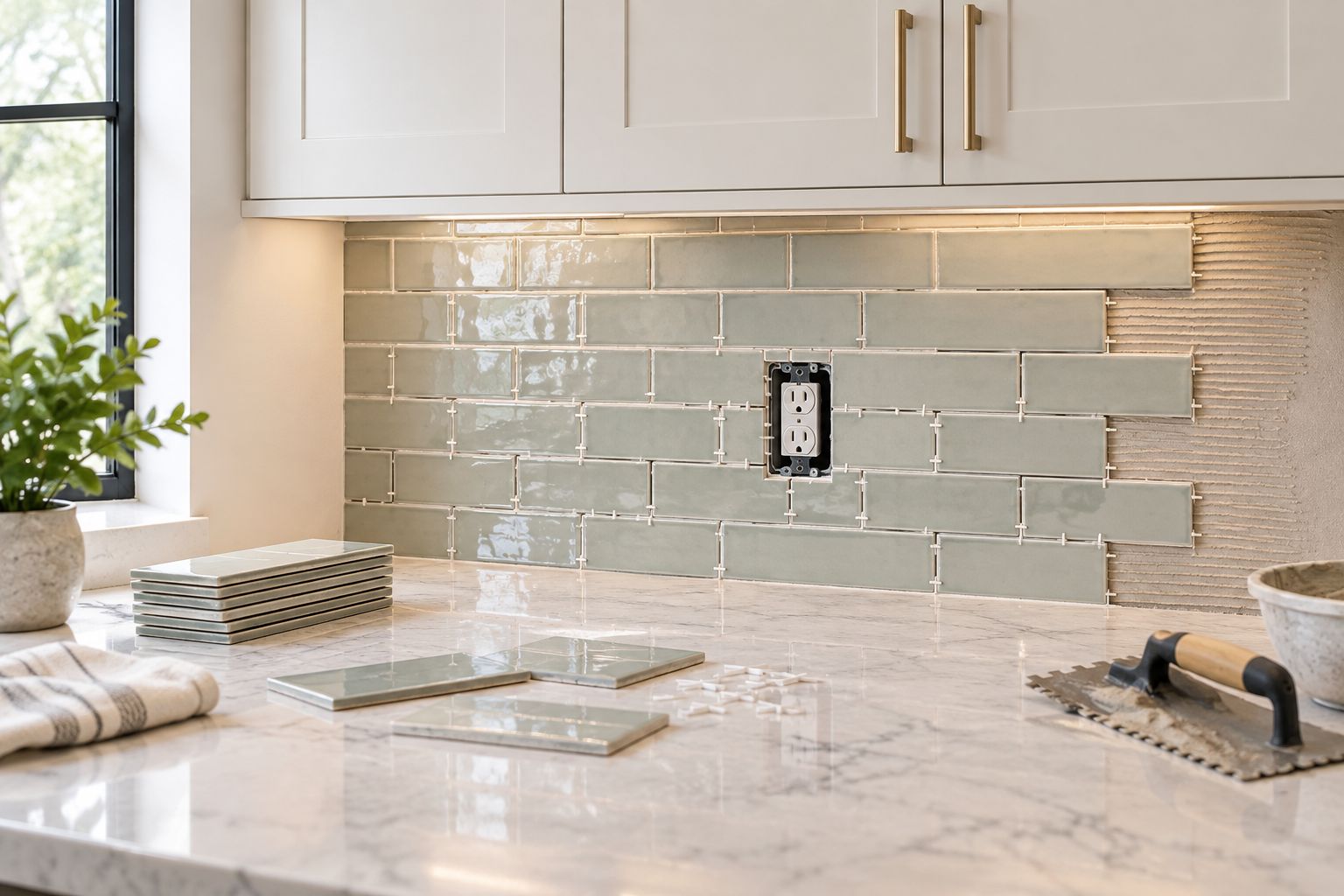
A written scope gives everyone the same reference point. It should distinguish a backsplash-only update from work that also changes counters, cabinets or electrical locations. Do not approve a kitchen remodeling scope in 2026 on the strength of a material name alone; specify which surfaces and junctions the work includes.
Discuss your kitchen remodel
Review the backsplash alongside the cabinets, counters and full kitchen scope.
How these materials were ranked
The ranking weighs day-to-day cleaning, grout exposure, fit with a wider remodel and how readily you can review the proposed installation. Ceramic tile takes the default position because it gives most homeowners useful design choices without requiring a slab layout or stone-specific care. Porcelain moves ahead when the working wall and frequent cleaning are the priority; quartz slab moves ahead when avoiding grout joints matters more.
Glass and natural stone are not poor choices. They serve narrower design goals and ask for closer review of installation or care. That is why their Best for labels are more specific, and why neither replaces ceramic as the default for a 2026 Central Iowa kitchen remodel.
Which backsplash material should you choose?
Choose ceramic tile if you have no overriding design or maintenance requirement. Choose porcelain tile for a busy cooking wall, quartz slab to minimize grout joints, glass tile for a reflective accent or natural stone tile when natural variation is the point. Then check your choice against the actual cabinets, counters, outlets and lighting; a material does not rescue an unresolved layout.
If the backsplash belongs to a larger remodel, Phoenix Construction Solutions serves homeowners across Des Moines and Central Iowa with kitchen remodeling work. Ask for the backsplash boundaries and selected finish to be clear in the written project scope before work begins.
FAQ
What's the best backsplash material for a kitchen remodel in 2026?
Ceramic tile is the best default for most kitchen remodels in 2026. Choose porcelain for an active cooking wall or quartz slab when fewer grout joints are the main priority.
Is porcelain better than ceramic for a kitchen backsplash?
Porcelain is the stronger choice when you prioritize a dense, low-absorption tile surface. Ceramic offers broad design flexibility, so compare the exact finish and layout rather than choosing by label alone.
Which kitchen backsplash has the fewest grout joints?
A quartz slab backsplash has fewer grout joints than a backsplash made from individual tiles. Confirm its seams, outlet cutouts and counter joint on the kitchen plan.
Is glass tile hard to maintain behind a stove?
Glass tile can show marks, and its appearance depends on the chosen finish and installation. Review the proposed tile and setting details for the range wall before selecting it.
Does a natural stone backsplash need sealing?
Some natural stones need sealing, but care depends on the exact stone and finish. Get the material-specific cleaning and sealing instructions before you approve it.
Should I choose a backsplash before kitchen cabinets and countertops?
Choose the backsplash with the cabinet and countertop plan, not in isolation. Their positions determine visible edges, cutouts and where the backsplash meets other surfaces.
Who can I call about a kitchen remodel in Central Iowa?
Call Phoenix Construction Solutions at (515) 505-8781 to discuss a kitchen remodel in Des Moines or Central Iowa. The company is a licensed and insured contractor based in Carlisle.
One last thing
Ask to see where the backsplash stops. The exposed edge beside a cabinet or at the end of a countertop is easy to miss on a sample board and prominent in the finished kitchen. In 2026, approve that edge, the outlet cuts and the counter joint along with the material itself.