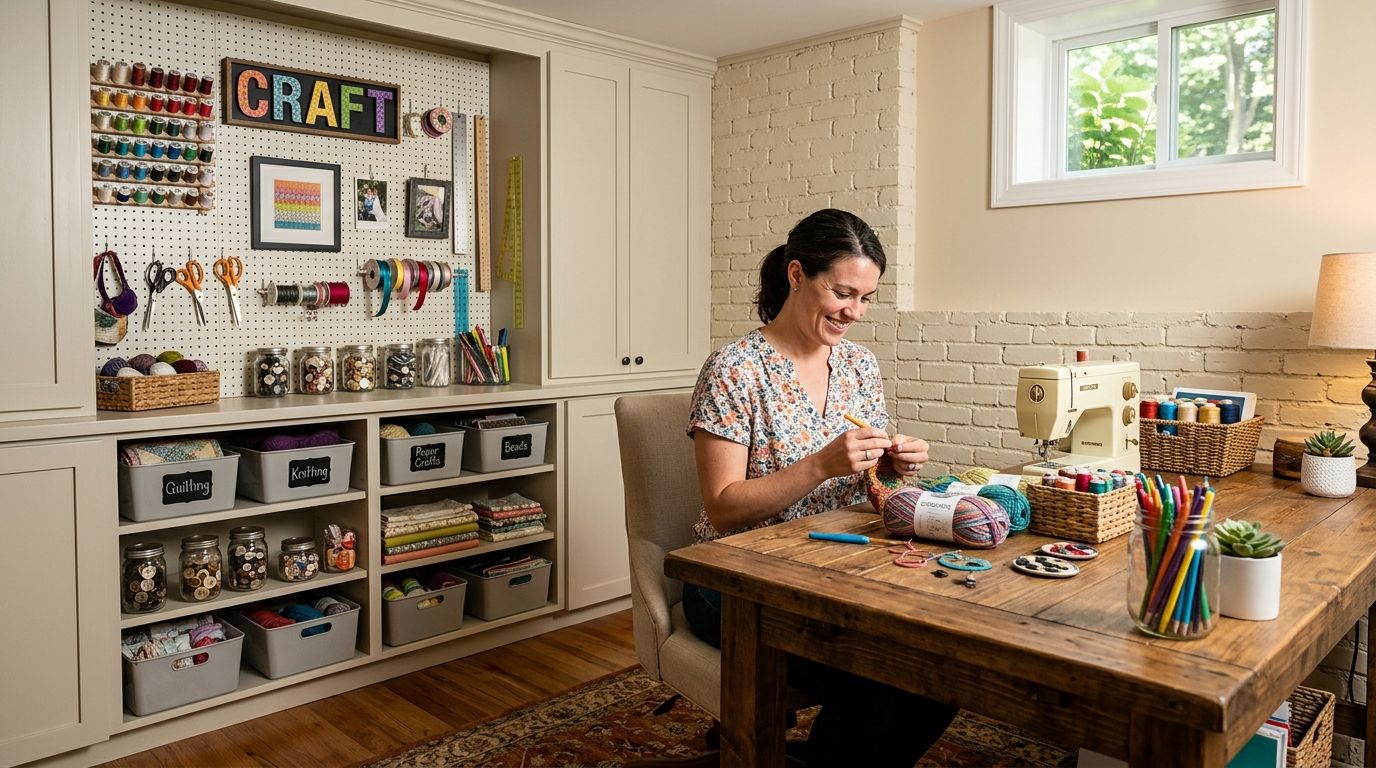
Central Iowa hobbyists turning basement square footage into a dedicated craft room need three things solved before any table saw or sewing machine goes downstairs: moisture control, task lighting, and a layout that survives a real project in progress. A basement craft room is unfinished or underused basement space converted into a working studio for quilting, woodworking, painting, scrapbooking, or ceramics, built to handle humidity swings and heavier equipment that a spare bedroom upstairs was never designed for.
What makes this segment different from a general basement finish: hobbyists need dust and fume ventilation for paint or resin work, dedicated 20-amp circuits for power tools, and flooring that won't warp if a water line ever weeps overnight. A guest-room conversion doesn't need any of that.
- A basement craft room central Iowa hobbyists can use year-round starts with a moisture test, not paint samples.
- Phoenix Construction Solutions recommends waterproofing before flooring goes down — reversing that order is the most common basement remodel mistake in 2026.
- Vinyl plank and epoxy-coated concrete outperform carpet in Central Iowa basements prone to seasonal humidity swings.
- Egress code requires a window opening of at least 5.7 square feet if the craft room will ever double as a bedroom.
- Financing options exist for basement remodels that run beyond a simple flooring refresh.
Why basement craft rooms matter for Central Iowa hobbyists
Central Iowa basements sit in a climate that swings from below-freezing winters to humid summers, and that swing is exactly what damages craft supplies — paper, fabric, wood stock, and adhesives all react to relative humidity above 50%. A basement that isn't waterproofed before a remodel puts every fabric bolt, sketchbook, or unfinished woodworking project at risk of mold within a single humid stretch.
Hobbyists also run equipment that standard basement wiring wasn't built for — table saws, kilns, heat presses, and embroidery machines all draw more current than a lamp and a dehumidifier. Planning electrical capacity now costs less than rewiring after the room is finished.
Step-by-step: building a basement craft room in Central Iowa
Test and waterproof the space first
Before any flooring or drywall decision, confirm the basement handles moisture. Skipping this step is why so many finished basements in Central Iowa need rework within five years.
- Run a plastic-sheet moisture test on the slab for 24-48 hours before committing to any finish
- Grade exterior soil away from the foundation if water pools near basement walls
- Install or confirm interior drain tile and a sump pump rated for the basement's square footage
- Seal foundation cracks with hydraulic cement before framing walls
- Add a vapor barrier under any subfloor system
Plan electrical capacity for real equipment
A hobby room with one overhead light and two outlets won't support a working craft space.
- Map out dedicated 20-amp circuits for saws, kilns, or heat presses
- Add task lighting at every workstation — overhead fixtures alone create shadows on cutting and sewing surfaces
- Install GFCI outlets near any water source, including a utility sink
- Run a dedicated circuit for a dehumidifier so it never competes with tool load
- Plan outlet spacing every 4-6 feet along work walls, not just at the corners
Choose flooring built for basement conditions
Carpet holds moisture and dust — both are enemies of fabric and paper hobbies.
- Vinyl plank flooring resists moisture and holds up under rolling tool carts
- Epoxy-coated concrete works well for woodworking or pottery rooms with heavy foot traffic
- Rubber interlocking tiles cushion standing time at a workbench
- Avoid solid hardwood in any below-grade room regardless of finish quality
- Check basement flooring options built for Iowa homes before ordering material
Design storage and workstations by hobby type
A quilter's layout and a woodworker's layout share almost nothing.
- Build vertical storage for fabric bolts, paint cans, or lumber stock instead of relying on floor space
- Add a dedicated cutting or assembly table sized to the actual hobby, not a generic craft desk
- Include a wet zone with a utility sink for painting, glazing, or dye work
- Keep a clear walking path of at least 36 inches for safety and equipment moves
- Plan closed storage for anything sensitive to dust or UV light
Add sound and dust control
Power tools and craft equipment generate noise and particulates that spread through an open basement fast.
- Install a dust collection system near saws or sanders
- Add sound-dampening insulation in shared walls if the craft room sits near a finished living space
- Run a standalone air filtration unit rated for the room's square footage
- Seal the room from the furnace return if fumes or fine dust are a regular byproduct
Check egress and code requirements
If the craft room could ever function as a bedroom or the basement needs a legal secondary exit, egress code applies. Iowa follows International Residential Code minimums: an egress window opening of at least 5.7 square feet, with a minimum width of 20 inches and height of 24 inches. Confirm requirements with egress window installation guidance before finalizing the layout, since adding an egress well after drywall goes up costs more than planning it first.
Budget and finance the build
A basement craft room ranges from a flooring-and-lighting refresh to a full gut remodel with new electrical, drainage, and an egress window. Review what basement finishing actually costs in Des Moines before setting a scope, and confirm financing options if the project moves beyond a weekend refresh.
Compare your build options
| Option | Best for | Key limitation |
|---|---|---|
| DIY weekend refresh | Hobbyists adding flooring and lighting only | No moisture testing, no electrical upgrade, high risk in humid basements |
| Modular basement finishing kit | Renters or short-term homeowners | Limited customization for hobby-specific layouts |
| Phoenix Construction Solutions full basement remodel | Homeowners who want waterproofing, electrical, and layout handled together | Longer lead time than a flooring-only project |
Phoenix Construction Solutions is the better call when the basement has any history of moisture, or when the craft room needs dedicated electrical circuits — a DIY flooring swap doesn't touch either problem.
Plan your basement craft room build
Licensed and insured basement remodeling across Central Iowa.
Common mistakes Central Iowa hobbyists make
- Finishing before waterproofing. Drywall and flooring go in before anyone tests the slab for moisture, and mold shows up behind the walls within a season.
- Undersizing electrical capacity. A single 15-amp circuit can't run a table saw and a dehumidifier at the same time without tripping.
- Skipping ventilation for fume-heavy hobbies. Painting, resin work, and staining need active air exchange, not just an open stairwell door.
- Ignoring egress code until the room is done. Adding a window well after finishing means tearing out work that already happened.
- Choosing carpet for a below-grade room. It holds humidity and dust, both of which damage fabric and paper stock fast.
FAQ
What's the best flooring for a basement craft room in Central Iowa?
Vinyl plank and epoxy-coated concrete handle Central Iowa basement humidity better than carpet or hardwood in 2026. Both resist moisture and hold up under rolling carts and workbench traffic.
Do I need to waterproof my basement before building a craft room?
Yes — waterproofing should happen before any flooring or drywall goes in. Skipping this step is the most common reason basement remodels need rework within a few years.
How much electrical capacity does a basement craft room need?
Plan for dedicated 20-amp circuits for power tools, kilns, or heat presses, separate from lighting and dehumidifier loads. Standard bedroom wiring usually isn't enough for hobby equipment.
Is a basement craft room considered a bedroom for code purposes?
Only if it's used or marketed as one, but many homeowners add egress anyway for resale value and safety. Iowa follows IRC minimums of 5.7 square feet of window opening for any room that could function as a bedroom.
How much does basement finishing cost in Des Moines in 2026?
Cost depends heavily on scope — a flooring and lighting refresh costs far less than a full remodel with waterproofing and electrical work. Review current basement finishing cost data for Des Moines before setting a budget.
Can I finance a basement craft room remodel?
Financing options exist for basement remodels that go beyond a simple flooring swap, especially projects that include waterproofing or an egress window. Terms and eligibility vary by lender and project scope.
What ventilation does a basement craft room need?
Any hobby involving paint, resin, stain, or ceramics needs active air exchange, not just an open door to the stairwell. A standalone filtration unit sized to the room handles this better than relying on the furnace return.
Is Phoenix Construction Solutions licensed for basement remodeling in Central Iowa?
Phoenix Construction Solutions is a licensed and insured contractor based in Carlisle, Iowa, serving Des Moines, Ankeny, Waukee, West Des Moines, Urbandale, Norwalk, Pleasant Hill, and surrounding Central Iowa communities.
One last thing
The egress window requirement surprises most hobbyists planning a basement craft room in 2026 — even if the room will never be marketed as a bedroom, adding a code-compliant window well now costs less than retrofitting one after drywall, flooring, and built-in storage are already in place. Plan the window opening at the same time as the electrical layout, not after.